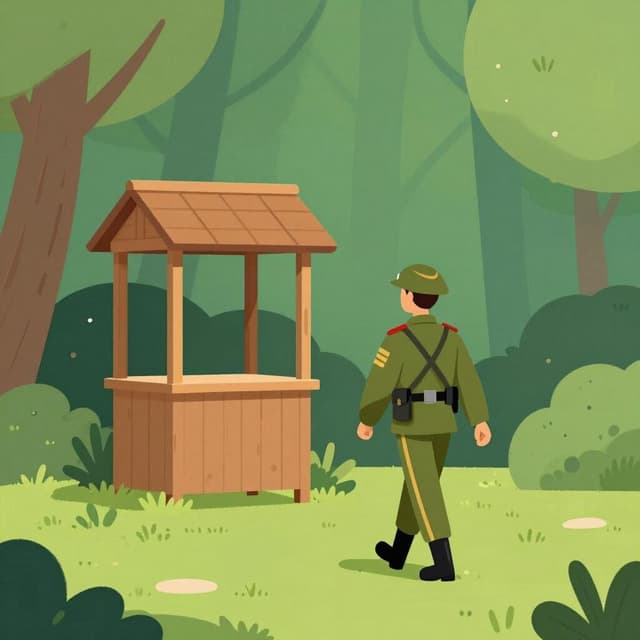
desertar Present Conjugation
desertar — to desert
The present indicative of desertar (desierto, desiertas, etc.) describes someone deserting now or habitually.
desertar Present Forms
When to Use the Present
Use the present tense for actions happening right now (He's deserting his post) or for habitual actions (He deserts his responsibilities often). It can also state general truths.
Notes on desertar in the Present
Desertar is regular in the present indicative. The first-person singular ('yo') form 'desierto' has a stem change from 'e' to 'ie' in this tense only.
Example Sentences
El espía desierta su puesto cada noche.
The spy deserts his post every night.
él/ella/usted
Yo desierto de las reuniones aburridas.
I bail on boring meetings.
yo
¿Tú desiertas a menudo?
Do you often desert (your duties)?
tú
Ellos desertan de sus promesas fácilmente.
They go back on their promises easily.
ellos/ellas/ustedes
Common Mistakes
Mistake: Using the present indicative when the preterite is needed for a completed action.
Correct: For a specific past instance of deserting, use 'desertó', not 'desierta'.
Why: The present describes ongoing or habitual actions, while the preterite describes completed actions.
Mistake: Incorrectly conjugating the 'yo' form.
Correct: The 'yo' form is 'desierto', not 'desertó' or 'desierto' (without the accent).
Why: The present indicative 'yo' form has an accent on the 'o'.
Master Spanish verbs in context
Memorizing tables only gets you so far. Read 200+ illustrated and narrated Spanish stories to see verbs like 'desertar' used naturally — in the tenses you're learning.
Related Tenses
Preterite
yo: deserté
The preterite of desertar is regular: deserté, desertaste, desertó, desertamos, desertasteis, desertaron.
Imperfect
yo: desertaba
The imperfect of desertar (desertaba, desertabas, etc.) describes past habits or ongoing actions of deserting.
Future
yo: desertaré
The future tense of desertar (desertaré, desertarás, etc.) indicates an action that will happen.
Conditional
yo: desertaría
The conditional of desertar (desertaría, desertarías, etc.) is used for hypotheticals ('would') and polite requests.
Present Subjunctive
yo: desierte
The present subjunctive of desertar (desierte, desiertes, etc.) is used for wishes, doubts, emotions, and after certain conjunctions.
Imperfect Subjunctive
yo: desertara
The imperfect subjunctive of desertar (desertara, desertaras, etc.) is used for past hypotheticals, wishes, or doubts.
Affirmative Imperative
yo: desierta
The imperative of desertar uses 'desierta' (tú) and 'desierte' (usted) for commands, and 'desertad' for vosotros.
Negative Imperative
yo: no desiertes
Negative commands for desertar use the present subjunctive: no desiertes (tú), no desierte (usted), no desertéis (vosotros).