empeñar Future Conjugation
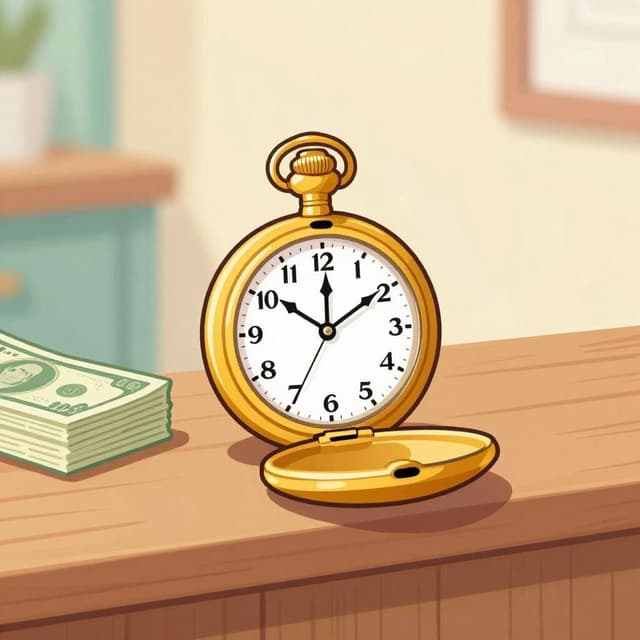
empeñar — to pawn
Use 'empeñaré', 'empeñarás', 'empeñará', 'empeñaremos', 'empeñaréis', 'empeñarán' for future actions or probability.
empeñar Future Forms
When to Use the Future
The future tense is used to talk about events that will happen. It can also express probability or conjecture about the present, like 'He probably pawned it'.
Notes on empeñar in the Future
'Empeñar' is regular in the future tense. The stem is the full infinitive ('empeñar'), and you add the standard future endings.
Example Sentences
Mañana empeñaré mi vieja cámara.
Tomorrow I will pawn my old camera.
yo
¿Empeñarás tus libros para comprar el nuevo videojuego?
Will you pawn your books to buy the new video game?
tú
Él empeñará su palabra de que no lo volverá a hacer.
He will pledge his word that he won't do it again.
él/ella/usted
Ellos empeñarán todo lo que puedan para ayudarte.
They will pawn everything they can to help you.
ellos/ellas/ustedes
Common Mistakes
Mistake: Using the present tense ('empeño') to talk about a future action.
Correct: For a definite future action, use the future tense: 'Empeñaré mi reloj la próxima semana'.
Why: While Spanish sometimes uses the present for near future, the future tense is clearer and more formal for planned future events.
Mistake: Forgetting the accent on the future endings.
Correct: All future endings require an accent: 'empeñaré', 'empeñarás', 'empeñará', etc.
Why: The accent marks the stressed syllable in these future forms.
Master Spanish verbs in context
Memorizing tables only gets you so far. Read 200+ illustrated and narrated Spanish stories to see verbs like 'empeñar' used naturally — in the tenses you're learning.
Related Tenses
Present
yo: empeño
Use 'empeño', 'empeñas', 'empeña', 'empeñamos', 'empeñáis', 'empeñan' for actions happening now, habits, or general truths.
Preterite
yo: empeñé
Use 'empeñé', 'empeñaste', 'empeñó', 'empeñamos', 'empeñasteis', 'empeñaron' for completed past actions.
Imperfect
yo: empeñaba
Use 'empeñaba', 'empeñabas', 'empeñaba', 'empeñábamos', 'empeñabais', 'empeñaban' for ongoing or habitual past actions.
Conditional
yo: empeñaría
Use 'empeñaría', 'empeñarías', 'empeñaría', 'empeñaríamos', 'empeñaríais', 'empeñarían' for hypotheticals, polite requests, or future-in-the-past.
Present Subjunctive
yo: empeñe
Use 'empeñe' (yo/él/ella/usted), 'empeñes' (tú), 'empeñemos' (nosotros), 'empeñéis' (vosotros), 'empeñen' (ellos/ellas/ustedes) after expressions of doubt, desire, emotion, or uncertainty.
Imperfect Subjunctive
yo: empeñara
Use 'empeñara'/'empeñase' (yo/él/ella/usted), 'empeñaras'/'empeñases' (tú), 'empeñáramos'/'empeñásemos' (nosotros), 'empeñarais'/'empeñaseis' (vosotros), 'empeñaran'/'empeñasen' (ellos/ellas/ustedes) for past hypotheticals or wishes.
Affirmative Imperative
yo: empeña
Use 'empeña' (tú), 'empeñe' (usted), 'empeñemos' (nosotros), 'empeñen' (ustedes), or 'empeñad' (vosotros) for direct commands.
Negative Imperative
yo: no empeñes
Use 'no empeñes' (tú), 'no empeñe' (usted), 'no empeñemos' (nosotros), 'no empeñen' (ustedes), or 'no empeñéis' (vosotros) for negative commands.