empujar Present Subjunctive Conjugation
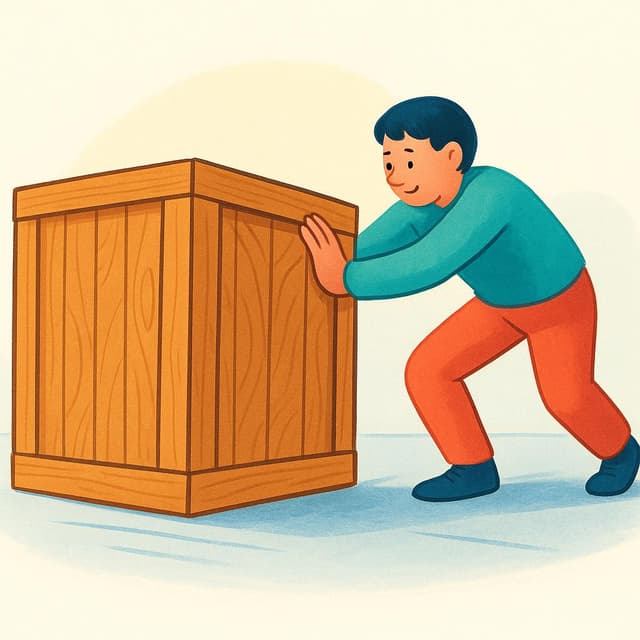
empujar — to push
Present subjunctive of empujar (empuje, empujes, empuje, empujemos, empujen, empujéis) is used for wishes, doubts, and emotions.
empujar Present Subjunctive Forms
When to Use the Present Subjunctive
Use the present subjunctive after expressions of desire, doubt, emotion, or uncertainty. For 'empujar', you might say 'Espero que empujes la puerta' (I hope you push the door) or 'Dudo que empujen el mueble' (I doubt they will push the furniture).
Notes on empujar in the Present Subjunctive
Empujar is regular in the present subjunctive. It follows the pattern of the 'yo' form of the present indicative (empujo), dropping the -o and adding the opposite vowel endings (-e for -ar verbs).
Example Sentences
Espero que empujes la puerta con cuidado.
I hope you push the door carefully.
tú
Quiero que usted empuje el carro hacia la rampa.
I want you to push the cart towards the ramp.
Sugiero que empujemos el sofá para limpiar.
I suggest we push the sofa to clean.
nosotros
No creo que ellos empujen la roca.
I don't think they will push the rock.
ellos/ellas/ustedes
Es importante que vosotros empujéis la carretilla.
It's important that you (plural, informal) push the wheelbarrow.
vosotros
Common Mistakes
Mistake: Using the present indicative instead of the present subjunctive.
Correct: Use 'Espero que empujes' not 'Espero que empujas'.
Why: Expressions of hope, doubt, and emotion trigger the subjunctive mood.
Mistake: Forgetting to change the ending for -ar verbs.
Correct: The endings are -e, -es, -e, -emos, -en, -éis. For empujar: empuje, empujes, empuje, empujemos, empujen, empujéis.
Why: Present subjunctive endings for -ar verbs are -e, -es, -e, -emos, -en, -éis, not -a, -as, -a, -amos, -an, -áis.
Master Spanish verbs in context
Memorizing tables only gets you so far. Read 200+ illustrated and narrated Spanish stories to see verbs like 'empujar' used naturally — in the tenses you're learning.
Related Tenses
Present
yo: empujo
The present tense of empujar is regular: empujo, empujas, empuja, empujamos, empujáis, empujan.
Preterite
yo: empujé
The preterite of empujar is regular: empujé, empujaste, empujó, empujamos, empujasteis, empujaron.
Imperfect
yo: empujaba
The imperfect of empujar is regular: empujaba, empujabas, empujaba, empujábamos, empujabais, empujaban.
Future
yo: empujaré
The future tense of empujar is regular: empujaré, empujarás, empujará, empujaremos, empujaréis, empujarán.
Conditional
yo: empujaría
The conditional of empujar is regular: empujaría, empujarías, empujaría, empujaríamos, empujaríais, empujarían.
Imperfect Subjunctive
yo: empujara
The imperfect subjunctive of empujar (empujara/empujase) is used for past hypotheticals or wishes.
Affirmative Imperative
yo: empuja
Imperative commands for empujar: empuja (tú), empuje (usted), empujemos (nosotros), empujen (ustedes), empujad (vosotros).
Negative Imperative
yo: no empujes
Negative imperative for empujar: no empujes (tú), no empuje (usted), no empujemos (nosotros), no empujen (ustedes), no empujéis (vosotros).