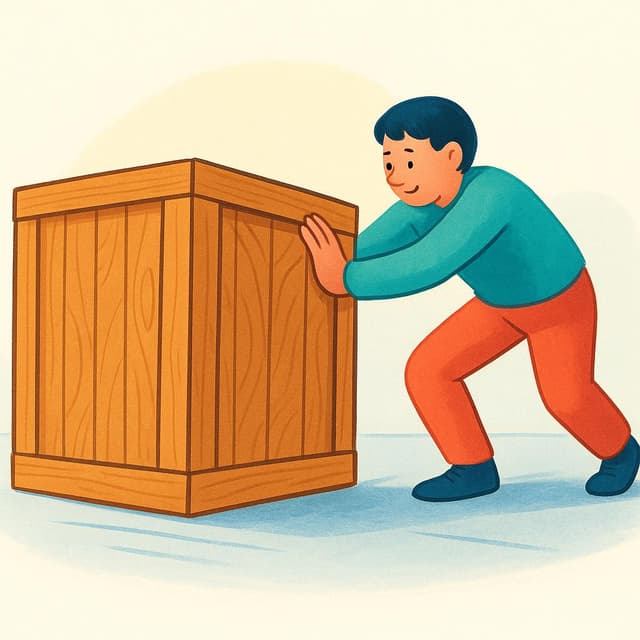
empujar Preterite Conjugation
empujar — to push
The preterite of empujar is regular: empujé, empujaste, empujó, empujamos, empujasteis, empujaron.
empujar Preterite Forms
When to Use the Preterite
Use the preterite for completed actions in the past. If you pushed a door at a specific moment and it's done, you use the preterite: 'Empujé la puerta' (I pushed the door). It emphasizes the action's completion.
Notes on empujar in the Preterite
Empujar is fully regular in the preterite. Note that the nosotros form 'empujamos' is identical to the present indicative; context will clarify which tense is meant.
Example Sentences
Ayer empujé la mesa para hacer sitio.
Yesterday I pushed the table to make space.
yo
¿Empujaste el botón correcto?
Did you push the correct button?
tú
Él empujó la puerta con todas sus fuerzas.
He pushed the door with all his might.
él/ella/usted
Los niños empujaron el columpio muy alto.
The children pushed the swing very high.
ellos/ellas/ustedes
Vosotros empujasteis el carro hasta la tienda.
You (plural, informal) pushed the cart to the store.
vosotros
Common Mistakes
Mistake: Using the imperfect tense for a single, completed push.
Correct: Use 'Empujé la puerta' (preterite) for a one-time push, not 'Empujaba la puerta' (imperfect).
Why: The preterite marks completed actions, while the imperfect describes ongoing or habitual past actions.
Mistake: Forgetting the accent on 'empujó' (él/ella/usted).
Correct: The third-person singular preterite is empujó, with an accent on the 'ó'.
Why: The accent distinguishes it from other forms and indicates the stressed syllable.
Master Spanish verbs in context
Memorizing tables only gets you so far. Read 200+ illustrated and narrated Spanish stories to see verbs like 'empujar' used naturally — in the tenses you're learning.
Related Tenses
Present
yo: empujo
The present tense of empujar is regular: empujo, empujas, empuja, empujamos, empujáis, empujan.
Imperfect
yo: empujaba
The imperfect of empujar is regular: empujaba, empujabas, empujaba, empujábamos, empujabais, empujaban.
Future
yo: empujaré
The future tense of empujar is regular: empujaré, empujarás, empujará, empujaremos, empujaréis, empujarán.
Conditional
yo: empujaría
The conditional of empujar is regular: empujaría, empujarías, empujaría, empujaríamos, empujaríais, empujarían.
Present Subjunctive
yo: empuje
Present subjunctive of empujar (empuje, empujes, empuje, empujemos, empujen, empujéis) is used for wishes, doubts, and emotions.
Imperfect Subjunctive
yo: empujara
The imperfect subjunctive of empujar (empujara/empujase) is used for past hypotheticals or wishes.
Affirmative Imperative
yo: empuja
Imperative commands for empujar: empuja (tú), empuje (usted), empujemos (nosotros), empujen (ustedes), empujad (vosotros).
Negative Imperative
yo: no empujes
Negative imperative for empujar: no empujes (tú), no empuje (usted), no empujemos (nosotros), no empujen (ustedes), no empujéis (vosotros).