enfadar Future Conjugation
enfadar — to anger
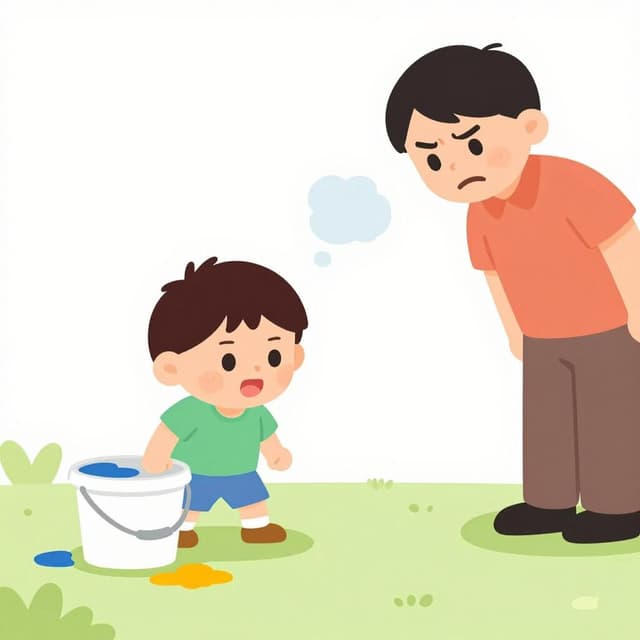
The future tense of enfadar (enfadaré, enfadarás, enfadará, etc.) predicts or assumes someone will get angry.
enfadar Future Forms
When to Use the Future
Use the future tense of 'enfadar' to talk about when someone *will* get angry in the future. It can also express probability or conjecture about the present, like 'He's probably getting angry now'.
Notes on enfadar in the Future
Enfadar is regular in the future tense. The future stem is the infinitive 'enfadar', and the standard future endings are added.
Example Sentences
Si sigues así, te enfadarás.
If you continue like this, you will get angry.
tú
No creo que se enfade por eso.
I don't think he will get angry about that.
él/ella/usted
Mañana nos enfadaremos si no nos ayudan.
Tomorrow we will get angry if they don't help us.
nosotros
¿Se enfadarán si llegamos tarde?
Will they get angry if we arrive late?
ellos/ellas/ustedes
Common Mistakes
Mistake: Using the present tense instead of the future for predictions.
Correct: Use 'Se enfadará mañana' (He will get angry tomorrow), not 'Se enfada mañana'.
Why: The future tense is used for actions that will happen in the future.
Mistake: Forgetting the reflexive pronoun with 'enfadarse'.
Correct: Use 'Te enfadarás' (You will get angry), not 'Enfadarás'.
Why: 'Enfadarse' is reflexive and needs the pronoun 'te' for the 'tú' form.
Master Spanish verbs in context
Memorizing tables only gets you so far. Read 200+ illustrated and narrated Spanish stories to see verbs like 'enfadar' used naturally — in the tenses you're learning.
Related Tenses
Present
yo: enfado
The present tense of enfadar (enfado, enfadas, enfada, etc.) describes current states or habitual actions of getting angry.
Preterite
yo: enfadé
The preterite of enfadar is regular: enfadé, enfadaste, enfadó, enfadamos, enfadasteis, enfadaron, used for completed past actions.
Imperfect
yo: enfadaba
The imperfect of enfadar (enfadaba, enfadabas, enfadaba, etc.) describes ongoing or habitual past anger.
Conditional
yo: enfadaría
The conditional of enfadar (enfadaría, enfadarías, enfadaría, etc.) expresses hypothetical anger or polite suggestions.
Present Subjunctive
yo: enfade
The present subjunctive of enfadar (enfade, enfades, enfade, etc.) is used after expressions of doubt, emotion, or desire.
Imperfect Subjunctive
yo: enfadara
The imperfect subjunctive of enfadar, like 'enfadara' or 'enfadase', is used for past hypotheticals or wishes.
Affirmative Imperative
yo: enfada
Use the imperative of enfadar for direct commands like 'enfada' (you singular, informal) or 'enfaden' (you plural).
Negative Imperative
yo: enfades
Negative commands for enfadar use the present subjunctive: 'no enfades' (you singular, informal), 'no enfaden' (you plural).