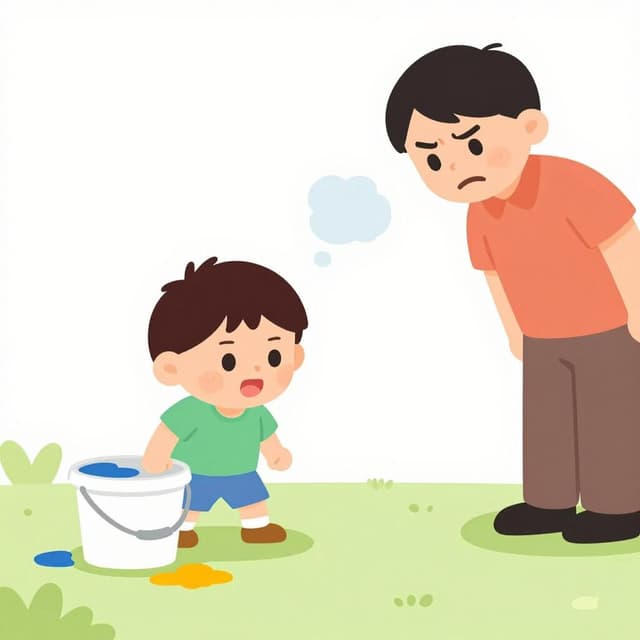
enfadar Imperfect Conjugation
enfadar — to anger
The imperfect of enfadar (enfadaba, enfadabas, enfadaba, etc.) describes ongoing or habitual past anger.
enfadar Imperfect Forms
When to Use the Imperfect
Use the imperfect tense of 'enfadar' to describe past situations where someone was habitually getting angry, or was in the process of getting angry as background description. It sets the scene or describes a state of being angry over a period of time in the past.
Notes on enfadar in the Imperfect
Enfadar is regular in the imperfect tense. All forms are conjugated according to the standard -ar verb pattern.
Example Sentences
Cuando era niño, me enfadaba muy a menudo.
When I was a child, I used to get angry very often.
yo
Tú te enfadabas por cualquier cosa.
You used to get angry over anything.
tú
Ella se enfadaba mientras esperaba.
She was getting angry while she waited.
él/ella/usted
Ellos se enfadaban cada vez que discutían.
They used to get angry every time they argued.
ellos/ellas/ustedes
Common Mistakes
Mistake: Using the preterite instead of the imperfect for habitual past actions.
Correct: Use 'Me enfadaba' (I used to get angry) for a repeated action, not 'Me enfadé'.
Why: The imperfect describes habitual or ongoing actions in the past, while the preterite describes completed, single events.
Mistake: Confusing the imperfect and preterite for descriptions.
Correct: Use 'Ella se enfadaba' (She was getting angry) to describe the background situation, not 'Ella se enfadó'.
Why: The imperfect is used for setting the scene or describing states in the past, whereas the preterite is for specific actions.
Master Spanish verbs in context
Memorizing tables only gets you so far. Read 200+ illustrated and narrated Spanish stories to see verbs like 'enfadar' used naturally — in the tenses you're learning.
Related Tenses
Present
yo: enfado
The present tense of enfadar (enfado, enfadas, enfada, etc.) describes current states or habitual actions of getting angry.
Preterite
yo: enfadé
The preterite of enfadar is regular: enfadé, enfadaste, enfadó, enfadamos, enfadasteis, enfadaron, used for completed past actions.
Future
yo: enfadaré
The future tense of enfadar (enfadaré, enfadarás, enfadará, etc.) predicts or assumes someone will get angry.
Conditional
yo: enfadaría
The conditional of enfadar (enfadaría, enfadarías, enfadaría, etc.) expresses hypothetical anger or polite suggestions.
Present Subjunctive
yo: enfade
The present subjunctive of enfadar (enfade, enfades, enfade, etc.) is used after expressions of doubt, emotion, or desire.
Imperfect Subjunctive
yo: enfadara
The imperfect subjunctive of enfadar, like 'enfadara' or 'enfadase', is used for past hypotheticals or wishes.
Affirmative Imperative
yo: enfada
Use the imperative of enfadar for direct commands like 'enfada' (you singular, informal) or 'enfaden' (you plural).
Negative Imperative
yo: enfades
Negative commands for enfadar use the present subjunctive: 'no enfades' (you singular, informal), 'no enfaden' (you plural).