envenenar Conditional Conjugation
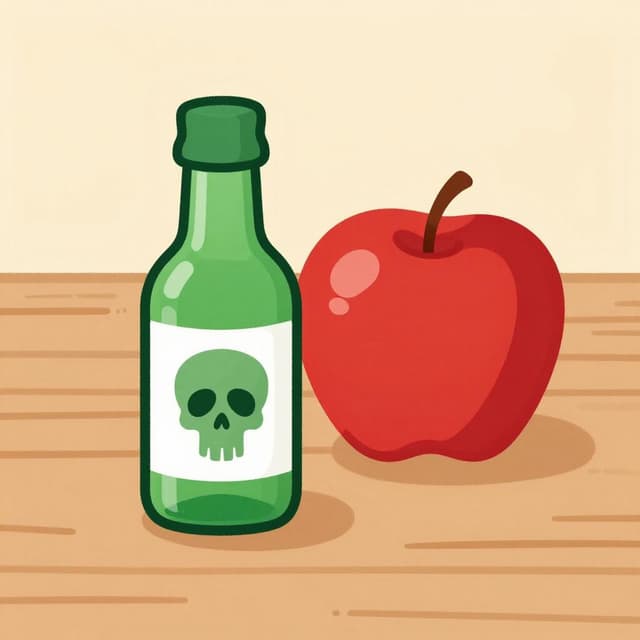
envenenar — to poison
The conditional of envenenar (envenenaría, envenenarías...) expresses 'would' actions, politeness, or future-in-the-past.
envenenar Conditional Forms
When to Use the Conditional
Use the conditional of 'envenenar' to talk about what you or someone else 'would' do, often in hypothetical situations ('I would poison it if...'). It's also used for polite requests or to express probability or conjecture about the past ('He probably poisoned it.').
Notes on envenenar in the Conditional
Envenenar is regular in the conditional tense. The stem is the infinitive ('envenenar'), and the endings are the standard conditional endings (-ía, -ías, -ía, -íamos, -íais, -ían).
Example Sentences
Yo envenenaría la planta si estuviera enferma.
I would poison the plant if it were sick.
yo
¿Tú envenenarías a tu peor enemigo?
Would you poison your worst enemy?
tú
Ella envenenaría la fiesta con sus comentarios negativos.
She would poison the party with her negative comments.
él/ella/usted
Nosotros no envenenaríamos a nadie.
We would not poison anyone.
nosotros
Ellos envenenarían la competencia si tuvieran la oportunidad.
They would poison the competition if they had the opportunity.
ellos/ellas/ustedes
Common Mistakes
Mistake: Using the imperfect subjunctive ('envenenara') instead of the conditional ('envenenaría') for 'would' statements.
Correct: Use the conditional for hypothetical 'would' actions: 'Yo envenenaría'.
Why: The conditional expresses what *would* happen under certain conditions, while the imperfect subjunctive is used in clauses often starting with 'si' (if) to set up that condition or express past hypotheticals.
Mistake: Confusing the conditional endings with the imperfect endings.
Correct: Conditional endings are '-ía', '-ías', etc., while imperfect endings are '-aba', '-abas', etc.
Why: These are distinct sets of endings that indicate different tenses and moods.
Master Spanish verbs in context
Memorizing tables only gets you so far. Read 200+ illustrated and narrated Spanish stories to see verbs like 'envenenar' used naturally — in the tenses you're learning.
Related Tenses
Present
yo: enveneno
The present tense of envenenar (enveneno, envenenas, envenena...) describes habitual actions or things happening now.
Preterite
yo: envenené
The preterite of envenenar is regular: envenené, envenenaste, envenenó, envenenamos, envenenasteis, envenenaron.
Imperfect
yo: envenenaba
The imperfect of envenenar (envenenaba, envenenabas...) describes ongoing or habitual past actions.
Future
yo: envenenaré
The future tense of envenenar (envenenaré, envenenarás...) indicates actions that will happen.
Present Subjunctive
yo: envenene
The present subjunctive of envenenar (envenene, envenenes, etc.) is used after expressions of doubt, desire, emotion, and uncertainty.
Imperfect Subjunctive
yo: envenenara
The imperfect subjunctive of envenenar (envenenara/envenenase) is used for past hypotheticals, wishes, or doubts.
Affirmative Imperative
yo: envenena
The imperative of envenenar uses regular -ar endings: envenena (tú), envenene (usted), envenenemos (nosotros), envenenen (ustedes), envenenad (vosotros).
Negative Imperative
yo: no envenenes
Negative commands for envenenar use 'no' + present subjunctive: no envenenes (tú), no envenene (usted), no envenenemos (nosotros), no envenenen (ustedes), no envenenéis (vosotros).