escupir Conditional Conjugation
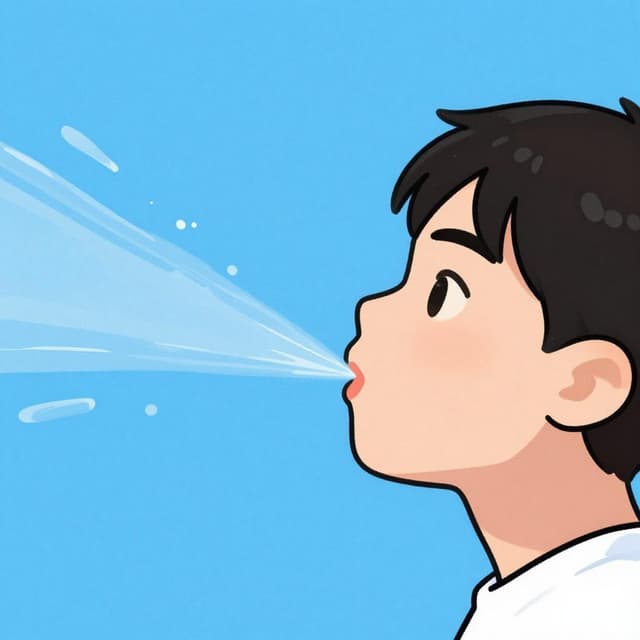
escupir — to spit
The conditional of escupir (escupiría, escupirías, etc.) is used for hypotheticals ('would'), polite requests, and future-in-the-past.
escupir Conditional Forms
When to Use the Conditional
Use the conditional for what *would* happen in a certain situation ('If I had a cough drop, I would spit it out'), for polite requests ('Would you spit that out, please?'), or to describe a future action from a past perspective ('He said he would spit it out later').
Notes on escupir in the Conditional
Escupir is regular in the conditional tense. The stem is the full infinitive 'escupir', and the endings are standard.
Example Sentences
Yo escupiría las semillas si no me gustaran.
I would spit out the seeds if I didn't like them.
yo
¿Tú escupirías eso?
Would you spit that out?
tú
Él escupiría el veneno si pudiera.
He would spit out the poison if he could.
él/ella/usted
Nosotros escupiríamos la cena si estuviera mala.
We would spit out the dinner if it were bad.
nosotros
Ellos escupirían si les dieras algo malo.
They would spit if you gave them something bad.
ellos/ellas/ustedes
Common Mistakes
Mistake: Confusing conditional 'escupiría' with imperfect 'escupía'.
Correct: Remember the extra 'i' in the conditional: 'escupiría' (I would spit) vs. 'escupía' (I used to spit).
Why: The conditional indicates hypothetical actions, while the imperfect describes past habits or ongoing actions.
Mistake: Using the simple future ('escupiré') instead of conditional.
Correct: For hypotheticals ('would'), use the conditional: 'escupiría'.
Why: The future tense states what *will* happen, while the conditional describes what *would* happen under certain conditions.
Master Spanish verbs in context
Memorizing tables only gets you so far. Read 200+ illustrated and narrated Spanish stories to see verbs like 'escupir' used naturally — in the tenses you're learning.
Related Tenses
Present
yo: escupo
The present tense of escupir (escupo, escupes, escupe, etc.) describes habitual actions, things happening now, or general truths about spitting.
Preterite
yo: escupí
The preterite of escupir (escupí, escupiste, escupió, etc.) describes completed actions of spitting in the past.
Imperfect
yo: escupía
The imperfect of escupir (escupía, escupías, etc.) describes ongoing or habitual actions of spitting in the past.
Future
yo: escupiré
The future tense of escupir (escupiré, escupirás, etc.) indicates actions that will happen.
Present Subjunctive
yo: escupa
The present subjunctive of escupir (esculpa, escupas, etc.) is used after expressions of doubt, desire, emotion, or uncertainty.
Imperfect Subjunctive
yo: escupiera
The imperfect subjunctive of escupir (escupiera/escupiese) is used for past hypotheticals, wishes, or softer commands.
Affirmative Imperative
yo: escupe
Use 'escupir' in the imperative for direct commands: escupe (tú), escupa (usted), escupamos (nosotros), escupan (ustedes), escupid (vosotros).
Negative Imperative
yo: no escupas
Negative commands for 'escupir' use the present subjunctive: no escupas (tú), no escupa (usted), no escupamos (nosotros), no escupan (ustedes), no escupáis (vosotros).