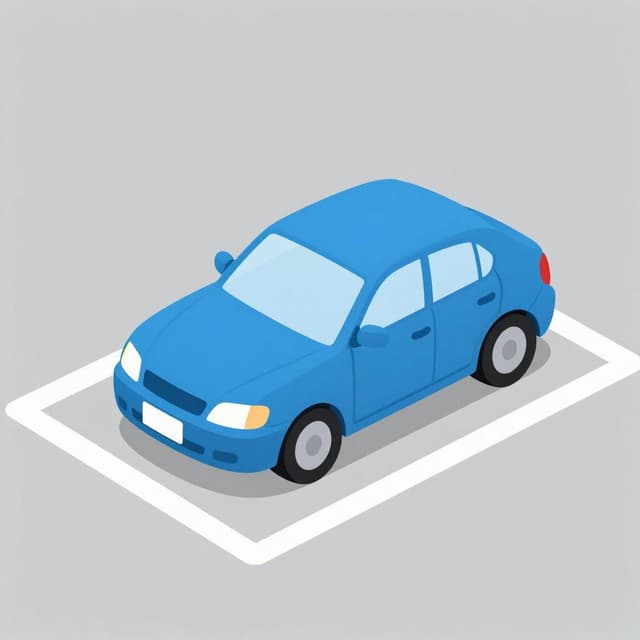
estacionar Imperfect Conjugation
estacionar — to park
Use 'estacionaba' (yo/él/ella/usted) and 'estacionabas' (tú) for ongoing or habitual past parking.
estacionar Imperfect Forms
When to Use the Imperfect
The imperfect is for describing actions that were happening over a period of time in the past, or actions that used to happen regularly. 'Cuando era niño, estacionaba mi bici aquí' (When I was a child, I used to park my bike here).
Notes on estacionar in the Imperfect
Estacionar is regular in the imperfect tense. The endings are standard for -ar verbs.
Example Sentences
Yo estacionaba el coche en ese lugar todos los días.
I used to park the car in that spot every day.
yo
Tú estacionabas cerca de la entrada.
You were parking near the entrance.
tú
Él estacionaba su moto aquí siempre.
He always parked his motorcycle here.
él/ella/usted
Nosotros estacionábamos en el parking público.
We used to park in the public parking lot.
nosotros
Ellos estacionaban a la vuelta de la esquina.
They were parking around the corner.
ellos/ellas/ustedes
Common Mistakes
Mistake: Using the preterite 'estacionó' instead of the imperfect 'estacionaba' for a habitual past action.
Correct: For habits like 'I used to park here', use the imperfect 'estacionaba'.
Why: The imperfect describes ongoing or repeated actions in the past, while the preterite describes single, completed events.
Mistake: Forgetting the double 'b' in forms like 'estacionábamos'.
Correct: The imperfect endings for -ar verbs always include a double 'b' (e.g., estacionábamos, estacionabais).
Why: This is a consistent feature of the imperfect tense for -ar verbs.
Master Spanish verbs in context
Memorizing tables only gets you so far. Read 200+ illustrated and narrated Spanish stories to see verbs like 'estacionar' used naturally — in the tenses you're learning.
Related Tenses
Present
yo: estaciono
Use 'estaciono' (yo), 'estacionas' (tú), 'estaciona' (él/ella/usted) for current or habitual parking actions.
Preterite
yo: estacioné
Use 'estacioné' (yo), 'estacionaste' (tú), 'estacionó' (él/ella/usted) for completed past parking actions.
Future
yo: estacionaré
Use 'estacionaré' (yo), 'estacionarás' (tú), 'estacionará' (él/ella/usted) for future parking actions.
Conditional
yo: estacionaría
Use 'estacionaría' (yo/él/ella/usted) and 'estacionarías' (tú) for hypothetical or polite parking scenarios.
Present Subjunctive
yo: estacione
Use 'estacione' (yo/usted) and 'estaciones' (tú) for wishes, doubts, or emotions about parking.
Imperfect Subjunctive
yo: estacionara
Use 'estacionara' or 'estacionase' for past hypothetical or uncertain situations about parking.
Affirmative Imperative
yo: estaciona
Use the imperative 'estaciona' (tú) and 'estacione' (usted) for direct commands to park.
Negative Imperative
yo: no estaciones
Use 'no estaciones' (tú) and 'no estacione' (usted) for negative commands not to park.