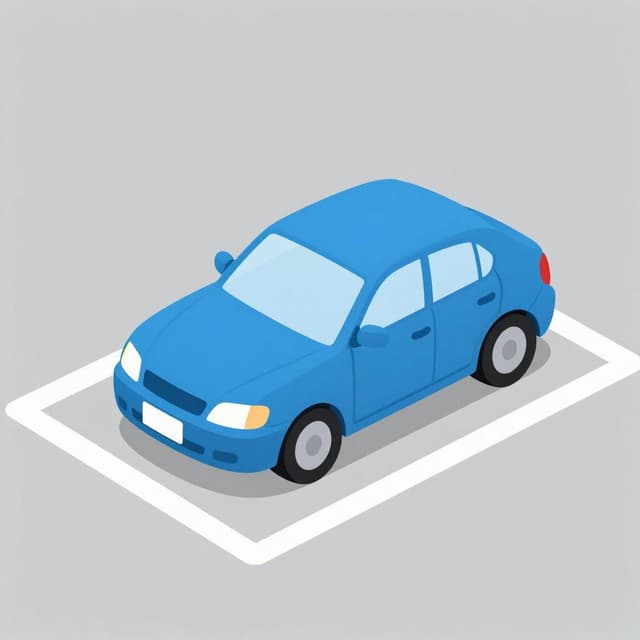
estacionar Present Subjunctive Conjugation
estacionar — to park
Use 'estacione' (yo/usted) and 'estaciones' (tú) for wishes, doubts, or emotions about parking.
estacionar Present Subjunctive Forms
When to Use the Present Subjunctive
This tense is for expressing wishes, doubts, emotions, or making impersonal statements about parking. For example, 'Espero que estaciones bien' (I hope you park well) or 'Dudo que estacionen aquí' (I doubt they will park here).
Notes on estacionar in the Present Subjunctive
Estacionar is regular in the present subjunctive. The forms are derived from the 'yo' form of the present indicative ('estaciono').
Example Sentences
Espero que estaciones el coche pronto.
I hope you park the car soon.
tú
Quiero que usted estacione en ese lugar.
I want you to park in that spot.
Ojalá estacionemos en la sombra.
Hopefully, we will park in the shade.
nosotros
Es importante que ellos no estacionen donde está prohibido.
It's important that they don't park where it's forbidden.
ellos/ellas/ustedes
Common Mistakes
Mistake: Using the present indicative ('estacionas') instead of the present subjunctive ('estaciones') after 'espero que'.
Correct: After verbs of hope, doubt, or emotion, use the present subjunctive: 'Espero que estaciones'.
Why: The subjunctive mood is used to express subjectivity like hope or doubt, whereas the indicative states facts.
Mistake: Confusing the 'yo' and 'usted' forms ('estacione').
Correct: Remember that 'estacione' can be used for both 'yo' and 'usted' in the present subjunctive.
Why: This is a common pattern for regular -ar verbs where the first-person singular and third-person singular forms are identical in the present subjunctive.
Master Spanish verbs in context
Memorizing tables only gets you so far. Read 200+ illustrated and narrated Spanish stories to see verbs like 'estacionar' used naturally — in the tenses you're learning.
Related Tenses
Present
yo: estaciono
Use 'estaciono' (yo), 'estacionas' (tú), 'estaciona' (él/ella/usted) for current or habitual parking actions.
Preterite
yo: estacioné
Use 'estacioné' (yo), 'estacionaste' (tú), 'estacionó' (él/ella/usted) for completed past parking actions.
Imperfect
yo: estacionaba
Use 'estacionaba' (yo/él/ella/usted) and 'estacionabas' (tú) for ongoing or habitual past parking.
Future
yo: estacionaré
Use 'estacionaré' (yo), 'estacionarás' (tú), 'estacionará' (él/ella/usted) for future parking actions.
Conditional
yo: estacionaría
Use 'estacionaría' (yo/él/ella/usted) and 'estacionarías' (tú) for hypothetical or polite parking scenarios.
Imperfect Subjunctive
yo: estacionara
Use 'estacionara' or 'estacionase' for past hypothetical or uncertain situations about parking.
Affirmative Imperative
yo: estaciona
Use the imperative 'estaciona' (tú) and 'estacione' (usted) for direct commands to park.
Negative Imperative
yo: no estaciones
Use 'no estaciones' (tú) and 'no estacione' (usted) for negative commands not to park.