guardar Present Conjugation
guardar — to put away
Guardar is completely regular in the present: guardo, guardas, guarda, guardamos, guardáis, guardan.
guardar Present Forms
When to Use the Present
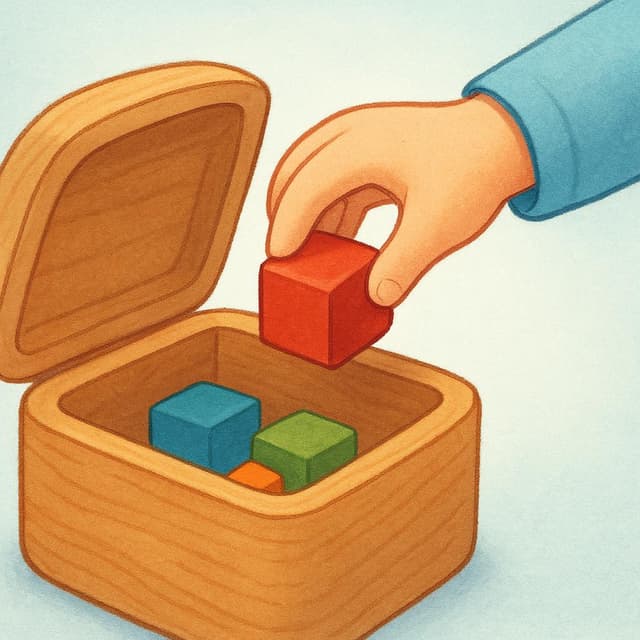
Use the present tense to talk about things you habitually put away, like groceries or toys. It also works for keeping secrets or saving files on a computer right now.
Notes on guardar in the Present
Guardar is a regular -ar verb in the present tense; it follows the standard pattern without any stem changes.
Example Sentences
Yo siempre guardo las llaves en el cajón.
I always put the keys in the drawer.
yo
¿Tú guardas el secreto?
Do you keep the secret?
tú
Nosotros guardamos los documentos en la carpeta.
We save the documents in the folder.
nosotros
Common Mistakes
Mistake: Using 'guardio' for the yo form.
Correct: guardo
Why: Learners sometimes try to add an extra 'i' thinking it's a stem-changer, but it is perfectly regular.
Master Spanish verbs in context
Memorizing tables only gets you so far. Read 200+ illustrated and narrated Spanish stories to see verbs like 'guardar' used naturally — in the tenses you're learning.
Related Tenses
Preterite
yo: guardé
The preterite of guardar is regular: guardé, guardaste, guardó, guardamos, guardasteis, guardaron.
Imperfect
yo: guardaba
In the imperfect, guardar uses standard -aba endings: guardaba, guardabas, guardaba, guardábamos, guardabais, guardaban.
Future
yo: guardaré
The future of guardar uses the infinitive as the stem: guardaré, guardarás, guardará, guardaremos, guardaréis, guardarán.
Conditional
yo: guardaría
The conditional of guardar adds -ía endings to the infinitive: guardaría, guardarías, guardaría, guardaríamos, guardaríais, guardarían.
Present Subjunctive
yo: guarde
The present subjunctive of guardar uses 'e' endings: guarde, guardes, guarde, guardemos, guardéis, guarden.
Imperfect Subjunctive
yo: guardara
The imperfect subjunctive of guardar is formed from the preterite 'ellos' form: guardara, guardaras, guardara, guardáramos, guardarais, guardaran.
Affirmative Imperative
yo: guarda
The imperative of guardar provides direct commands: guarda, guarde, guardemos, guardad, guarden.
Negative Imperative
yo: no guardes
The negative imperative of guardar uses present subjunctive forms: no guardes, no guarde, no guardemos, no guardéis, no guarden.