halar Present Subjunctive Conjugation
halar — to pull
Use present subjunctive like 'hale' after expressions of doubt, desire, or emotion.
halar Present Subjunctive Forms
When to Use the Present Subjunctive
This tense is used when expressing wishes, doubts, emotions, or uncertainty. For example, 'Espero que hale la puerta' (I hope he pulls the door) or 'Dudo que hales mucho' (I doubt you pull much).
Notes on halar in the Present Subjunctive
Halar is regular in the present subjunctive.
Example Sentences
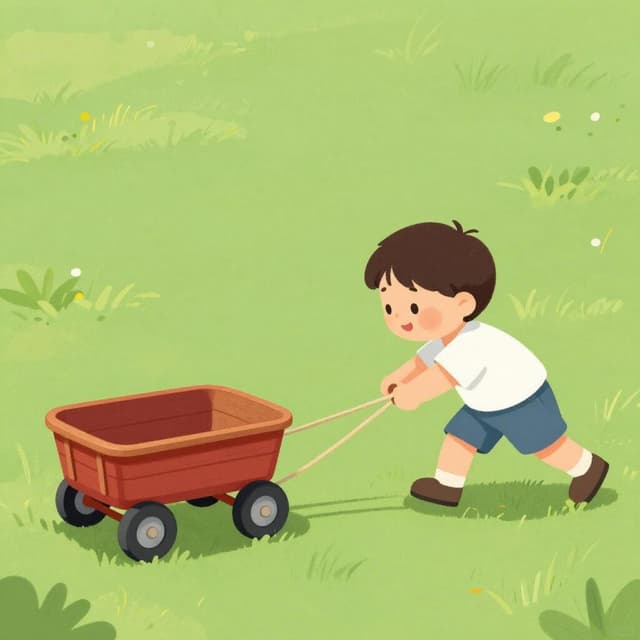
Espero que tú hales el carro con cuidado.
I hope you pull the cart carefully.
tú
Queremos que él hale más fuerte.
We want him to pull harder.
él/ella/usted
Dudo que nosotros halemos la cuerda a tiempo.
I doubt we will pull the rope on time.
nosotros
Me alegra que ustedes halen la carga.
I'm happy that you all pull the load.
ellos/ellas/ustedes
Common Mistakes
Mistake: Using the present indicative instead of the present subjunctive: 'Espero que hala'.
Correct: After expressions of hope or doubt, use the subjunctive: 'Espero que hale'.
Why: The subjunctive mood is required to express subjective states like hope or doubt.
Mistake: Confusing the 'yo/él/ella/usted' form 'hale' with the 'tú' form 'hales'.
Correct: Remember 'hale' is for third person singular (and yo), while 'hales' is for 'tú'.
Why: This is a common confusion with regular -ar verbs in the present subjunctive.
Master Spanish verbs in context
Memorizing tables only gets you so far. Read 200+ illustrated and narrated Spanish stories to see verbs like 'halar' used naturally — in the tenses you're learning.
Related Tenses
Present
yo: halo
Use present tense like 'halo' for actions happening now or habitual pulling.
Preterite
yo: halé
Use preterite like 'halé' for completed past actions of pulling.
Imperfect
yo: halaba
Use imperfect like 'halaba' for ongoing or habitual past actions of pulling.
Future
yo: halaré
Use future tense like 'halaré' for actions that will happen.
Conditional
yo: halaría
Use conditional like 'halaría' for hypothetical situations ('would pull').
Imperfect Subjunctive
yo: halara
Use imperfect subjunctive like 'halara' for past hypotheticals or wishes.
Affirmative Imperative
yo: hala
Use imperative forms like 'hala' (pull!) for direct commands.
Negative Imperative
yo: hales
Use negative commands like 'no hales' (don't pull) using the present subjunctive.