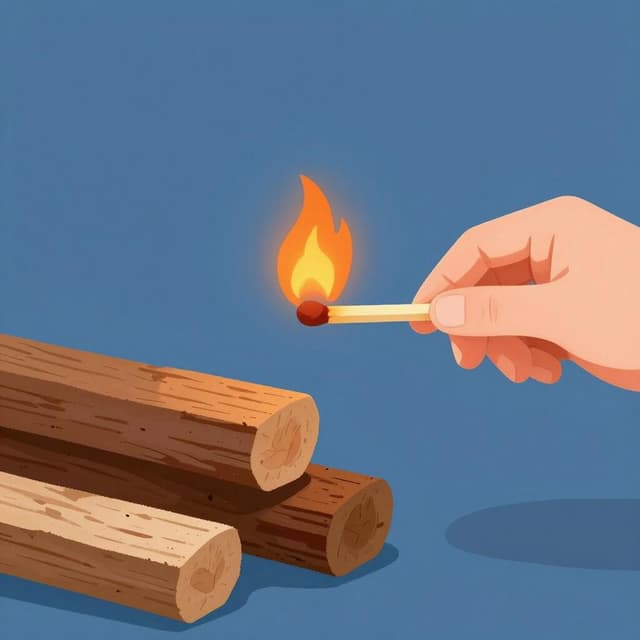
incendiar Imperfect Conjugation
incendiar — to set on fire
The imperfect ('incendiaba', 'incendiabas') describes ongoing or habitual past actions, like 'incendiaba la chimenea cada noche'.
incendiar Imperfect Forms
When to Use the Imperfect
Use the imperfect for ongoing actions in the past that set the scene, or for habitual actions. For example, 'Cuando era niño, incendiaba pequeños montones de hojas' (When I was a child, I used to burn small piles of leaves).
Notes on incendiar in the Imperfect
'Incendiar' is regular in the imperfect tense. All forms follow the standard pattern for -ar verbs.
Example Sentences
Yo incendiaba la leña en la chimenea todos los días.
I used to light the firewood in the fireplace every day.
yo
¿Tú incendiabas las velas cuando estudiabas?
Did you used to light candles when you studied?
tú
Él incendiaba la pira ritual cada año.
He used to light the ritual bonfire every year.
él/ella/usted
Ellos incendiaban los rastrojos después de la cosecha.
They used to burn the stubble after the harvest.
ellos/ellas/ustedes
Common Mistakes
Mistake: Using the preterite instead of the imperfect.
Correct: Use 'incendiaba' for a past habit, not 'incendió'.
Why: The imperfect is for ongoing or habitual past actions, whereas the preterite is for completed ones.
Mistake: Confusing the verb 'incendiar' with 'encender'.
Correct: 'Incendiar' means to set fire to something large-scale, while 'encender' is to light something smaller like a cigarette or lamp.
Why: These verbs are similar but have different scopes and connotations.
Master Spanish verbs in context
Memorizing tables only gets you so far. Read 200+ illustrated and narrated Spanish stories to see verbs like 'incendiar' used naturally — in the tenses you're learning.
Related Tenses
Present
yo: incendio
The present tense ('incendio', 'incendias') describes actions happening now or habitual actions.
Preterite
yo: incendié
The preterite of 'incendiar' is regular: incendié, incendiaste, incendió, incendiamos, incendiasteis, incendiaron.
Future
yo: incendiaré
The future tense ('incendiaré', 'incendiarás') indicates actions that will happen.
Conditional
yo: incendiaría
The conditional ('incendiaría', 'incendiarías') expresses hypotheticals ('would set fire') or polite requests.
Present Subjunctive
yo: incendie
The present subjunctive ('incendie', 'incendies', etc.) expresses wishes, doubts, or emotions about the present or future.
Imperfect Subjunctive
yo: incendiara
The imperfect subjunctive ('incendiara' or 'incendiase') talks about past hypotheticals or wishes.
Affirmative Imperative
yo: incendia
Commands like 'incendia tú' or 'incendien ustedes' are formed directly from the present subjunctive (except for tú).
Negative Imperative
yo: no incendies
Negative commands like 'no incendies' always use the present subjunctive forms.