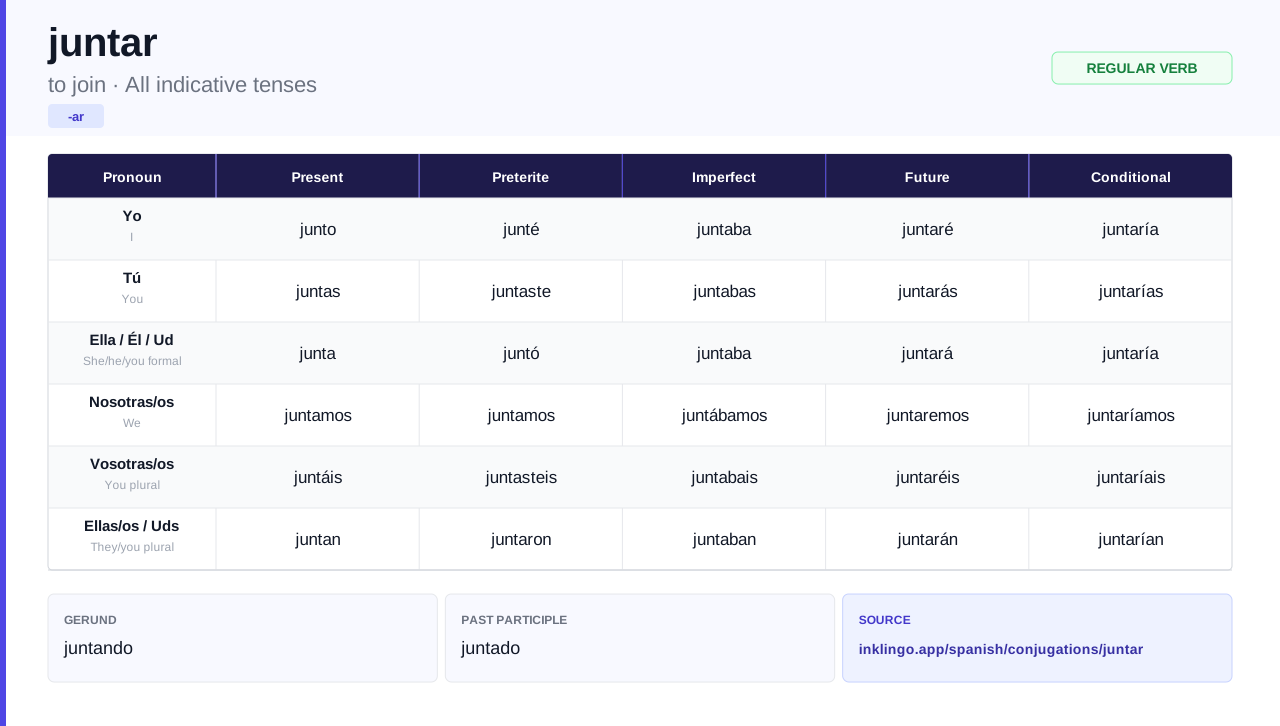
juntarConjugation
juntar means to join.
Complete Conjugation Tables
Reference all tenses and moods
Subjunctive
Imperfect Subjunctive
The imperfect subjunctive (-ra or -se form) expresses past wishes, doubts, or hypothetical situations, like 'si juntara' (if I joined).
Present Subjunctive
Use the present subjunctive after wishes, doubts, emotions, or uncertainty: 'junte' (yo/él/ella/usted), 'juntes' (tú), 'juntemos' (nosotros), 'juntéis' (vosotros), 'junten' (ellos/ellas/ustedes).
Imperative
Negative Imperative
Use 'no' + present subjunctive: 'no juntes' (tú), 'no junte' (usted), 'no juntemos' (nosotros), 'no junten' (ustedes), 'no juntéis' (vosotros).
Imperative
Make direct commands with 'junta' (tú), 'junte' (usted), 'juntemos' (nosotros), 'junten' (ustedes), 'juntad' (vosotros).
Indicative
Conditional
The conditional of 'juntar' is regular: juntaría, juntarías, juntaría, juntaríamos, juntaríais, juntarían. Use for 'would' or polite requests.
Preterite
Juntar is regular in the preterite: junté, juntaste, juntó, juntamos, juntasteis, juntaron. Use for completed actions.
Imperfect
Juntar is regular in the imperfect: juntaba, juntabas, juntaba, juntábamos, juntabais, juntaban. Use for ongoing/habitual past actions.
Present
Juntar is regular in the present: junto, juntas, junta, juntamos, juntáis, juntan. Use for now, habits, truths.
Future
The future of 'juntar' is regular: juntaré, juntarás, juntará, juntaremos, juntaréis, juntarán. Used for future actions or probability.
Practice Conjugations
Test your knowledge with interactive exercises
Take juntar from tables to real Spanish
Conjugation tables are the start. Read 200+ illustrated and narrated Spanish stories to see 'juntar' in action across real sentences — and build the instinct that native speakers have.
Frequently Asked Questions
What does juntar mean in Spanish?
juntar means "to join".
Is juntar a regular or irregular verb?
juntar is a regular -ar verb in Spanish.
How do you conjugate juntar in the present tense?
The present tense of juntar is: yo junto, tú juntas, él/ella/usted junta, nosotros juntamos, vosotros juntáis, ellos/ellas/ustedes juntan.
How do you conjugate juntar in the preterite (past tense)?
The preterite of juntar is: yo junté, tú juntaste, él/ella/usted juntó, nosotros juntamos, vosotros juntasteis, ellos/ellas/ustedes juntaron.
juntar conjugation cheat sheet