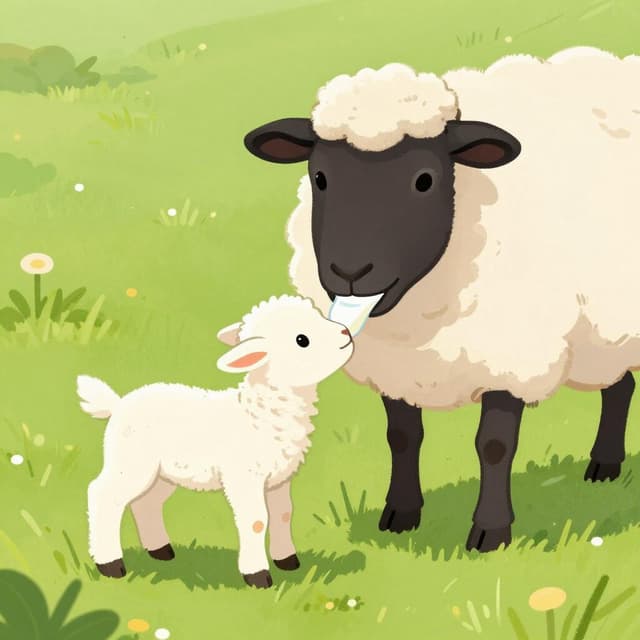
mamar Future Conjugation
mamar — to suckle
The future tense of 'mamar' (mamaré, mamarás, mamará, etc.) indicates actions that will happen.
mamar Future Forms
When to Use the Future
Use the future tense of 'mamar' to talk about something that will happen in the future. It can also express probability. For example, 'El bebé mamará más tarde' (The baby will suckle later).
Notes on mamar in the Future
'Mamar' is regular in the future tense; the stem is the infinitive 'mamar'.
Example Sentences
El bebé mamará pronto.
The baby will suckle soon.
él/ella/usted
¿Tú mamarás con biberón?
Will you suckle with a bottle?
tú
Mañana mamaremos en casa.
Tomorrow we will suckle at home.
nosotros
Ellos mamarán después de la siesta.
They will suckle after the nap.
ellos/ellas/ustedes
Common Mistakes
Mistake: Using the present tense when referring to a future action.
Correct: For future events, use the future tense: 'mamará', 'mamarán'. The present tense usually refers to actions happening now or habitually.
Why: Spanish has distinct tenses for present and future actions.
Master Spanish verbs in context
Memorizing tables only gets you so far. Read 200+ illustrated and narrated Spanish stories to see verbs like 'mamar' used naturally — in the tenses you're learning.
Related Tenses
Present
yo: mamo
The present tense of 'mamar' (mamo, mamas, mama, mamamos, mamáis, maman) describes habitual or ongoing suckling.
Preterite
yo: mamé
The preterite of 'mamar' (mamé, mamaste, mamó, mamamos, mamasteis, mamaron) describes completed actions of suckling.
Imperfect
yo: mamaba
The imperfect of 'mamar' (mamaba, mamabas, mamaba, mamábamos, mamabais, mamaban) describes ongoing or habitual suckling in the past.
Conditional
yo: mamaría
The conditional of 'mamar' (mamaría, mamarías, mamaría, etc.) expresses hypothetical actions ('would suckle') or polite requests.
Present Subjunctive
yo: mame
The present subjunctive of 'mamar' (e.g., 'mame', 'mames', 'mamen') expresses wishes, doubts, or emotions.
Imperfect Subjunctive
yo: mamara
The imperfect subjunctive of 'mamar' (e.g., 'mamara', 'mamaras') is used for hypothetical past situations or wishes.
Affirmative Imperative
yo: mama
Use imperative forms like 'mama' (tú) and 'mamen' (ustedes) for direct commands with 'mamar'.
Negative Imperative
yo: no mames
Negative commands for 'mamar' use 'no' plus present subjunctive forms, like 'no mames' (tú) or 'no mamen' (ustedes).