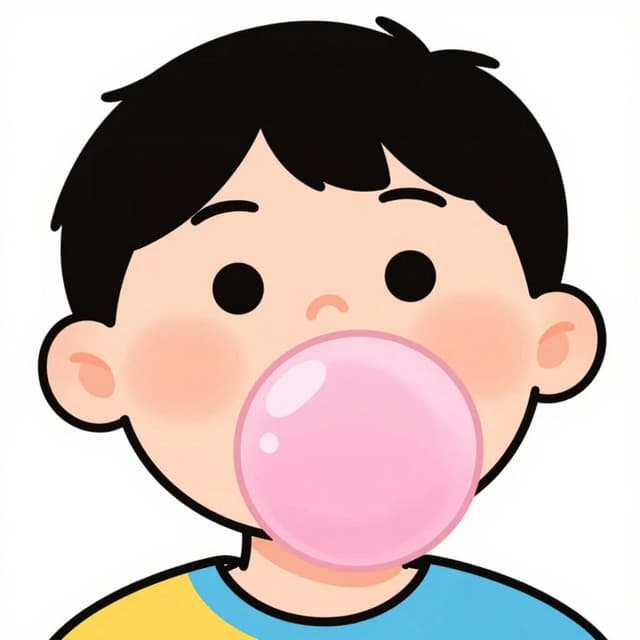
mascar Preterite Conjugation
mascar — to chew
The preterite of mascar is regular except for the 'yo' form spelling change: masqué.
mascar Preterite Forms
When to Use the Preterite
Use the preterite for a completed action of chewing at a specific point in time, like 'I chewed the gum for five minutes'.
Notes on mascar in the Preterite
Only the 'yo' form changes (c to qu) to preserve the 'k' sound: masqué. All other forms (mascaste, mascó, etc.) are regular.
Example Sentences
Masqué chicle por dos horas.
I chewed gum for two hours.
yo
Él mascó la carne con dificultad.
He chewed the meat with difficulty.
él/ella/usted
Mascamos las hojas de coca en la montaña.
We chewed the coca leaves on the mountain.
nosotros
Common Mistakes
Mistake: mascé
Correct: masqué
Why: In Spanish, 'ce' sounds like 'se'. To keep the 'k' sound from 'mascar', you must use 'qué'.
Master Spanish verbs in context
Memorizing tables only gets you so far. Read 200+ illustrated and narrated Spanish stories to see verbs like 'mascar' used naturally — in the tenses you're learning.
Related Tenses
Present
yo: masco
The present tense of mascar is completely regular: masco, mascas, masca, mascamos, mascáis, mascan.
Imperfect
yo: mascaba
The imperfect of mascar is regular: mascaba, mascabas, mascaba, mascábamos, mascabais, mascaban.
Future
yo: mascaré
The future of mascar is regular: mascaré, mascarás, mascará, mascaremos, mascaréis, mascarán.
Conditional
yo: mascaría
The conditional of mascar is regular: mascaría, mascarías, mascaría, mascaríamos, mascaríais, mascarían.
Present Subjunctive
yo: masque
The present subjunctive of mascar requires a c-to-qu spelling change: masque, masques, masque, masquemos, masquéis, masquen.
Imperfect Subjunctive
yo: mascara
The imperfect subjunctive is formed from the third-person plural preterite: mascara, mascaras, mascara, mascáramos, mascarais, mascaran.
Affirmative Imperative
yo: masca
The affirmative imperative of mascar uses 'masca' for tú and 'masque' for usted.
Negative Imperative
yo: no masques
The negative imperative of mascar always uses the 'qu' spelling change: no masques, no masque, no masquemos, no masquéis, no masquen.