merodear Future Conjugation
merodear — to prowl
Use the future 'merodeará' (he/she will prowl) for actions that will happen.
merodear Future Forms
When to Use the Future
The future tense is used to talk about actions that are certain to happen in the future. It can also express probability or conjecture about a present situation, like guessing someone might be prowling.
Notes on merodear in the Future
'Merodear' is regular in the future indicative tense. The stem is the full infinitive 'merodear'.
Example Sentences
Si sigues así, merodearás por aquí mañana.
If you keep this up, you will prowl around here tomorrow.
tú
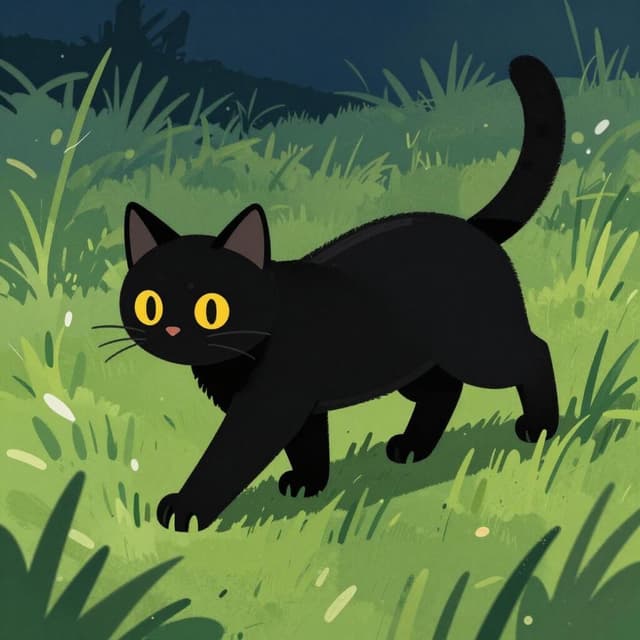
El gato merodeará alrededor de la casa cuando oscurezca.
The cat will prowl around the house when it gets dark.
él/ella/usted
Mañana por la noche merodearemos por el centro.
Tomorrow night we will prowl downtown.
nosotros
Seguro que merodearán cerca del parque esta noche.
They will surely be prowling near the park tonight.
ellos/ellas/ustedes
Common Mistakes
Mistake: Using the present tense instead of the future for a future action.
Correct: For 'He will prowl tomorrow', use 'Él merodeará mañana', not 'Él merodea mañana'.
Why: The present tense describes current actions, not future ones.
Mistake: Confusing future stem with infinitive.
Correct: The future stem for 'merodear' is 'merodear-', not just 'merode-'.
Why: Regular future stems are typically the infinitive itself for -ar and -er verbs.
Master Spanish verbs in context
Memorizing tables only gets you so far. Read 200+ illustrated and narrated Spanish stories to see verbs like 'merodear' used naturally — in the tenses you're learning.
Related Tenses
Present
yo: merodeo
Use the present 'merodea' (he/she prowls) for ongoing actions or habits.
Preterite
yo: merodeé
Use the preterite 'merodeó' (he/she/it prowled) for completed past actions of prowling.
Imperfect
yo: merodeaba
Use imperfect 'merodeaba' (he/she was prowling) for ongoing or habitual past actions.
Conditional
yo: merodearía
Use conditional 'merodearía' (he/she would prowl) for hypotheticals or polite requests.
Present Subjunctive
yo: merodee
Use present subjunctive like 'merodee' after expressions of doubt, desire, or emotion.
Imperfect Subjunctive
yo: merodeara
Use imperfect subjunctive like 'merodeara' or 'merodeara' for past hypotheticals or wishes.
Affirmative Imperative
yo: merodea
Use imperative forms like 'merodea' (tú) and 'merodeen' (ustedes) for direct commands.
Negative Imperative
yo: no merodees
Negative commands like 'no merodees' (tú) use the present subjunctive with 'no'.