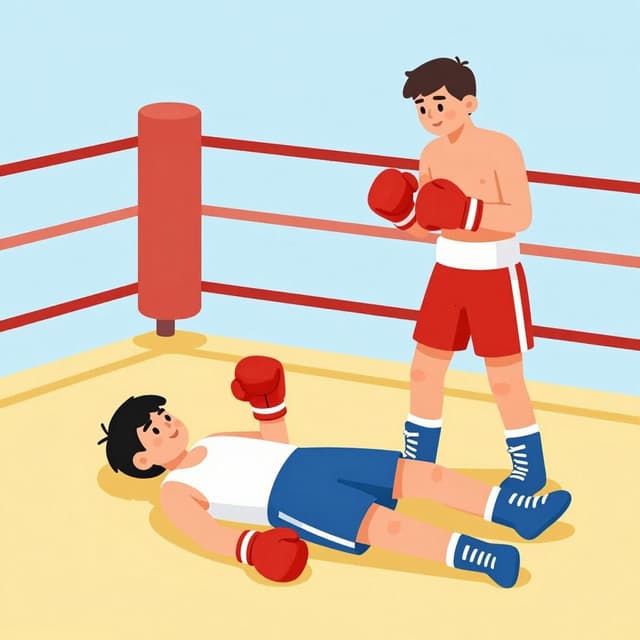
noquear Present Subjunctive Conjugation
noquear — to knock out
Use the present subjunctive of noquear after expressions of doubt, desire, or emotion, like 'Espero que noquees'.
noquear Present Subjunctive Forms
When to Use the Present Subjunctive
This tense is for when you want to express wishes, doubts, emotions, or uncertainty about something happening now or in the future. For example, 'I hope he knocks out the opponent' or 'It's unlikely they will knock out the champion'.
Notes on noquear in the Present Subjunctive
Noquear is regular in the present subjunctive. The stem changes slightly from the indicative: the 'yo' form of the present indicative ('noqueo') is used as the base, and then the opposite vowel endings (-e, -es, -e, -emos, -éis, -en) are added.
Example Sentences
Espero que tú noquees al luchador.
I hope you knock out the fighter.
tú
Quiero que él noquee al jefe final.
I want him to knock out the final boss.
él/ella/usted
Es importante que noqueemos rápido.
It's important that we knock out (quickly).
nosotros
Dudo que vosotros noqueéis el récord.
I doubt you all (Spain, informal) will knock out the record.
vosotros
No creo que ellos noqueen al campeón.
I don't think they will knock out the champion.
ellos/ellas/ustedes
Common Mistakes
Mistake: Using the present indicative instead of the present subjunctive.
Correct: Use 'noquees' after 'espero que', not 'noqueas'.
Why: Expressions of hope, doubt, and emotion require the subjunctive mood.
Mistake: Forgetting the stem change for the 'yo' form, leading to incorrect forms for others.
Correct: The base for the present subjunctive is derived from the 'yo' present indicative, 'noqueo'. The forms are 'noquee', 'noquees', etc.
Why: The subjunctive forms are based on the first-person singular present indicative, which may have stem changes that carry over.
Master Spanish verbs in context
Memorizing tables only gets you so far. Read 200+ illustrated and narrated Spanish stories to see verbs like 'noquear' used naturally — in the tenses you're learning.
Related Tenses
Present
yo: noqueo
The present tense of noquear is regular: noqueo, noqueas, noquea, noqueamos, noqueáis, noquean.
Preterite
yo: noqueé
The preterite of noquear is regular: noqueé, noqueaste, noqueó, noqueamos, noqueasteis, noquearon.
Imperfect
yo: noqueaba
The imperfect of noquear is regular: noqueaba, noqueabas, noqueaba, noqueábamos, noqueabais, noqueaban.
Future
yo: noquearé
The future tense of noquear is regular: noquearé, noquearás, noqueará, noquearemos, noquearéis, noquearán.
Conditional
yo: noquearía
The conditional of noquear is regular: noquearía, noquearías, noquearía, noquearíamos, noquearíais, noquearían.
Imperfect Subjunctive
yo: noqueara
Use the imperfect subjunctive of noquear for past hypotheticals or wishes, like 'si noqueara' or 'ojalá noqueara'.
Affirmative Imperative
yo: noquea
Use 'noquea', 'noquee', 'noqueemos', 'noquead', 'noqueen' for direct commands with noquear.
Negative Imperative
yo: no noquees
Use 'no noquees', 'no noquee', 'no noqueemos', 'no noqueéis', 'no noqueen' for negative commands.