ojalar Imperfect Conjugation
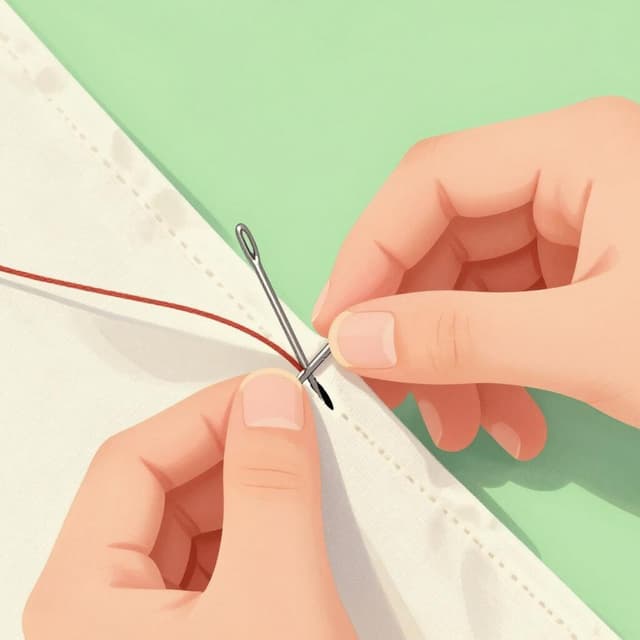
ojalar — to make buttonholes
The imperfect of ojalá is regular: ojalaba, ojalabas, ojalaba, ojalábamos, ojalabais, ojalaban.
ojalar Imperfect Forms
When to Use the Imperfect
Use the imperfect tense of 'ojalar' to describe ongoing actions, habitual actions, or background conditions in the past related to making buttonholes. For example, 'Cuando era niño, ojalaba todo a mano.' (When I was a child, I used to make all the buttonholes by hand.)
Notes on ojalar in the Imperfect
The verb 'ojalar' is regular in the imperfect tense.
Example Sentences
Yo ojalaba los ojales de las camisas de mi padre.
I used to make the buttonholes on my father's shirts.
yo
¿Tú ojalabas las prendas en tu antigua máquina de coser?
Did you used to make buttonholes on the garments on your old sewing machine?
tú
Ella ojalaba los botones mientras veía la televisión.
She was making the buttonholes while watching television.
él/ella/usted
Nosotros ojalábamos los uniformes escolares cada verano.
We used to make the buttonholes on the school uniforms every summer.
nosotros
Ellos ojalaban las cortinas para la casa nueva.
They were making the buttonholes for the curtains for the new house.
ellos/ellas/ustedes
Common Mistakes
Mistake: Using the preterite 'ojalé' instead of the imperfect 'ojalaba' for ongoing or habitual past actions.
Correct: For repeated actions like 'I used to make buttonholes', use the imperfect: 'Yo ojalaba'.
Why: The imperfect describes the background or continuity of actions in the past, not completed events.
Mistake: Confusing the imperfect 'ojalaba' (yo/él/ella/usted) with the preterite 'ojalaba' (nosotros).
Correct: The imperfect 'nosotros' form is 'ojalábamos'.
Why: The endings are different: -aba for singular and third person plural, and -ábamos for nosotros.
Master Spanish verbs in context
Memorizing tables only gets you so far. Read 200+ illustrated and narrated Spanish stories to see verbs like 'ojalar' used naturally — in the tenses you're learning.
Related Tenses
Present
yo: ojalo
The present indicative of ojalá is regular: ojalá, ojalas, ojala, ojalamos, ojaláis, ojalan.
Preterite
yo: ojalé
The preterite of ojalá is regular: ojalé, ojalaste, ojaló, ojalamos, ojalasteis, ojalaron.
Future
yo: ojalaré
The future of ojalá is regular: ojalare, ojalás, ojalá, ojalaremos, ojalaréis, ojalán.
Conditional
yo: ojalaría
The conditional of ojalá is regular: ojalaria, ojalarias, ojalaria, ojalariamos, ojalariais, ojalarian.
Present Subjunctive
yo: ojale
The present subjunctive of ojalá is regular: ojalé (yo/él/ella/usted), ojalemos (nosotros), ojalen (ellos/ellas/ustedes).
Imperfect Subjunctive
yo: ojalara
The imperfect subjunctive of ojalá uses the -ra or -se endings: ojalara (él/ella/usted), ojaláramos (nosotros), ojalaran (ellos/ellas/ustedes).
Affirmative Imperative
yo: ojala
The imperative of ojalá is regular: ojala (tú), ojale (usted), ojalemos (nosotros), ojalen (ustedes), ojalad (vosotros).
Negative Imperative
yo: no ojales
The negative imperative of ojalá uses the present subjunctive: no ojaláes (tú), no ojale (usted), no ojalemos (nosotros), no ojalen (ustedes), no ojaléis (vosotros).