ojalar Present Subjunctive Conjugation
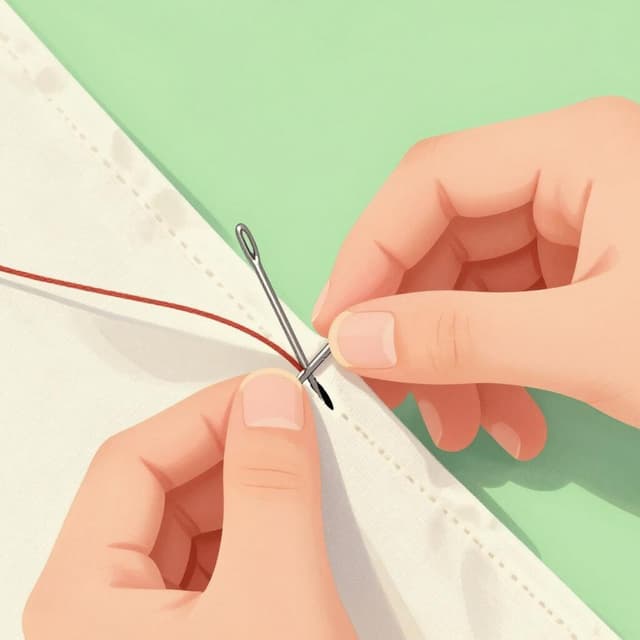
ojalar — to make buttonholes
The present subjunctive of ojalá is regular: ojalé (yo/él/ella/usted), ojalemos (nosotros), ojalen (ellos/ellas/ustedes).
ojalar Present Subjunctive Forms
When to Use the Present Subjunctive
Use the present subjunctive of 'ojalar' after expressions of wishing, hoping, doubting, or emotion, especially when you want someone else to perform the action. For example, 'Espero que ojalá bien la camisa.' (I hope you make the shirt's buttonholes well).
Notes on ojalar in the Present Subjunctive
The present subjunctive of 'ojalar' is regular for -ar verbs.
Example Sentences
Espero que ojalá bien los ojales.
I hope you make the buttonholes well.
tú
Dudo que ojalemos la tela correctamente.
I doubt we will make the fabric's buttonholes correctly.
nosotros
Quiero que usted ojale este patrón.
I want you to make the buttonholes on this pattern.
Es necesario que ellos ojalen los puños.
It is necessary that they make the buttonholes on the cuffs.
ellos/ellas/ustedes
Common Mistakes
Mistake: Using the present indicative ('ojalas') instead of the present subjunctive ('ojalás') after expressions of doubt or desire.
Correct: Use the subjunctive: 'Dudo que ojalás...' is wrong; it should be 'Dudo que ojalás...'.
Why: Expressions of doubt, desire, and emotion trigger the subjunctive mood.
Mistake: Forgetting the subjunctive 'e' ending for 'tú' (ojalás) and using the indicative 'as' ending (ojalas).
Correct: The 'tú' form is 'ojalás'.
Why: The present subjunctive for -ar verbs has 'e' endings for yo, tú, él/ella/usted, and 'en' for ellos/ellas/ustedes.
Master Spanish verbs in context
Memorizing tables only gets you so far. Read 200+ illustrated and narrated Spanish stories to see verbs like 'ojalar' used naturally — in the tenses you're learning.
Related Tenses
Present
yo: ojalo
The present indicative of ojalá is regular: ojalá, ojalas, ojala, ojalamos, ojaláis, ojalan.
Preterite
yo: ojalé
The preterite of ojalá is regular: ojalé, ojalaste, ojaló, ojalamos, ojalasteis, ojalaron.
Imperfect
yo: ojalaba
The imperfect of ojalá is regular: ojalaba, ojalabas, ojalaba, ojalábamos, ojalabais, ojalaban.
Future
yo: ojalaré
The future of ojalá is regular: ojalare, ojalás, ojalá, ojalaremos, ojalaréis, ojalán.
Conditional
yo: ojalaría
The conditional of ojalá is regular: ojalaria, ojalarias, ojalaria, ojalariamos, ojalariais, ojalarian.
Imperfect Subjunctive
yo: ojalara
The imperfect subjunctive of ojalá uses the -ra or -se endings: ojalara (él/ella/usted), ojaláramos (nosotros), ojalaran (ellos/ellas/ustedes).
Affirmative Imperative
yo: ojala
The imperative of ojalá is regular: ojala (tú), ojale (usted), ojalemos (nosotros), ojalen (ustedes), ojalad (vosotros).
Negative Imperative
yo: no ojales
The negative imperative of ojalá uses the present subjunctive: no ojaláes (tú), no ojale (usted), no ojalemos (nosotros), no ojalen (ustedes), no ojaléis (vosotros).