olerConjugation
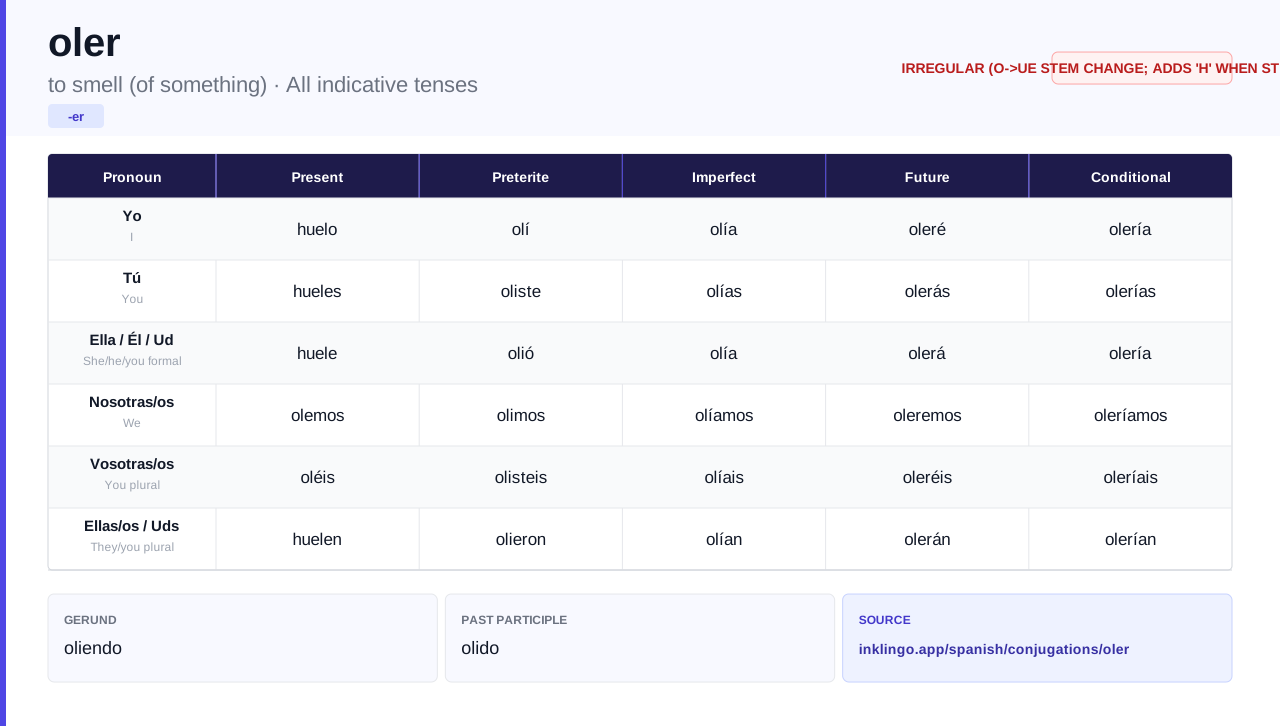
oler means to smell (of something).
Complete Conjugation Tables
Reference all tenses and moods
Indicative
Present
Oler is highly irregular in the present: huelo, hueles, huele, olemos, oléis, huelen.
Future
The future of oler is regular: oleré, olerás, olerá, oleremos, oleréis, olerán.
Imperfect
The imperfect of oler is regular: olía, olías, olía, olíamos, olíais, olían.
Conditional
The conditional of oler is regular: olería, olerías, olería, oleríamos, oleríais, olerían.
Preterite
The preterite of oler is regular: olí, oliste, olió, olimos, olisteis, olieron.
Imperative
Negative Imperative
The negative imperative uses the present subjunctive: no huelas, no huela, no olamos, no oláis, no huelan.
Imperative
Use the imperative to tell someone to smell something: huele, huela, olamos, oled, huelan.
Subjunctive
Present Subjunctive
The present subjunctive follows the present indicative's irregularities: huela, huelas, huela, olamos, oláis, huelan.
Imperfect Subjunctive
The imperfect subjunctive is regular based on the preterite stem: oliera, olieras, oliera, oliéramos, olierais, olieran.
Practice Conjugations
Test your knowledge with interactive exercises
Take oler from tables to real Spanish
Conjugation tables are the start. Read 200+ illustrated and narrated Spanish stories to see 'oler' in action across real sentences — and build the instinct that native speakers have.
Frequently Asked Questions
What does oler mean in Spanish?
oler means "to smell (of something)".
Is oler a regular or irregular verb?
oler is a irregular (o->ue stem change; adds 'h' when stressed) -er verb in Spanish.
How do you conjugate oler in the present tense?
The present tense of oler is: yo huelo, tú hueles, él/ella/usted huele, nosotros olemos, vosotros oléis, ellos/ellas/ustedes huelen.
How do you conjugate oler in the preterite (past tense)?
The preterite of oler is: yo olí, tú oliste, él/ella/usted olió, nosotros olimos, vosotros olisteis, ellos/ellas/ustedes olieron.
oler conjugation cheat sheet