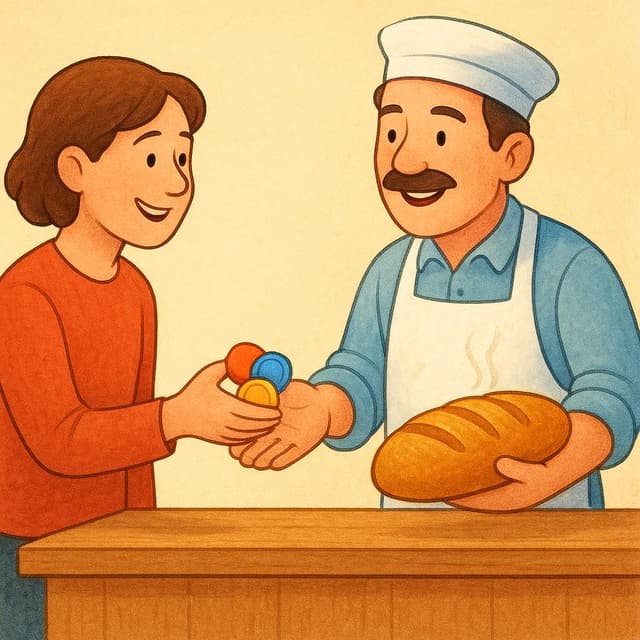
pagar Imperfect Conjugation
pagar — to pay
The imperfect of pagar is regular: pagaba, pagabas, pagaba, pagábamos, pagabais, pagaban.
pagar Imperfect Forms
When to Use the Imperfect
Use the imperfect to describe recurring payments in the past or to say 'I was paying' when something else happened.
Notes on pagar in the Imperfect
Pagar is a regular -ar verb in the imperfect. No spelling changes are needed here.
Example Sentences
Antes pagaba mucho menos por la luz.
I used to pay much less for electricity before.
yo
Nosotros pagábamos a plazos.
We were paying in installments.
nosotros
Ella pagaba mientras yo esperaba afuera.
She was paying while I was waiting outside.
él/ella/usted
Common Mistakes
Mistake: Forgetting the accent on 'pagábamos'.
Correct: pagábamos
Why: The 'nosotros' form of all -ar verbs in the imperfect always has an accent on the first 'a' of the ending.
Master Spanish verbs in context
Memorizing tables only gets you so far. Read 200+ illustrated and narrated Spanish stories to see verbs like 'pagar' used naturally — in the tenses you're learning.
Related Tenses
Present
yo: pago
Pagar is fully regular in the present tense: pago, pagas, paga, pagamos, pagáis, pagan.
Preterite
yo: pagué
The preterite of pagar has a spelling change in the first person (pagué) to keep the hard 'g' sound.
Future
yo: pagaré
The future of pagar is regular: add endings to the full infinitive (pagaré, pagarás, etc.).
Conditional
yo: pagaría
The conditional of pagar is regular: add -ía endings to the infinitive (pagaría, pagarías).
Present Subjunctive
yo: pague
The present subjunctive of pagar uses the 'gu' spelling change in all forms: pague, pagues, pague, etc.
Imperfect Subjunctive
yo: pagara
The imperfect subjunctive of pagar is regular: pagara, pagaras, pagara, pagáramos, pagarais, pagaran.
Affirmative Imperative
yo: paga
Use 'paga' for informal 'tú' and 'pague' for formal 'usted'.
Negative Imperative
yo: no pagues
The negative imperative always uses the present subjunctive: no pagues, no pague, no paguemos.