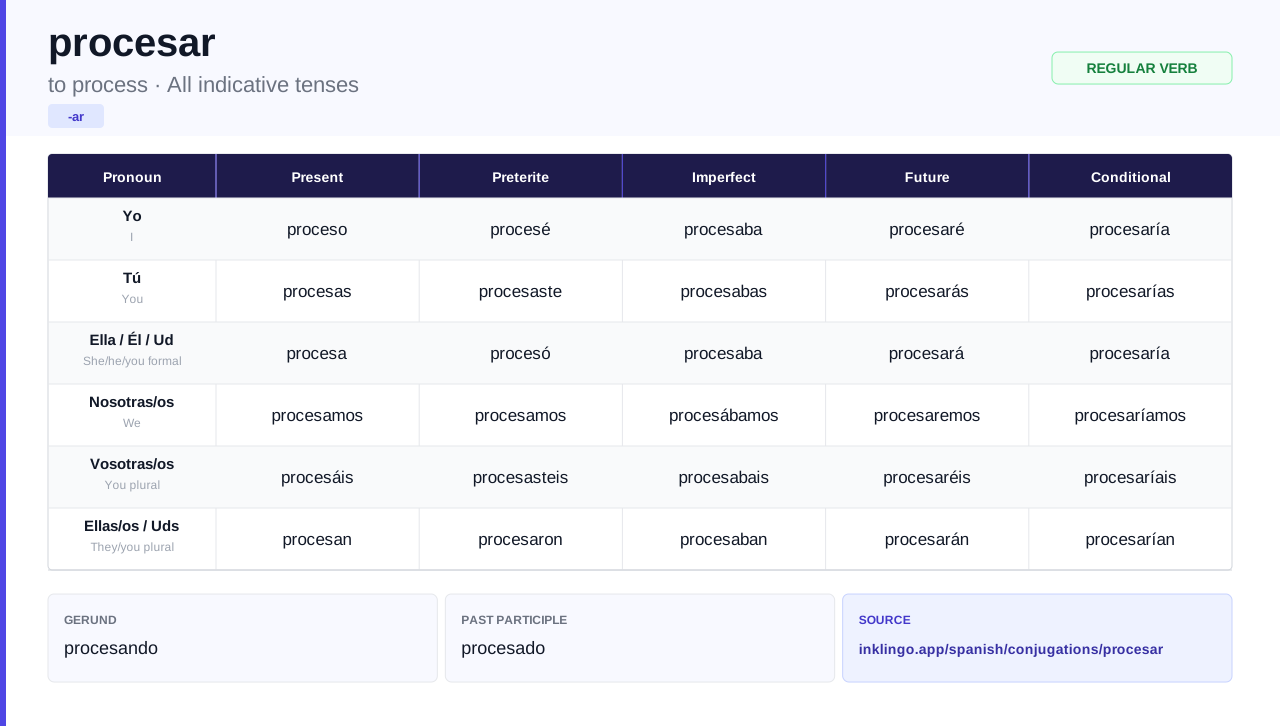
procesarConjugation
procesar means to process.
Complete Conjugation Tables
Reference all tenses and moods
Subjunctive
Imperfect Subjunctive
The imperfect subjunctive, like procesara or procesase, is used for past hypotheticals or wishes.
Present Subjunctive
Use the present subjunctive, like procese or procesen, after expressions of doubt, desire, or emotion.
Imperative
Negative Imperative
Negative commands use 'no' plus the present subjunctive, like 'no proceses' (tú) or 'no procesen' (ustedes).
Imperative
Use imperative forms like procesa (tú) and procesen (ustedes) for direct commands.
Indicative
Conditional
The conditional of procesar (procesaría, procesarías, procesaría, etc.) is used for hypotheticals and polite requests.
Preterite
Use the preterite of procesar (procesé, procesaste, procesó, etc.) for completed actions in the past.
Imperfect
Use the imperfect of procesar (procesaba, procesabas, procesaba, etc.) for ongoing or habitual past actions.
Present
The present tense of procesar (proceso, procesas, procesa, etc.) describes current or habitual actions.
Future
The future tense of procesar (procesaré, procesarás, procesará, etc.) indicates actions that will happen.
Practice Conjugations
Test your knowledge with interactive exercises
Take procesar from tables to real Spanish
Conjugation tables are the start. Read 200+ illustrated and narrated Spanish stories to see 'procesar' in action across real sentences — and build the instinct that native speakers have.
Frequently Asked Questions
What does procesar mean in Spanish?
procesar means "to process".
Is procesar a regular or irregular verb?
procesar is a regular -ar verb in Spanish.
How do you conjugate procesar in the present tense?
The present tense of procesar is: yo proceso, tú procesas, él/ella/usted procesa, nosotros procesamos, vosotros procesáis, ellos/ellas/ustedes procesan.
How do you conjugate procesar in the preterite (past tense)?
The preterite of procesar is: yo procesé, tú procesaste, él/ella/usted procesó, nosotros procesamos, vosotros procesasteis, ellos/ellas/ustedes procesaron.
procesar conjugation cheat sheet