satisfacerConjugation
satisfacer means to satisfy.
Complete Conjugation Tables
Reference all tenses and moods
Subjunctive
Imperfect Subjunctive
This tense is built from the preterite 'ellos' form: satisficiera, satisficieras...
Present Subjunctive
The present subjunctive is based on the 'yo' form 'satisfago', resulting in 'satisfaga'.
Imperative
Negative Imperative
The negative imperative uses 'no' plus the present subjunctive forms: no satisfagas.
Imperative
The command forms include the unique 'tú' form 'satisfaz'.
Indicative
Conditional
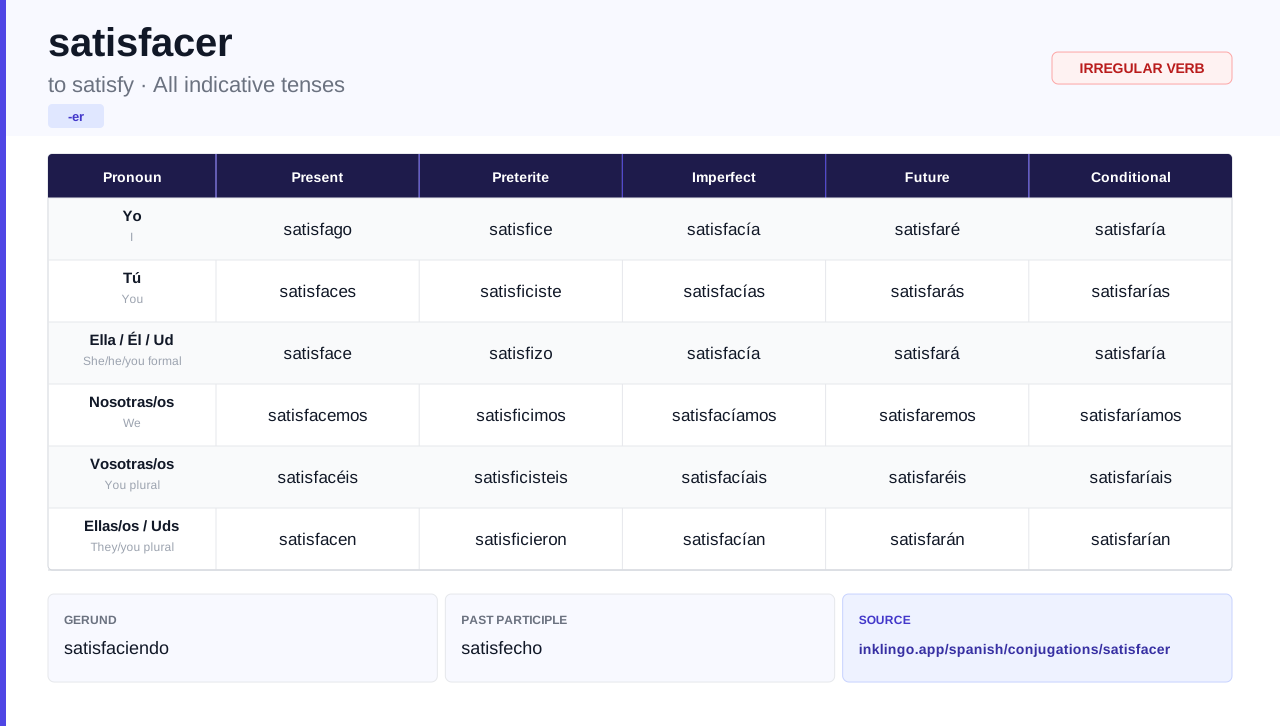
The conditional uses the irregular stem 'satisfar-' followed by the -ía endings.
Preterite
Satisfacer is highly irregular in the preterite, using the stem 'satisfic-' (e.g., satisfice, satisfizo).
Imperfect
The imperfect of satisfacer is completely regular: satisfacía, satisfacías, satisfacía...
Present
Satisfacer follows the pattern of 'hacer' in the present tense, featuring a 'go' ending in the yo form: satisfago.
Future
The future tense uses the irregular stem 'satisfar-' (e.g., satisfaré, satisfarás).
Practice Conjugations
Test your knowledge with interactive exercises
Take satisfacer from tables to real Spanish
Conjugation tables are the start. Read 200+ illustrated and narrated Spanish stories to see 'satisfacer' in action across real sentences — and build the instinct that native speakers have.
Frequently Asked Questions
What does satisfacer mean in Spanish?
satisfacer means "to satisfy".
Is satisfacer a regular or irregular verb?
satisfacer is a irregular -er verb in Spanish.
How do you conjugate satisfacer in the present tense?
The present tense of satisfacer is: yo satisfago, tú satisfaces, él/ella/usted satisface, nosotros satisfacemos, vosotros satisfacéis, ellos/ellas/ustedes satisfacen.
How do you conjugate satisfacer in the preterite (past tense)?
The preterite of satisfacer is: yo satisfice, tú satisficiste, él/ella/usted satisfizo, nosotros satisficimos, vosotros satisficisteis, ellos/ellas/ustedes satisficieron.
satisfacer conjugation cheat sheet