servir Negative Imperative Conjugation
servir — to serve
Negative commands use 'no' + the present subjunctive: no sirvas, no sirva.
servir Negative Imperative Forms
When to Use the Negative Imperative
Use this to tell someone NOT to serve something yet or to tell someone not to use an object that doesn't work.
Notes on servir in the Negative Imperative
All forms use the 'sirv-' stem because they are identical to the present subjunctive.
Example Sentences
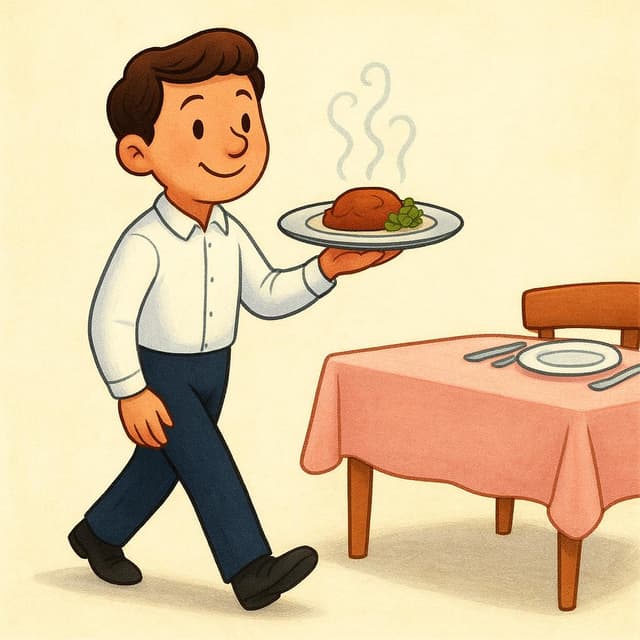
No sirvas la carne todavía.
Don't serve the meat yet.
tú
No sirvan ese plato, está frío.
Don't serve that dish; it's cold.
ustedes
Common Mistakes
Mistake: no serves
Correct: no sirvas
Why: Negative commands must use the subjunctive stem change.
Master Spanish verbs in context
Memorizing tables only gets you so far. Read 200+ illustrated and narrated Spanish stories to see verbs like 'servir' used naturally — in the tenses you're learning.
Related Tenses
Present
yo: sirvo
Servir is a stem-changer (e > i) in all forms except nosotros and vosotros.
Preterite
yo: serví
Servir has a 'slipper' stem change (e > i) in the third-person forms: sirvió and sirvieron.
Imperfect
yo: servía
Servir is regular in the imperfect: servía, servías, servía, servíamos, servíais, servían.
Future
yo: serviré
Servir is completely regular in the future tense; just add the endings to the infinitive.
Conditional
yo: serviría
The conditional of servir is regular: serviría, servirías, serviría, serviríamos, serviríais, servirían.
Present Subjunctive
yo: sirva
Servir changes e > i in all forms of the present subjunctive, including nosotros.
Imperfect Subjunctive
yo: sirviera
The imperfect subjunctive is based on the 'sirvieron' stem: sirviera, sirvieras, sirviera...
Affirmative Imperative
yo: sirve
Use 'sirve' (tú) or 'sirva' (usted) to tell someone to serve or function.