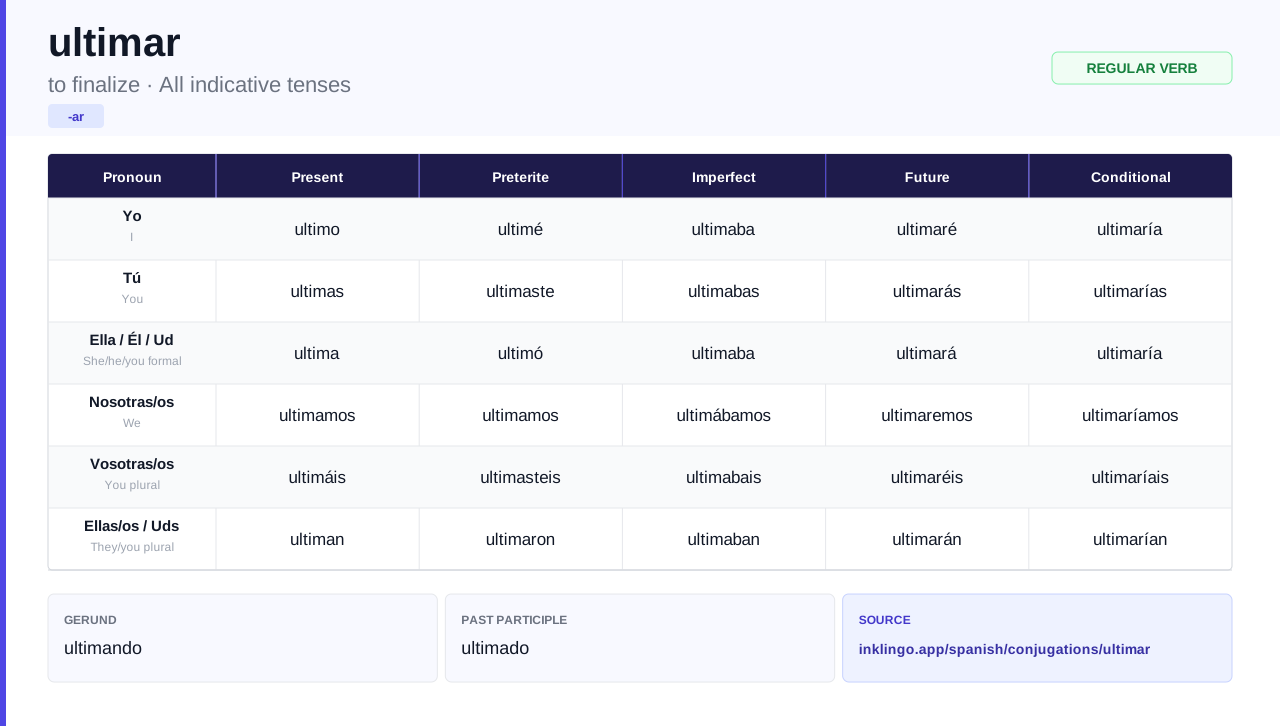
ultimarConjugation
ultimar means to finalize.
Complete Conjugation Tables
Reference all tenses and moods
Subjunctive
Imperfect Subjunctive
The imperfect subjunctive of ultimar uses the -ara endings: ultimara, ultimaras, ultimara, ultimáramos, ultimarais, ultimaran.
Present Subjunctive
The present subjunctive of ultimar changes the -a to -e: ultime, ultimes, ultime, ultimemos, ultiméis, ultimen.
Imperative
Negative Imperative
The negative imperative of ultimar uses 'no' plus the present subjunctive forms.
Imperative
The imperative of ultimar uses the forms: ultima, ultime, ultimemos, ultimad, ultimen.
Indicative
Conditional
The conditional of ultimar adds -ía, -ías, -ía, -íamos, -íais, -ían to the infinitive.
Preterite
The preterite of ultimar is regular: ultimé, ultimaste, ultimó, ultimamos, ultimasteis, ultimaron.
Imperfect
The imperfect of ultimar follows the standard -aba pattern: ultimaba, ultimabas, ultimaba, ultimábamos, ultimabais, ultimaban.
Present
The present of ultimar is regular: ultimo, ultimas, ultima, ultimamos, ultimáis, ultiman.
Future
The future of ultimar is formed by adding -é, -ás, -á, -emos, -éis, -án to the infinitive.
Practice Conjugations
Test your knowledge with interactive exercises
Take ultimar from tables to real Spanish
Conjugation tables are the start. Read 200+ illustrated and narrated Spanish stories to see 'ultimar' in action across real sentences — and build the instinct that native speakers have.
Frequently Asked Questions
What does ultimar mean in Spanish?
ultimar means "to finalize".
Is ultimar a regular or irregular verb?
ultimar is a regular -ar verb in Spanish.
How do you conjugate ultimar in the present tense?
The present tense of ultimar is: yo ultimo, tú ultimas, él/ella/usted ultima, nosotros ultimamos, vosotros ultimáis, ellos/ellas/ustedes ultiman.
How do you conjugate ultimar in the preterite (past tense)?
The preterite of ultimar is: yo ultimé, tú ultimaste, él/ella/usted ultimó, nosotros ultimamos, vosotros ultimasteis, ellos/ellas/ustedes ultimaron.
ultimar conjugation cheat sheet