avergonzada
“avergonzada” means “ashamed” in Spanish (feeling guilt or regret about an action).
ashamed, embarrassed
Also: humiliated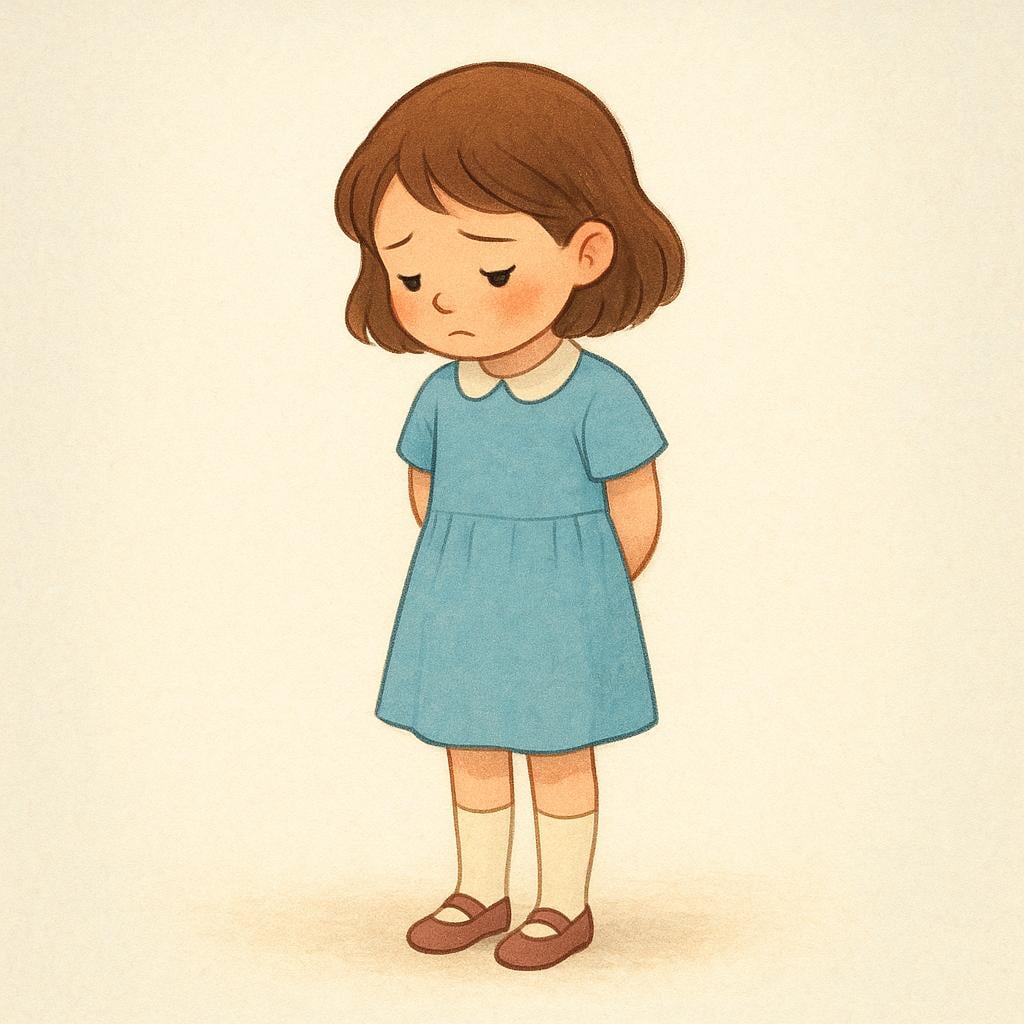
📝 In Action
Ella se sintió muy avergonzada por haber mentido.
A2She felt very ashamed for having lied.
Ana estaba avergonzada porque se le olvidó el nombre de su jefe.
B1Ana was embarrassed because she forgot her boss's name.
No estés avergonzada, todos cometemos errores.
A2Don't be embarrassed; we all make mistakes.
Translate to Spanish
Words that translate to "avergonzada" in Spanish:
humiliated→✏️ Quick Practice
Quick Quiz: avergonzada
Question 1 of 2
Which sentence correctly describes a woman who feels silly after tripping in public?
📚 More Resources
👥 Word Family▼
📚 Etymology▼
From the Spanish verb 'avergonzar', which comes from 'vergüenza' (shame). This traces back to the Latin word 'verecundia', meaning 'modesty' or 'respect'.
First recorded: 13th century
Cognates (Related words)
💡 Master Spanish
Take your Spanish to the next level. Read 200+ illustrated and narrated Spanish stories tailored to your level with the Inklingo app!
Frequently Asked Questions
What is the difference between 'avergonzada' and 'penosa'?
Both can mean embarrassed. 'Avergonzada' is more common for feeling shame or regret, while 'penosa' is often used in Mexico and other regions to mean 'shy' or 'socially self-conscious'.
Can I use 'avergonzada' for a group of people?
If it is a group of only women, use 'avergonzadas'. If there is at least one man in the group, use 'avergonzados'.