Inklingo

buscarme

/boos-KAR-meh/

to look for me

An adult is peering around a large blue armchair, actively searching for a small child who is hiding behind the chair.

When someone else is trying "to look for me," it implies they are searching for the speaker.

buscarme(Verb (Infinitive))

A1regular ar

to look for me

?

as in, to search for the speaker

Also:

to seek me out

?

formal or intense search

📝 In Action

¿Puedes venir a buscarme a la escuela?

A1

Can you come look for me at school?

Mi jefe quiere buscarme para hablar sobre el proyecto.

A2

My boss wants to look for me (to find me) to talk about the project.

Ellos prometieron buscarme si me perdía.

B1

They promised to look for me if I got lost.

Word Connections
Synonyms

Common Collocations

  • venir a buscarmeto come pick me up
  • llamar para buscarmeto call to find me

💡 Grammar Points

Pronoun Placement Rule

The 'me' means 'me' (the speaker). When using an infinitive (like 'buscar'), you can attach 'me' to the end, or place it before the conjugated verb: 'Necesitas buscarme' or 'Me necesitas buscar'.

Tilde on Gerund

When 'me' attaches to the gerund (the -ing form), you must add an accent mark (tilde) to the third syllable from the end: 'Buscando' becomes 'Buscándome'.

Spelling Change in Preterite

The 'yo' form of the past tense (preterite) changes 'c' to 'qu' to keep the hard 'k' sound: 'yo busqué' (I looked for).

❌ Common Pitfalls

Confusing Placement

Mistake: "Me va a buscar."

Correction: Va a buscarme. OR Me va a buscar. (Both are correct! Spanish allows flexibility with infinitives, unlike single conjugated verbs where the pronoun must precede: 'Me busca'.)

⭐ Usage Tips

Picking Up Someone

When you say 'venir a buscarme' (to come look for me), it almost always means 'to come pick me up,' especially from an airport, station, or school.

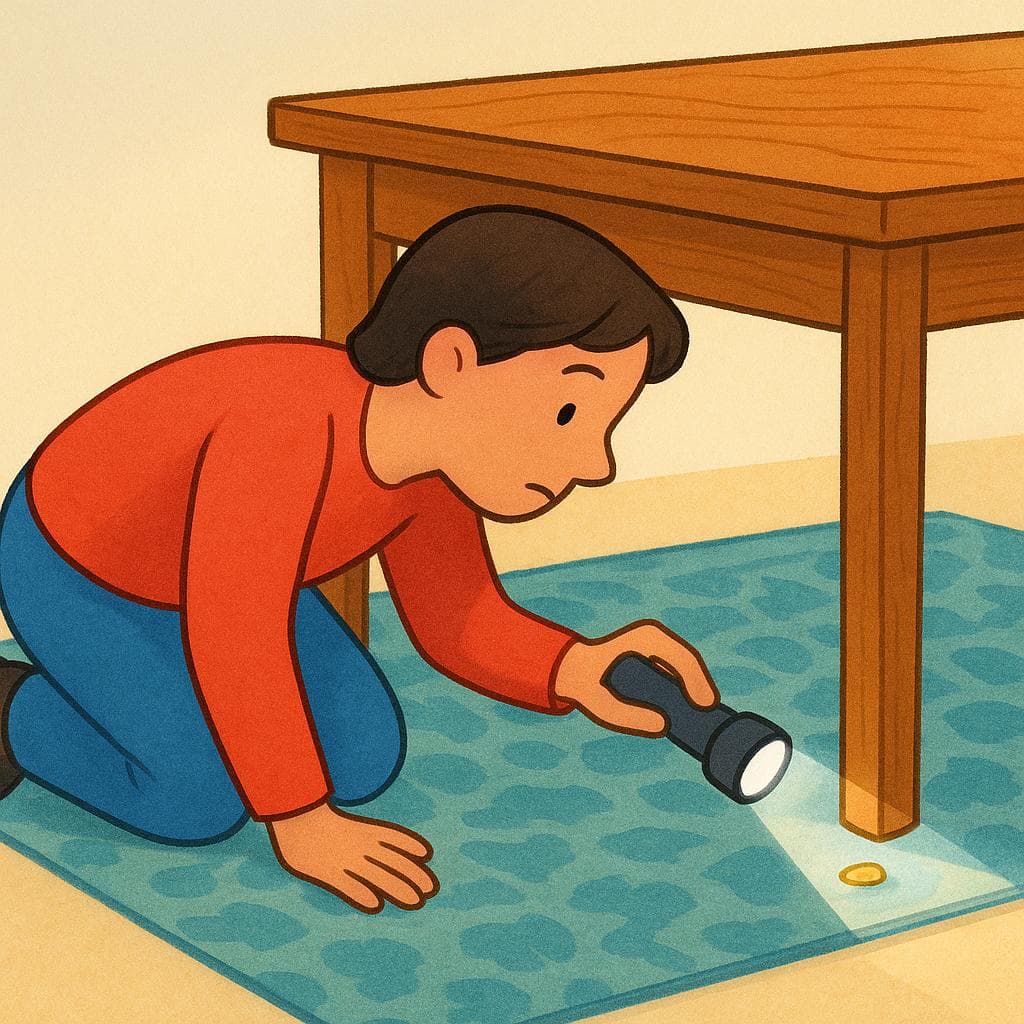
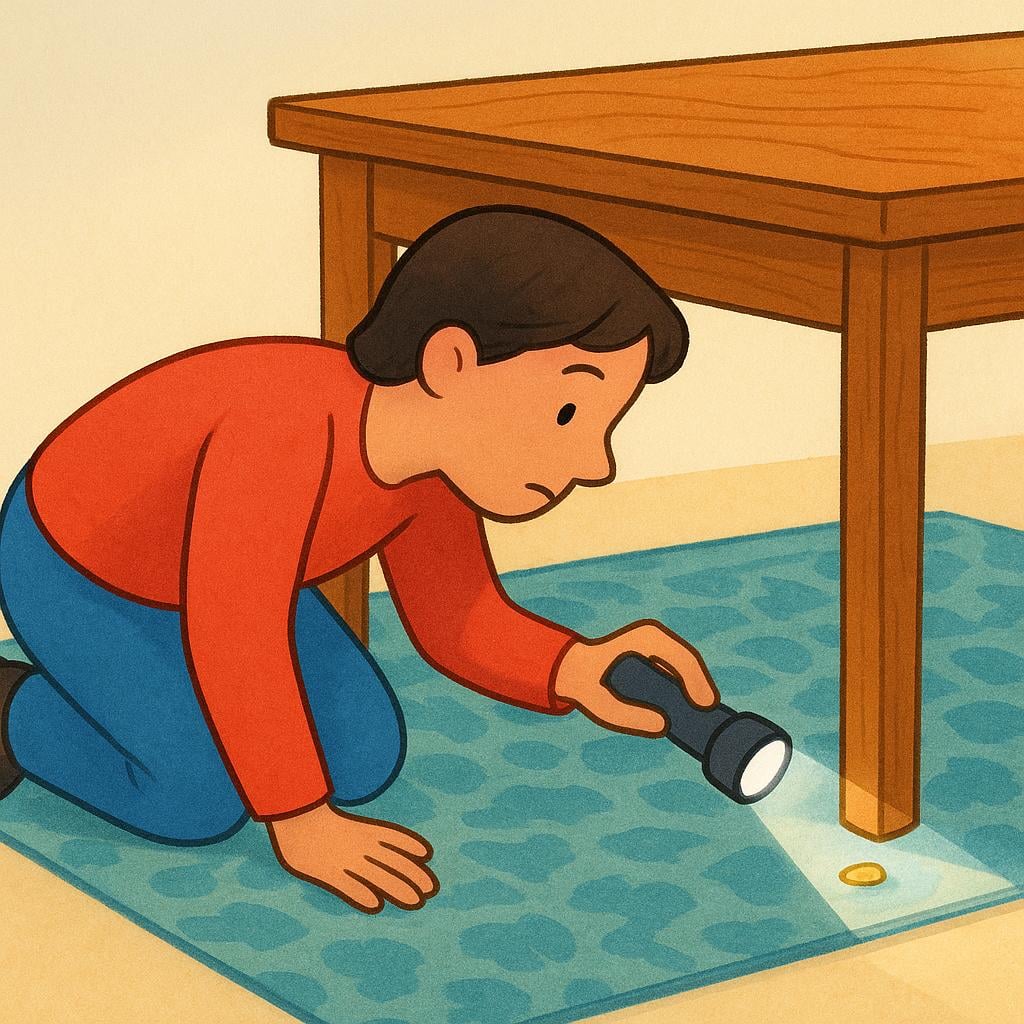
A person is kneeling on the floor, using a small flashlight to look underneath a wooden desk, searching diligently for a lost object.

When the action is reflexive, "to look for myself" means the speaker is seeking something for their own benefit or use.

buscarme(Verb (Infinitive))

B1pronominal/reflexive context ar

to look for myself

?

to seek something for one's own benefit

Also:

to get myself into

?

used idiomatically with words like 'problema' (trouble)

📝 In Action

No quiero buscarme más problemas con el vecino.

B1

I don't want to get myself into more problems with the neighbor.

Tengo que buscarme un buen abogado.

B2

I have to look for a good lawyer for myself.

Decidí buscarme un nuevo pasatiempo.

B2

I decided to look for a new hobby (for myself).

Word Connections

Synonyms

Common Collocations

  • buscarse la vidato make a living/to hustle

Idioms & Expressions

  • buscarse un líoto get into a mess or trouble

💡 Grammar Points

The Reflexive 'Se' (or 'Me')

When 'buscar' is used with a reflexive pronoun (like 'buscarse' or 'buscarme'), it changes the meaning slightly, implying the action is done for the benefit or detriment of the subject.

❌ Common Pitfalls

Using 'Buscar' instead of 'Buscarse'

Mistake: "Voy a buscar un problema."

Correction: Voy a buscarme un problema. (The reflexive form 'buscarme' is necessary when talking about causing trouble for yourself.)

⭐ Usage Tips

Using 'Buscarse la vida'

This is a very common idiomatic phrase meaning to find a way to survive or earn money, often implying hard work or ingenuity.

✏️ Quick Practice

💡 Quick Quiz: buscarme

Question 1 of 2

Which sentence uses 'buscarme' in the figurative sense of 'getting into trouble'?

📚 More Resources

Word Family

buscar(to search) - verb

Frequently Asked Questions

If 'buscarme' is an infinitive, how do I use it in a sentence?

You usually use 'buscarme' after another conjugated verb (e.g., 'Quiero buscarme' - I want to look for myself) or as part of a command or instruction (though 'búscame' is more common for commands).

What is the difference between 'buscar' and 'buscarse'?

'Buscar' simply means 'to look for' (Busco mi llave - I look for my key). 'Buscarse' (which becomes 'buscarme' when referring to yourself) often implies finding something for your own benefit, or more commonly, getting yourself into trouble (Me busco un problema - I get myself into a problem).