carruaje
“carruaje” means “carriage” in Spanish (a vehicle pulled by horses).
carriage
Also: coach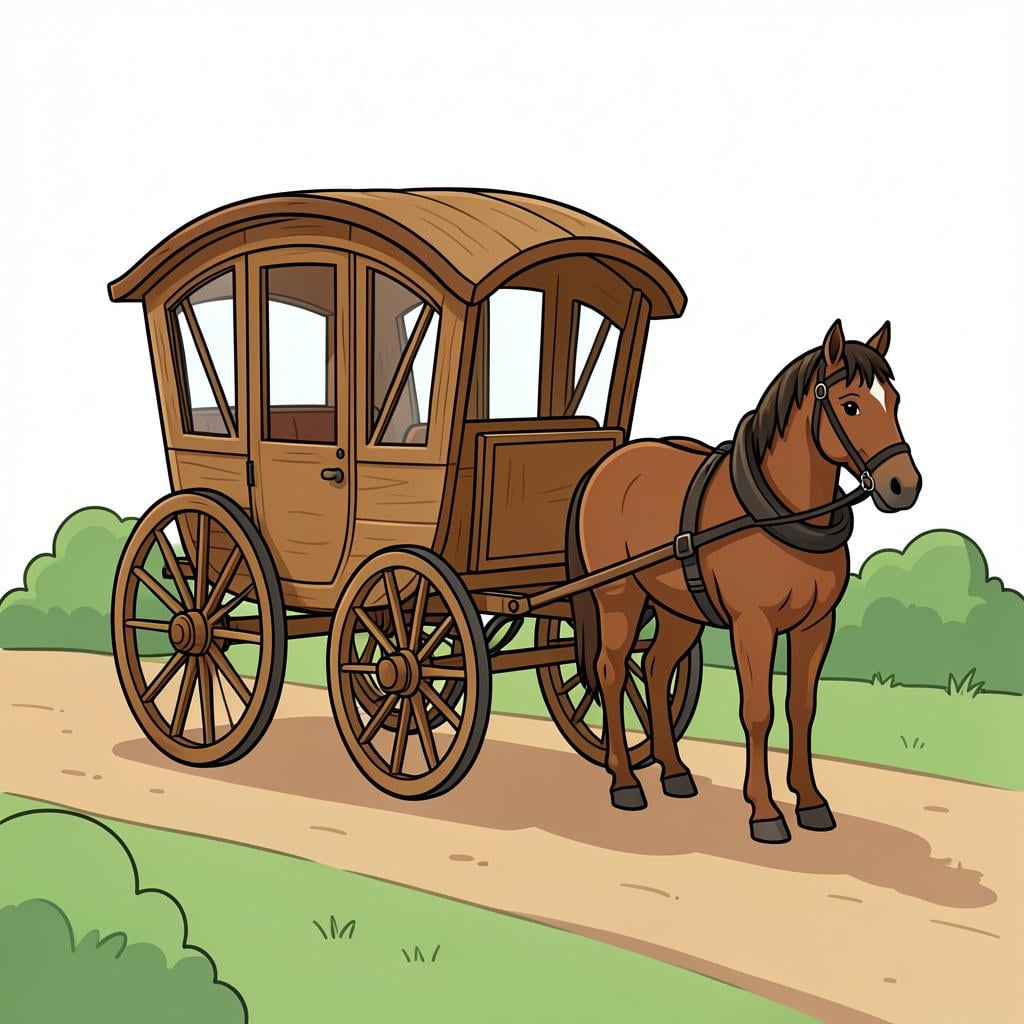
📝 In Action
Cenicienta fue al baile en un carruaje que antes era una calabaza.
A2Cinderella went to the ball in a carriage that was previously a pumpkin.
El museo tiene una colección impresionante de carruajes antiguos.
B1The museum has an impressive collection of old carriages.
Los novios salieron de la iglesia en un carruaje tirado por caballos blancos.
B1The bride and groom left the church in a carriage pulled by white horses.
✏️ Quick Practice
Quick Quiz: carruaje
Question 1 of 1
Which of these would you most likely see in a 'carruaje'?
📚 More Resources
📚 Etymology▼
Derived from the Spanish word 'carro' (cart), which comes from the Latin 'carrus.' It was influenced by the Old French word 'charriage' (act of transporting).
First recorded: 16th century
Cognates (Related words)
💡 Master Spanish
Take your Spanish to the next level. Read 200+ illustrated and narrated Spanish stories tailored to your level with the Inklingo app!
Frequently Asked Questions
Is 'carruaje' the same as a car?
No. While they both transport people, a 'carruaje' refers to the old-fashioned type pulled by animals. For a modern car, use 'coche', 'carro', or 'automóvil'.
How do I know if it's 'el' or 'la' carruaje?
It is 'el carruaje.' A great trick is that almost all Spanish words ending in -aje are masculine.