Inklingo

cavar

/kah-BAHR/

to dig

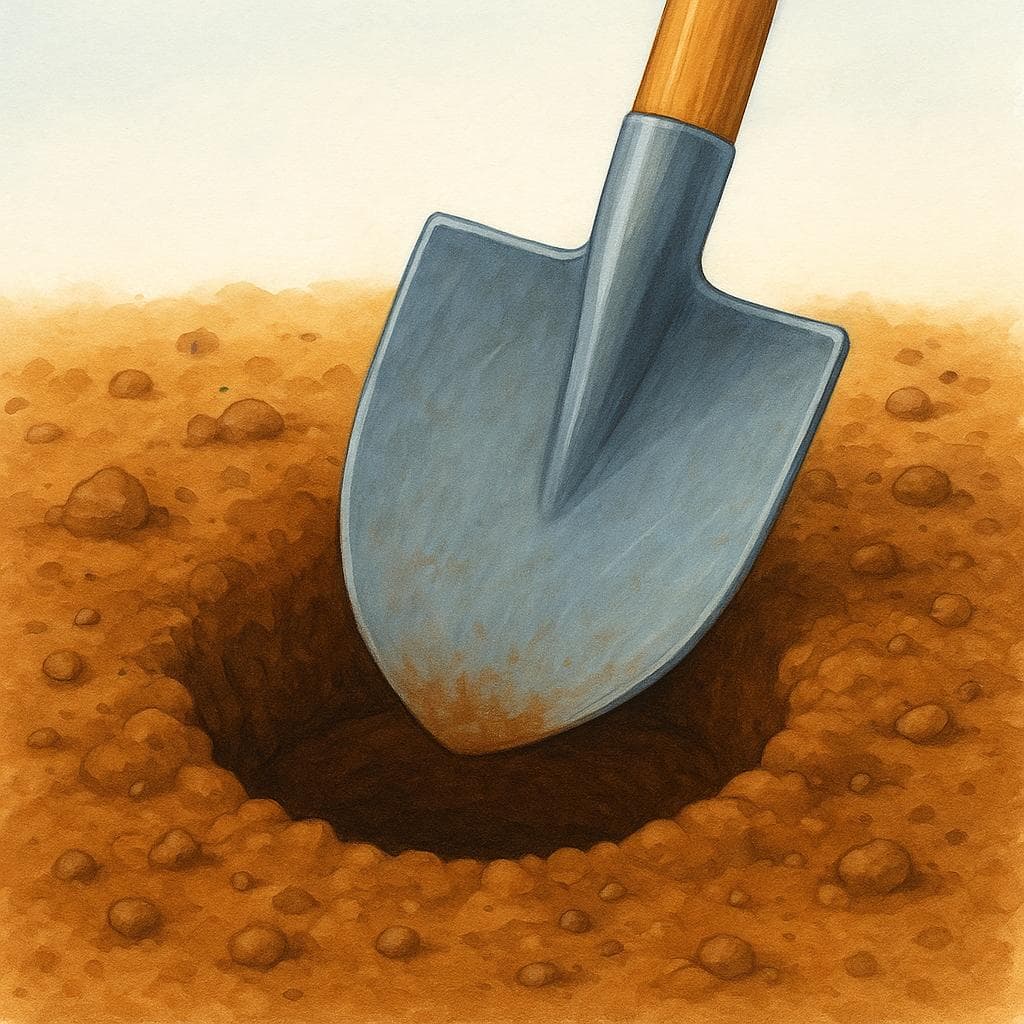
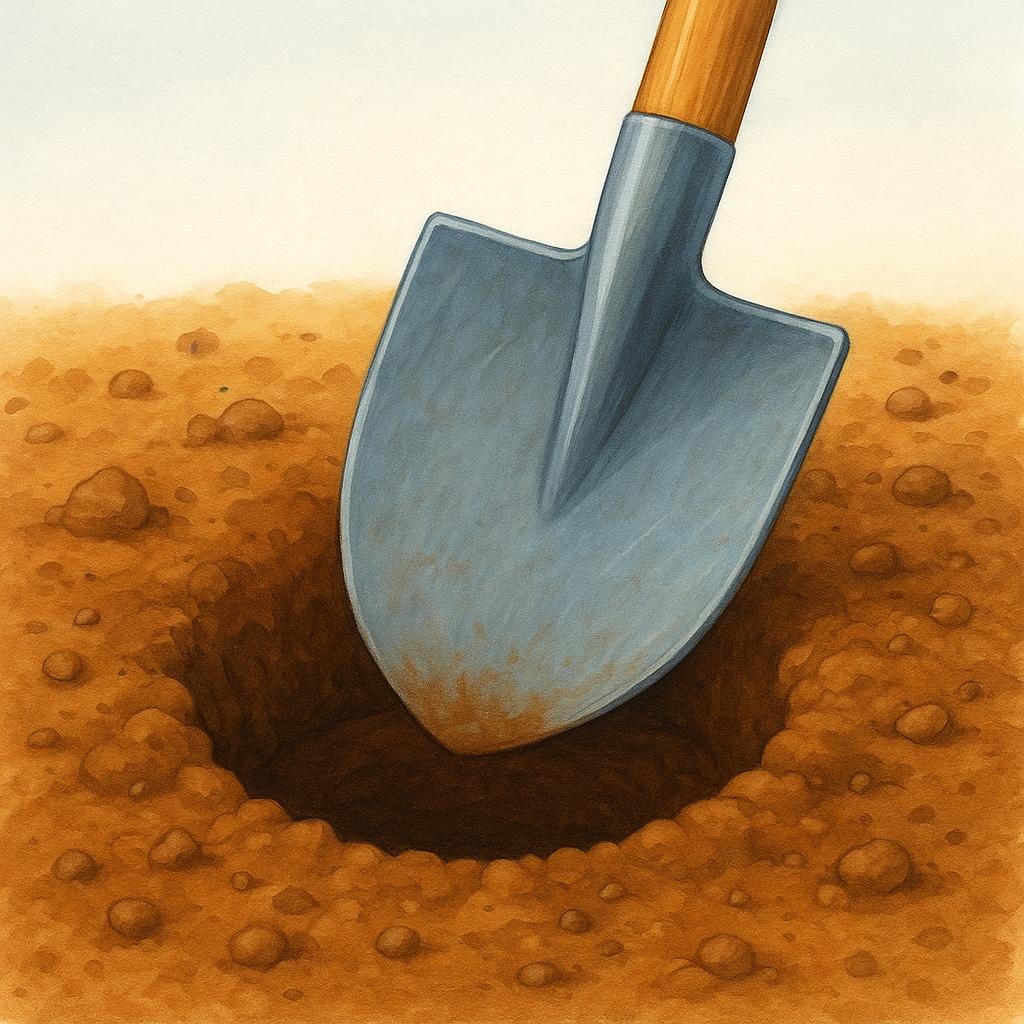
A silver shovel digging into brown earth to create a deep hole.

Cavar can mean to dig a hole in the ground.

cavar(verb)

A2regular ar

to dig

?

making a hole in the ground

Also:

to excavate

?

more formal or archaeological digging

📝 In Action

El perro empezó a cavar un hoyo para esconder su hueso.

A2

The dog started to dig a hole to hide his bone.

Tuvimos que cavar mucho para encontrar la tubería.

B1

We had to dig a lot to find the pipe.

Word Connections

Synonyms

  • excavar (to excavate)
  • ahondar (to deepen)

Antonyms

Common Collocations

  • cavar un hoyoto dig a hole
  • cavar una zanjato dig a ditch
  • cavar la tierrato dig the earth/soil

Idioms & Expressions

  • cavar su propia tumbato do something that will cause your own failure or downfall

💡 Grammar Points

A Friendly Regular Verb

Cavar is a regular -ar verb. It follows the exact same pattern as 'hablar' or 'cantar', so if you know those, you already know how to use this one!

❌ Common Pitfalls

Cavar vs. Clavar

Mistake: "Using 'clavar' when you mean to dig."

Correction: Use 'cavar' for the ground/holes and 'clavar' for hitting a nail with a hammer.

⭐ Usage Tips

Tools for the Job

In Spanish, you usually 'cavar con una pala' (dig with a shovel). It's a great way to remember the noun 'pala'!

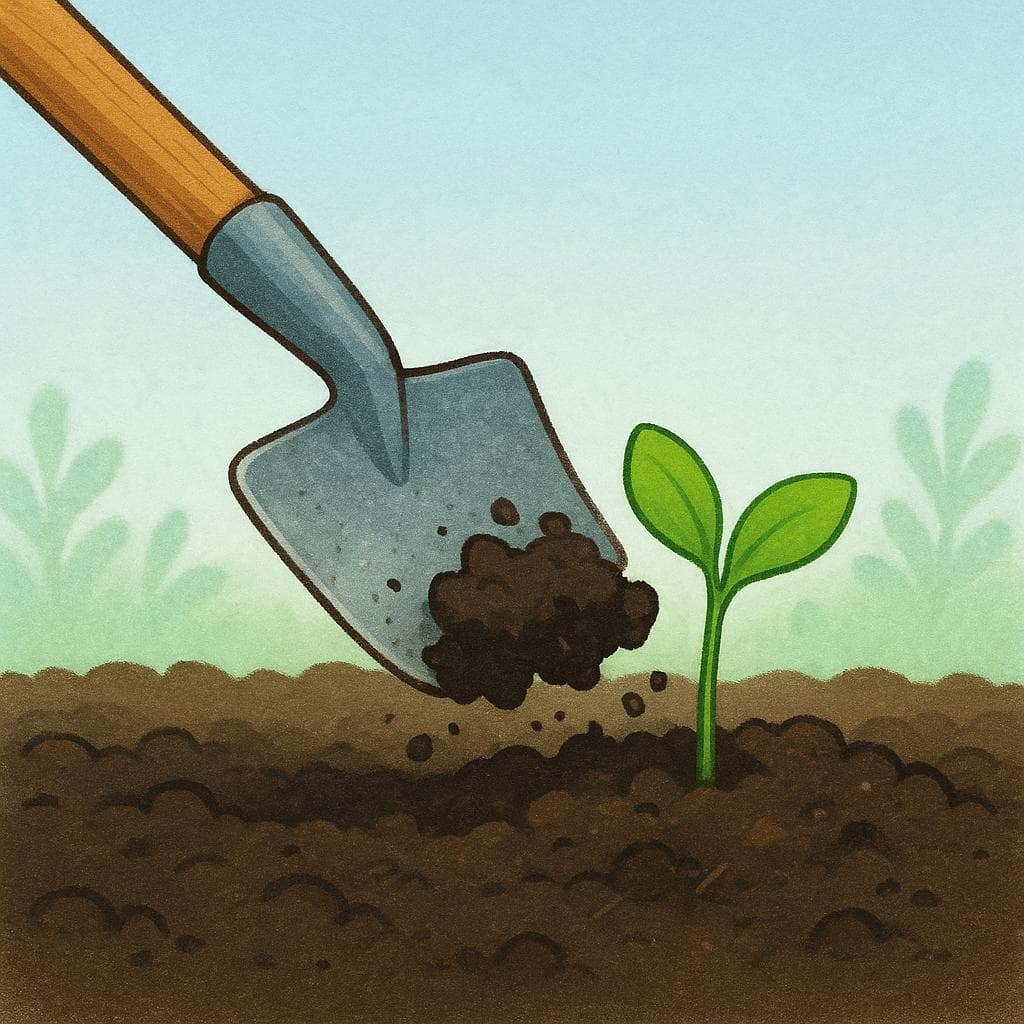
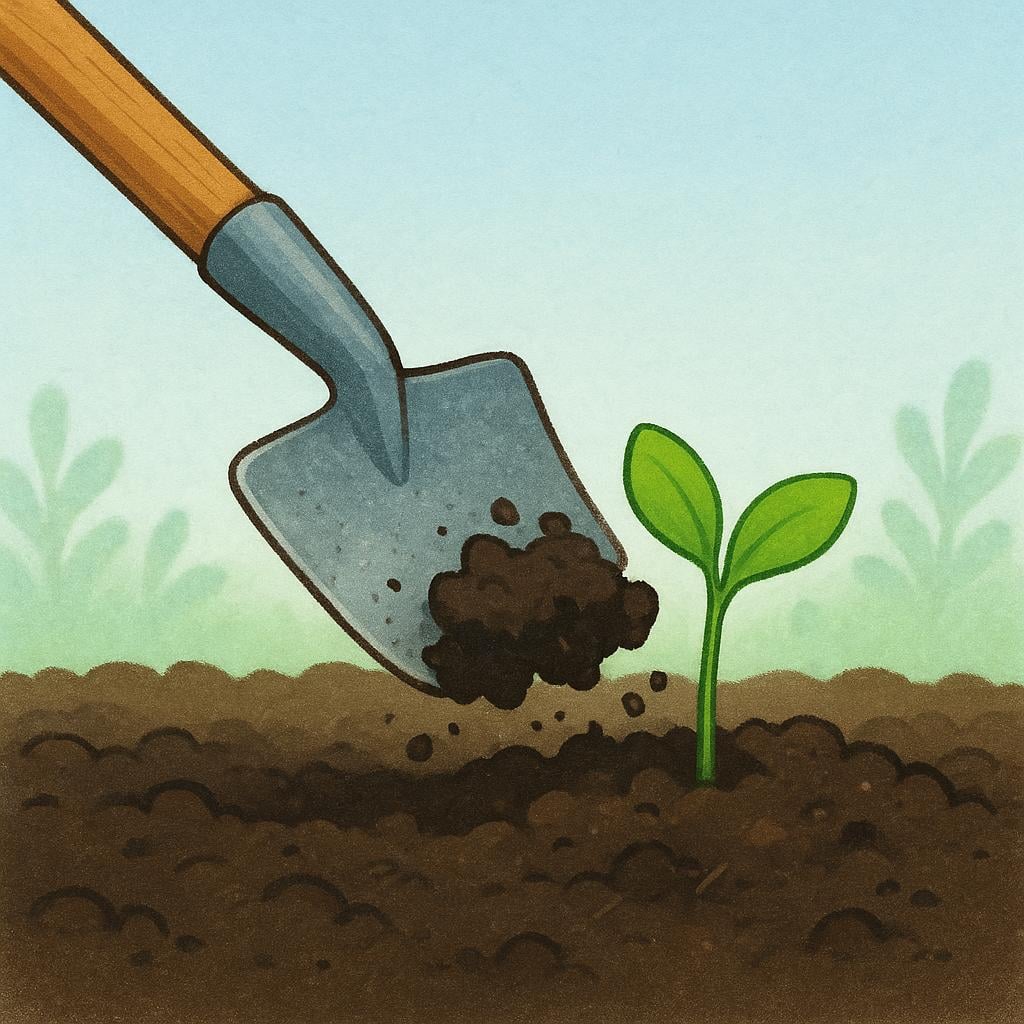
A garden hoe loosening the soil around a small green leafy plant.

Cavar also refers to hoeing or turning over soil around plants.

cavar(verb)

B2regular ar

to hoe

?

turning over soil around plants

Also:

to till

?

preparing soil for planting

📝 In Action

Es necesario cavar las vides en primavera.

B2

It is necessary to hoe the vines in spring.

Word Connections

Synonyms

  • labrar (to till/work the land)

💡 Grammar Points

Context is Key

While 'cavar' usually means making a hole, in a vineyard or garden, it specifically refers to turning the soil to help plants grow.

🔄 Conjugations

subjunctive

present

yocave
nosotroscavemos
ellos/ellas/ustedescaven
caves
vosotroscavéis
él/ella/ustedcave

imperfect

yocavara
nosotroscaváramos
ellos/ellas/ustedescavaran
cavaras
vosotroscavarais
él/ella/ustedcavara

indicative

present

yocavo
nosotroscavamos
ellos/ellas/ustedescavan
cavas
vosotroscaváis
él/ella/ustedcava

imperfect

yocavaba
nosotroscavábamos
ellos/ellas/ustedescavaban
cavabas
vosotroscavabais
él/ella/ustedcavaba

preterite

yocavé
nosotroscavamos
ellos/ellas/ustedescavaron
cavaste
vosotroscavasteis
él/ella/ustedcavó

✏️ Quick Practice

💡 Quick Quiz: cavar

Question 1 of 1

Which sentence correctly uses 'cavar' to mean 'to dig a hole'?

📚 More Resources

Word Family

Frequently Asked Questions

Is 'cavar' an irregular verb?

No, 'cavar' is a perfectly regular -ar verb. It follows all the standard rules for conjugation.

What is the difference between 'cavar' and 'excavar'?

'Cavar' is the general word for digging (like a dog or a gardener). 'Excavar' is usually more formal, used for construction or archaeology.