cheques
“cheques” means “checks” in Spanish. It has 2 different meanings depending on context:
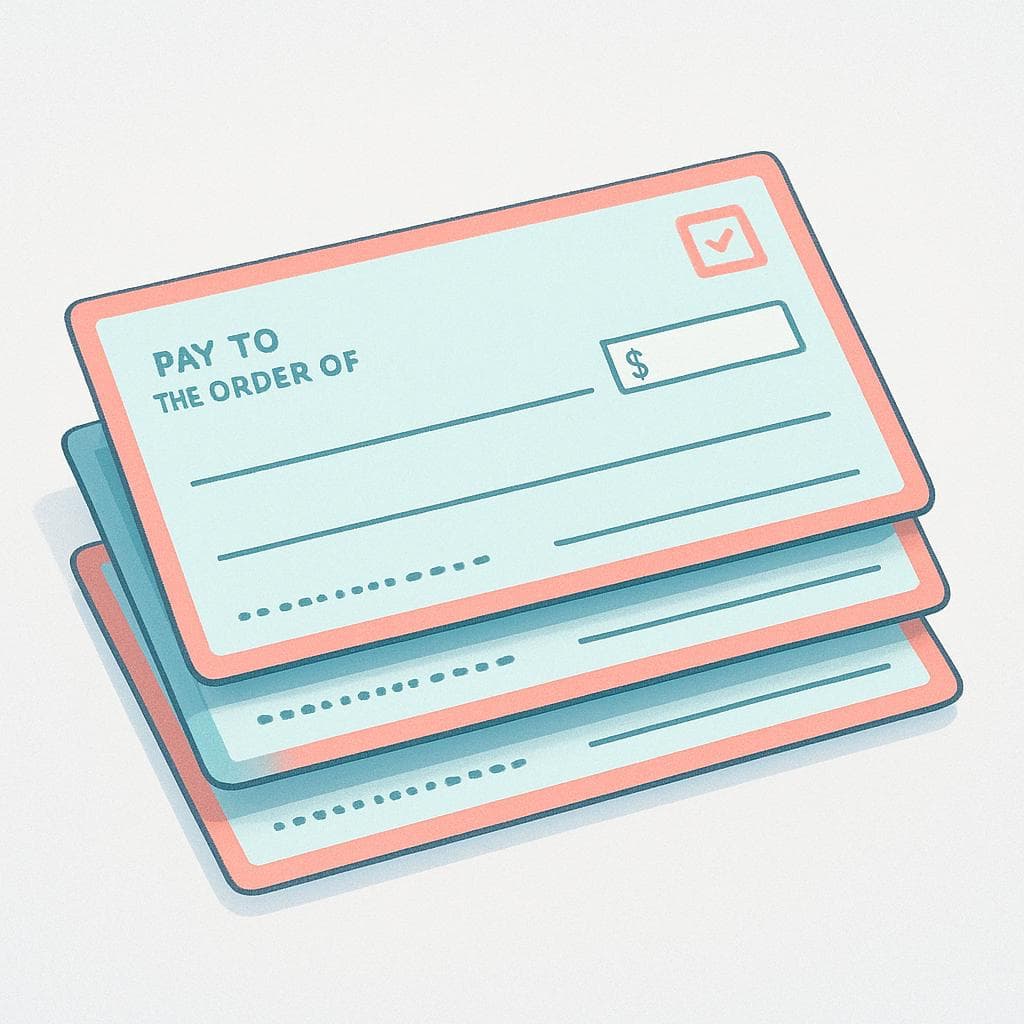

checks, cheques
Also: money orders
📝 In Action
Recibimos cinco cheques de diferentes clientes esta mañana.
B1We received five checks from different clients this morning.
Necesito firmar todos estos cheques antes de irme.
B1I need to sign all these checks before I leave.
you check, that you check
Also: you verify
📝 In Action
¿Tú siempre cheques la cerradura antes de salir?
B2Do you always check the lock before leaving?
Es crucial que cheques el informe antes de enviarlo al jefe.
B2It is crucial that you check the report before sending it to the boss.
Indicative
Present
Imperfect
Preterite
Subjunctive
Present Subjunctive
Imperfect Subjunctive
Translate to Spanish
✏️ Quick Practice
Quick Quiz: cheques
Question 1 of 2
Which sentence uses 'cheques' as the plural form of the financial instrument?
📚 More Resources
👥 Word Family▼
🎵 Rhymes▼
📚 Etymology▼
The noun 'cheque' and the verb 'chequear' were borrowed directly from the English word 'check.' The financial instrument meaning came first, followed by the verb meaning 'to verify' or 'to examine.'
First recorded: Mid-20th century (for the verb meaning, reflecting modern influence)
Cognates (Related words)
💡 Master Spanish
Take your Spanish to the next level. Read 200+ illustrated and narrated Spanish stories tailored to your level with the Inklingo app!
Frequently Asked Questions
How do I know if 'cheques' means the noun or the verb?
Look at the words around it. If it follows an article like 'los' (los cheques), it is the noun (checks). If it follows a pronoun like 'tú' or a trigger phrase like 'que' (que cheques), it is the verb form (you check).
Is 'cheques' commonly used in all Spanish-speaking countries?
Yes, the noun (financial check) is universally understood. The verb 'chequear' is very common in Latin America, but speakers in Spain often prefer synonyms like 'revisar' or 'comprobar' for 'to check/verify'.