Inklingo

cierren

/syehr-rehn/

Close!

A pair of cartoon hands firmly pushing a bright blue wooden door shut, illustrating the command to close something.

As a command to a group, 'Cierren' means 'Close!'.

cierren(verb)

A1irregular (e → ie stem change) ar

Close!

?

As a command addressed to a group of people (ustedes).

,

They close / You (plural, formal) close

?

Used in the special mood (subjunctive) to express wishes, doubts, or requests.

Also:

Shut!

?

Informal command.

📝 In Action

¡Cierren la ventana, por favor! Hace mucho frío.

A1

Close the window, please! It's very cold.

Necesito que cierren el paquete antes de enviarlo.

A2

I need you (plural) to close the package before sending it.

No creo que cierren el gimnasio por la lluvia.

B1

I don't think they will close the gym because of the rain.

Word Connections

Synonyms

  • tapar (to cover)
  • sellar (to seal)

Antonyms

Common Collocations

  • Cierren los ojosClose your eyes
  • Cierren las cortinasClose the curtains

💡 Grammar Points

Using Cierren as a Command

'Cierren' is the polite or formal way to give a command to a group of people (ustedes). It uses the same verb ending as the present subjunctive mood.

The E to IE Change

The base verb 'cerrar' is irregular. When the stress falls on the stem, the 'e' changes to 'ie' (e.g., cerrar becomes cierro, cierran, cierre, etc.).

❌ Common Pitfalls

Forgetting the stem change

Mistake: "The group says: 'Cerren la tienda.'"

Correction: The group should say: 'Cierren la tienda.' The 'e' must change to 'ie' in this form.

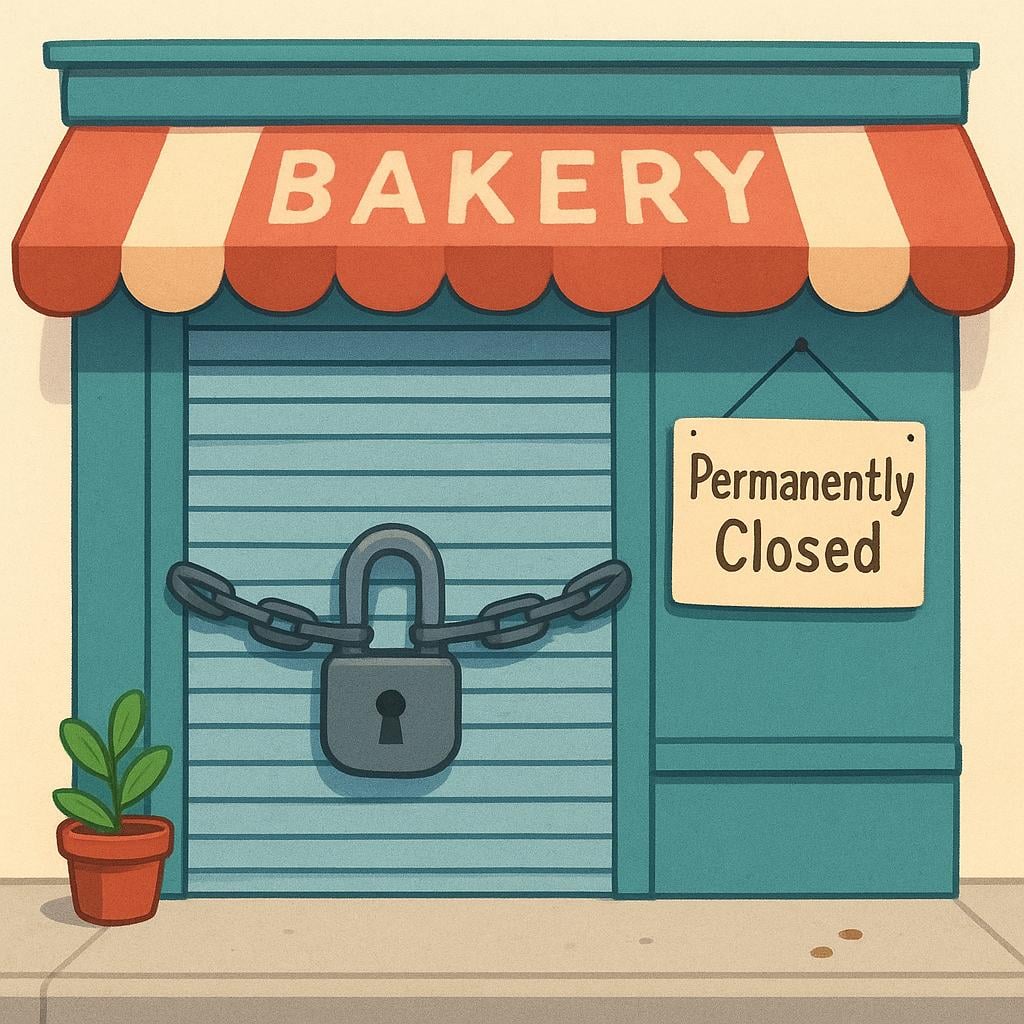
A small, colorful shop with its heavy metal security shutters completely pulled down and secured by a large padlock, symbolizing the permanent closure of a business.

The word 'cierren' can also mean to 'close down' when referring to a business or institution.

cierren(verb)

B1irregular (e → ie stem change) ar

Close down

?

Referring to a business or institution.

,

Conclude

?

Referring to a deal or discussion.

Also:

Finalize

?

A negotiation.

📝 In Action

El banco quiere que cierren todas las cuentas inactivas.

B1

The bank wants them to close all inactive accounts.

Es urgente que ustedes cierren el trato hoy mismo.

B2

It is urgent that you (plural) close the deal today.

Word Connections

Synonyms

  • terminar (to finish)
  • liquidar (to liquidate)

Common Collocations

  • Cierren la cuentaClose the account
  • Cierren el negocioClose the business

💡 Grammar Points

Expressing Necessity

When 'cierren' is used in this sense, it usually follows an expression of necessity or desire (like 'espero que' or 'es urgente que'), which forces the special verb form.

🔄 Conjugations

indicative

present

vosotroscerráis
él/ella/ustedcierra
cierras
yocierro
nosotroscerramos
ellos/ellas/ustedescierran

preterite

vosotroscerrasteis
él/ella/ustedcerró
cerraste
yocerré
nosotroscerramos
ellos/ellas/ustedescerraron

imperfect

vosotroscerrabais
él/ella/ustedcerraba
cerrabas
yocerraba
nosotroscerrábamos
ellos/ellas/ustedescerraban

subjunctive

present

vosotroscerréis
él/ella/ustedcierre
cierres
yocierre
nosotroscerremos
ellos/ellas/ustedescierren

imperfect

vosotroscerrarais/cerraseis
él/ella/ustedcerrara/cerrase
cerraras/cerrases
yocerrara/cerrase
nosotroscerráramos/cerrásemos
ellos/ellas/ustedescerraran/cerrasen

✏️ Quick Practice

💡 Quick Quiz: cierren

Question 1 of 1

If you are addressing a group of friends informally in Spain, what command form would you use instead of 'cierren'?

📚 More Resources

Frequently Asked Questions

Is 'cierren' only used for commands?

No. While 'Cierren la puerta' is a command, 'cierren' is also the special verb form (subjunctive) used when expressing wishes, doubts, or needs about what a group of people ('ellos' or 'ustedes') might do. For example: 'Espero que cierren la tienda pronto' (I hope they close the store soon).

How do I know if 'cierren' refers to 'they' or 'you plural'?

You must look at the context. If it's a direct command without a subject ('¡Cierren!'), it usually means 'you plural' (ustedes). If it's preceded by 'que' and a subject is implied ('Dudo que ellos cierren'), it refers to 'they' (ellos/ellas).