comas
“comas” means “commas” in Spanish. It has 3 different meanings depending on context:
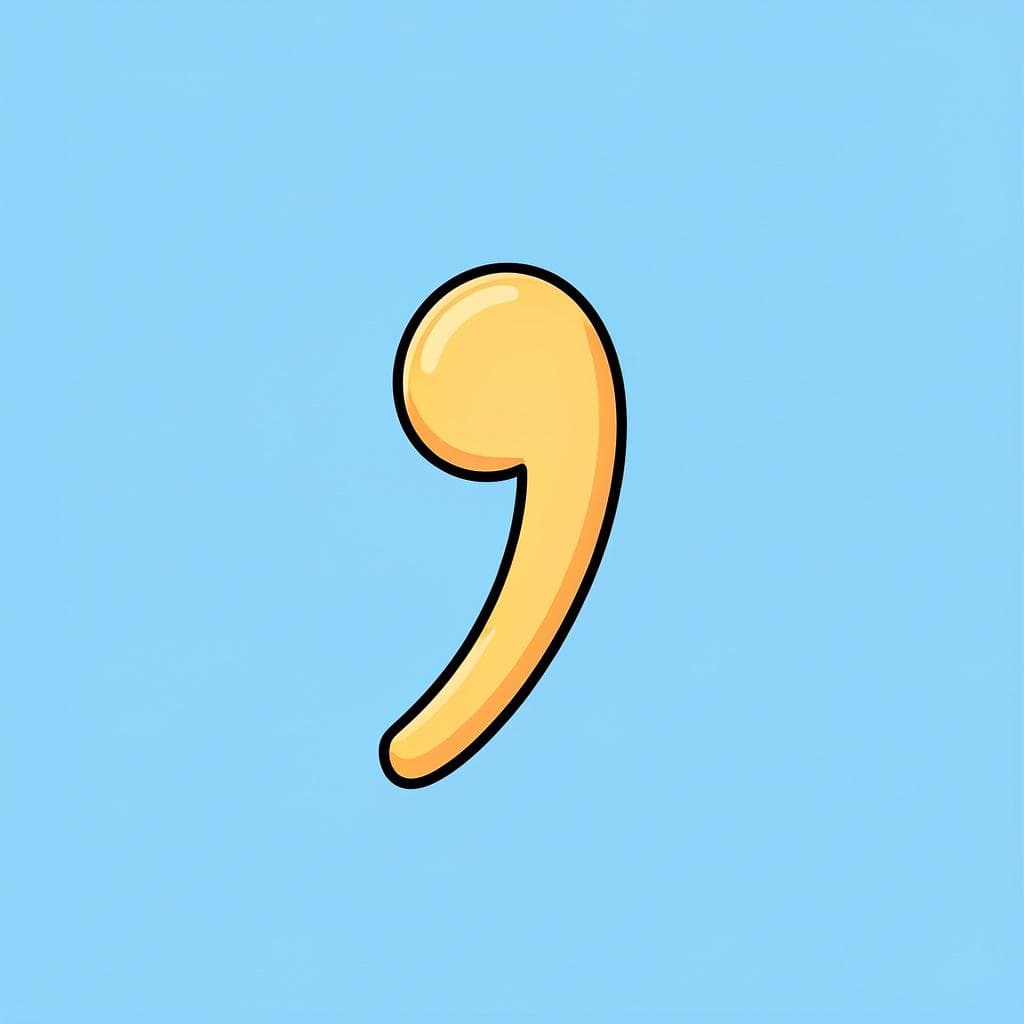


commasAlso: decimal points
📝 In Action
Esta frase tiene demasiadas comas.
A2This sentence has too many commas.
En España, usamos comas para los decimales, como 3,5.
B1In Spain, we use commas for decimals, like 3.5.
Word Connections
don't eat, that you eatAlso: eat up

📝 In Action
No comas eso, está malo.
A1Don't eat that, it's bad.
Espero que comas mucho en la fiesta.
A2I hope that you eat a lot at the party.
Dudo que comas verduras hoy.
B1I doubt that you will eat vegetables today.
Word Connections
comas

📝 In Action
Los doctores estudian diferentes tipos de comas.
C1Doctors study different types of comas.
Word Connections
Subjunctive
Imperfect Subjunctive
Present Subjunctive
Indicative
Preterite
Imperfect
Present
Translate to Spanish
Words that translate to "comas" in Spanish:
✏️ Quick Practice
Quick Quiz: comas
Question 1 of 2
How do you say 'Don't eat the apple' to a friend?
📚 More Resources
👥 Word Family
📚 Etymology
From different Greek and Latin roots. The punctuation 'coma' comes from Greek 'komma' (a piece cut off), while the medical 'coma' comes from Greek 'kōma' (deep sleep). The verb 'comas' comes from the Latin 'comedere' (to eat up).
First recorded: 13th century
Cognates (Related words)
💡 Master Spanish
Take your Spanish to the next level. Read 200+ illustrated and narrated Spanish stories tailored to your level with the Inklingo app!
Frequently Asked Questions
Is 'comas' the same as 'comes'?
No. 'Comes' is for simple facts (You eat). 'Comas' is for commands (Don't eat) or wishes (I hope you eat).
Why do Spanish people use 'comas' for numbers?
It is a regional convention. Where English speakers use a decimal point (2.5), many Spanish speakers use a decimal comma (2,5).