puntos
“puntos” means “points” in Spanish. It has 2 different meanings depending on context:
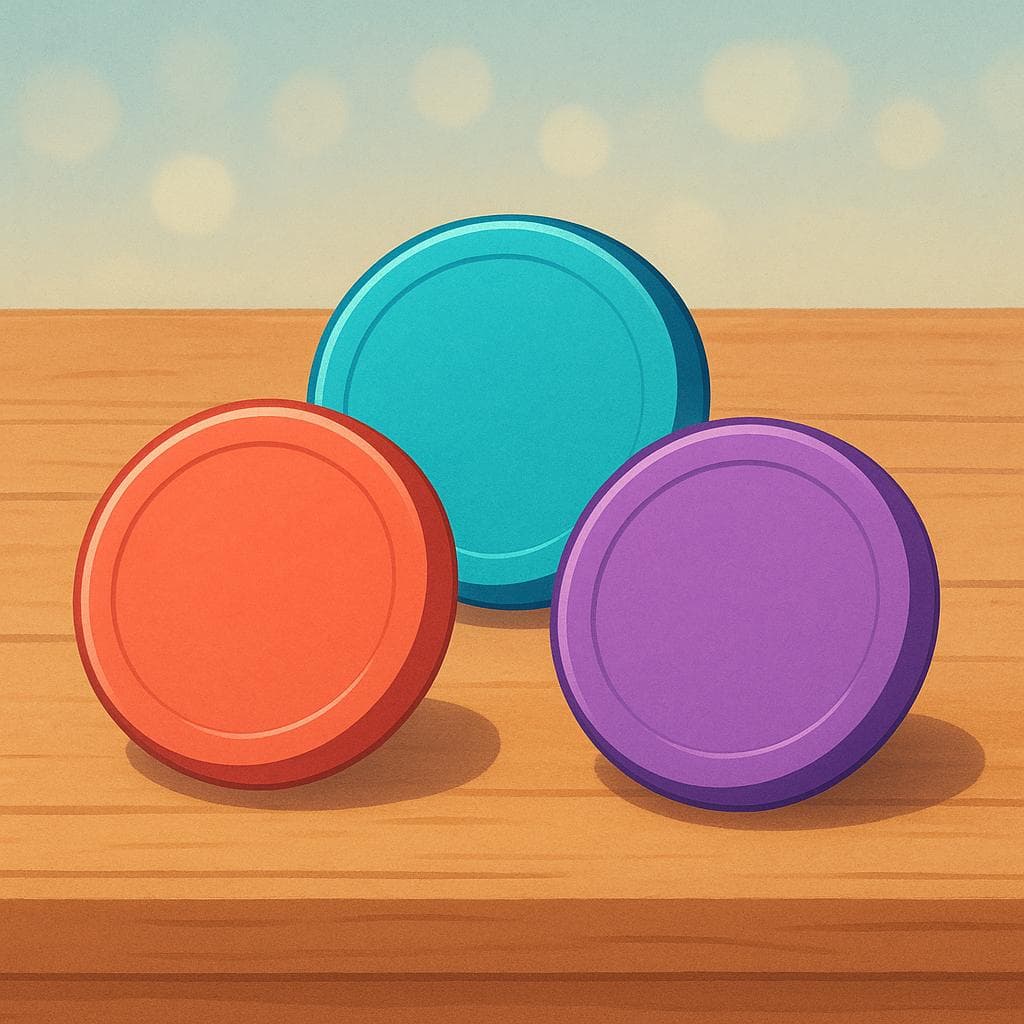

points, marksAlso: dots

📝 In Action
Necesitas diez puntos más para ganar el partido.
A1You need ten more points to win the game.
Todos los puntos importantes están marcados en el mapa.
A2All the important points are marked on the map.
En matemáticas, una línea está formada por infinitos puntos.
B1In mathematics, a line is formed by infinite points (dots).

stitchesAlso: sutures

📝 In Action
Me caí de la bicicleta y necesité tres puntos en la rodilla.
B1I fell off the bike and needed three stitches on my knee.
Este jersey tiene un patrón de puntos muy complicado.
B2This sweater has a very complicated stitch pattern.
El doctor me dijo que me quitan los puntos la próxima semana.
B1The doctor told me they will remove the stitches next week.
Word Connections
✏️ Quick Practice
Quick Quiz: puntos
Question 1 of 1
Which sentence uses 'puntos' to mean a score or tally?
📚 More Resources
👥 Word Family
📚 Etymology
The word comes directly from the Latin 'punctum,' meaning 'prick, little hole, or point.' The core idea is always a small, specific mark or unit.
First recorded: Before the 10th century (in its singular form).
Cognates (Related words)
💡 Master Spanish
Take your Spanish to the next level. Read 200+ illustrated and narrated Spanish stories tailored to your level with the Inklingo app!
Frequently Asked Questions
When does 'puntos' mean 'grades' or 'marks' in school?
While 'nota' is the standard word for grades, 'puntos' is often used to refer to the individual units or criteria needed to pass a test or the specific numerical score achieved ('Sacó 95 puntos en el examen').
What is the difference between 'puntos' and 'punto'?
'Punto' is the singular form (a single point, dot, or period). 'Puntos' is the plural form (multiple points, dots, or stitches). You must use 'puntos' whenever you are talking about more than one.