Inklingo

condena

/kon-DEH-nah/

sentence

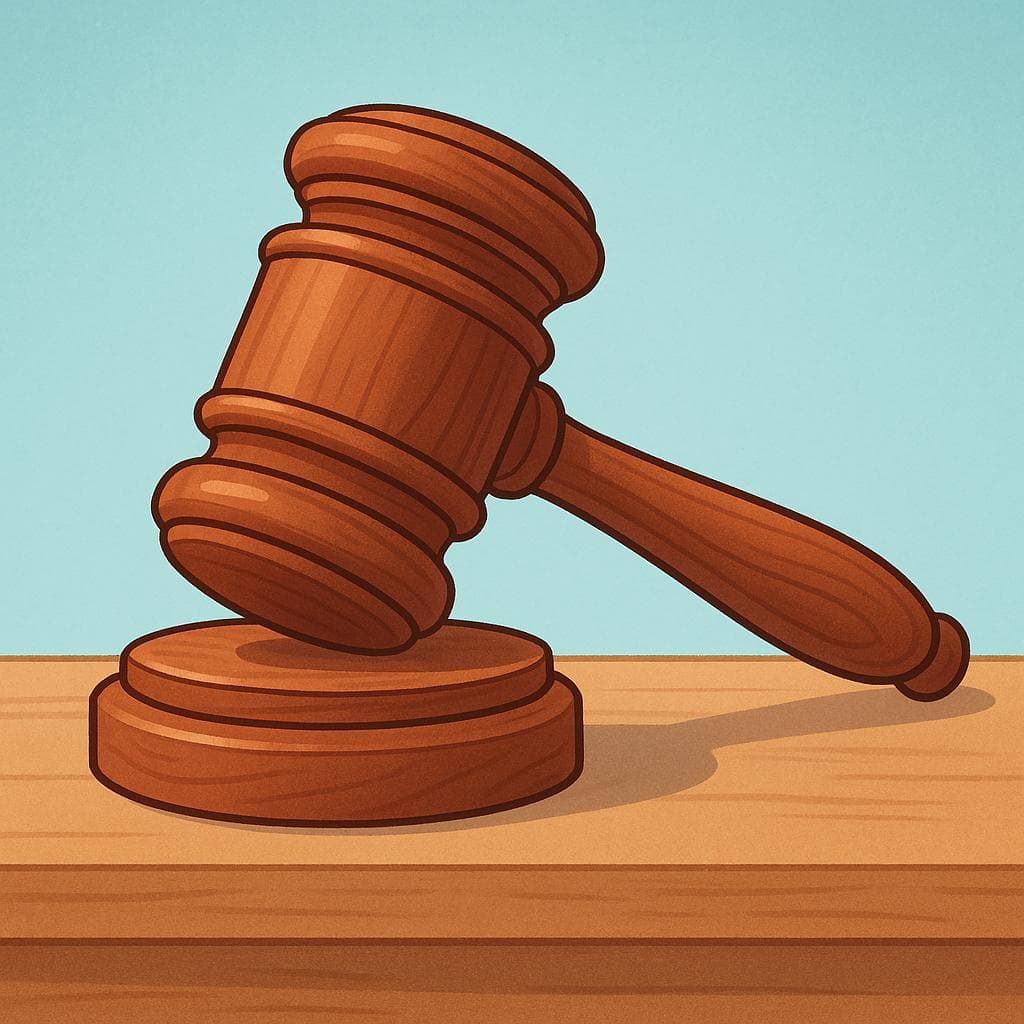
A close-up view of a large wooden judge's gavel resting on a round wooden sound block, symbolizing a final judicial decision.

The final judicial sentence (condena) is delivered when the gavel falls.

condena(noun)

fB1

sentence

?

judicial punishment

,

conviction

?

finding someone guilty

Also:

condemnation

?

strong disapproval

📝 In Action

La corte dictó una condena de diez años de prisión.

B1

The court handed down a sentence of ten years in prison.

Su condena por fraude arruinó su carrera.

B2

His conviction for fraud ruined his career.

El presidente expresó su condena por los actos de violencia.

C1

The president expressed his condemnation of the acts of violence.

Word Connections

Synonyms

Antonyms

  • absolución (acquittal)

Common Collocations

  • cumplir una condenato serve a sentence
  • condena firmefinal conviction

💡 Grammar Points

Gender and Articles

Since 'condena' is feminine, always use 'la' before it, or 'una' if you mean 'a sentence' (e.g., 'la condena', 'una condena').

❌ Common Pitfalls

Confusing 'Condena' and 'Sentencia'

Mistake: "Using 'sentencia' only for the punishment length."

Correction: 'Sentencia' usually refers to the judge's ruling or verdict, while 'condena' refers specifically to the punishment imposed.

⭐ Usage Tips

Formal Contexts

This word is most often heard or read in news reports, legal documents, or formal political discussions.

A simplified figure dressed in black judicial robes stands behind a wooden bench, pointing downward decisively to impose a ruling.

The act of imposing the punishment is to sentence (condenar).

condena(verb)

B2regular ar

to sentence

?

to impose a punishment (infinitive: condenar)

,

to condemn

?

to express severe disapproval (infinitive: condenar)

Also:

to convict

?

to find guilty (infinitive: condenar)

📝 In Action

La comunidad internacional condena estos actos de terror.

B2

The international community condemns these acts of terror.

El juez siempre condena a los culpables.

B1

The judge always sentences the guilty parties.

Word Connections

Synonyms

  • culpar (to blame)
  • reprobar (to disapprove)

Antonyms

  • absolver (to acquit)

💡 Grammar Points

Regular AR Verb

The verb 'condenar' is a regular verb ending in -AR, meaning its conjugations follow the standard pattern for this group (like 'hablar' or 'cantar').

❌ Common Pitfalls

Noun vs. Verb Form

Mistake: "Using 'condena' (noun) when you need the action form 'condena' (verb) with the wrong subject."

Correction: Remember that 'condena' as a verb only works with 'he/she/it' or 'you (formal).' If you are talking about 'I' or 'we,' you must use 'condeno' or 'condenamos.'

⭐ Usage Tips

Figurative Use

You can use 'condenar' figuratively to mean something is doomed or destined for trouble: 'Lo condenó a una vida de pobreza' (It condemned him to a life of poverty).

🔄 Conjugations

indicative

present

él/ella/ustedcondena
yocondeno
condenas
ellos/ellas/ustedescondenan
nosotroscondenamos
vosotroscondenáis

imperfect

él/ella/ustedcondenaba
yocondenaba
condenabas
ellos/ellas/ustedescondenaban
nosotroscondenábamos
vosotroscondenabais

preterite

él/ella/ustedcondenó
yocondené
condenaste
ellos/ellas/ustedescondenaron
nosotroscondenamos
vosotroscondenasteis

subjunctive

present

él/ella/ustedcondene
yocondene
condenes
ellos/ellas/ustedescondenen
nosotroscondenemos
vosotroscondenéis

imperfect

él/ella/ustedcondenara/condenase
yocondenara/condenase
condenaras/condenases
ellos/ellas/ustedescondenaran/condenasen
nosotroscondenáramos/condenásemos
vosotroscondenarais/condenaseis

✏️ Quick Practice

💡 Quick Quiz: condena

Question 1 of 2

Which sentence uses 'condena' as a noun (the punishment)?

📚 More Resources

Word Family

condenado(convicted person, damned) - noun/adjective

Frequently Asked Questions

Is 'condena' only used for legal terms?

No. While it is strongly associated with court sentences and convictions, 'condena' can also be used in formal speech or writing to mean strong moral disapproval or condemnation of an action or idea.

How do I know if 'condena' is the noun or the verb?

Look at the words around it. If it follows 'la' or 'una' (the/a), it's the noun. If it follows a subject like 'él,' 'ella,' or 'usted' (he, she, or formal you), it is the verb form meaning 'condemns' or 'sentences.'