deme
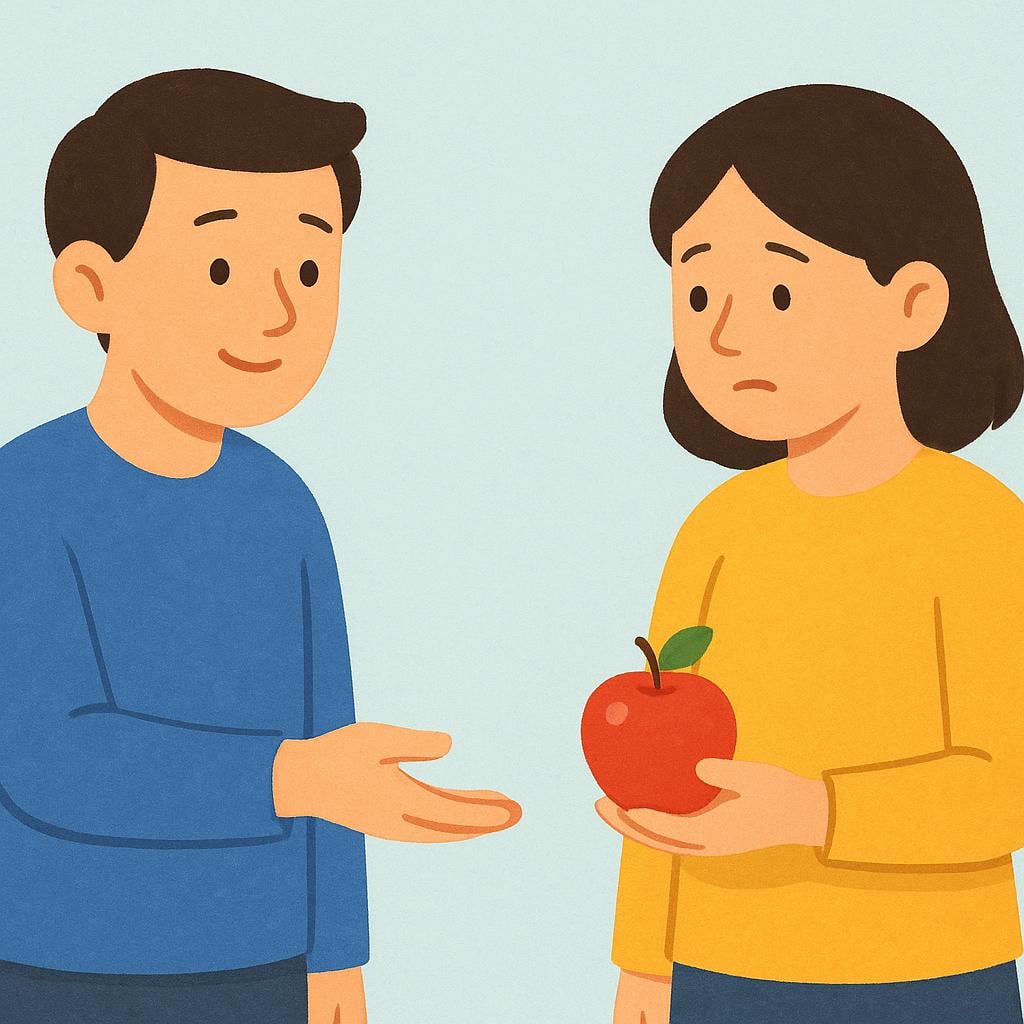
“deme” means “Give me” in Spanish (Formal command to a person you address as 'usted').
Give meAlso: Hand me
📝 In Action
Deme un vaso de agua, por favor.
A1Give me a glass of water, please.
Si no le gusta, deme el recibo y le devuelvo el dinero.
A2If you don't like it, give me the receipt and I will give you the money back.
Deme su número para llamarle mañana.
A2Give me your number so I can call you tomorrow.
Word Connections
Indicative
Present
Imperfect
Preterite
Subjunctive
Present Subjunctive
Imperfect Subjunctive
✏️ Quick Practice
Quick Quiz: deme
Question 1 of 2
Which of these requests is the most polite and formal way to ask a shop clerk for a brochure?
📚 More Resources
👥 Word Family
🎵 Rhymes
📚 Etymology
The word 'deme' is a modern Spanish construction combining the verb *dar* (to give), which comes directly from the Latin verb *dare*, with the pronoun *me* (me).
First recorded: The structure of attaching pronouns to affirmative commands dates back to early Romance languages.
Cognates (Related words)
💡 Master Spanish
Take your Spanish to the next level. Read 200+ illustrated and narrated Spanish stories tailored to your level with the Inklingo app!
Frequently Asked Questions
What is the difference between 'deme' and 'dame'?
'Deme' is the formal way to say 'give me,' used when addressing someone as *usted* (like a boss, a stranger, or an elder). 'Dame' is the informal way, used with people you address as *tú* (friends, family, children).
Why does 'deme' have an accent mark?
The accent mark is necessary because when you attach pronouns to a one-syllable verb command, the stress needs to be marked to stay on the original syllable. If the accent were missing, the stress would shift to the last syllable (de-MÉ), which is incorrect.