demuestra
“demuestra” means “shows” in Spanish. It has 2 different meanings depending on context:


shows, displays
Also: exhibits, proves
📝 In Action
Ella demuestra mucha paciencia con los niños.
A2She shows a lot of patience with the children.
El museo demuestra una colección de arte moderno.
B1The museum displays a modern art collection.
¡Demuestra que puedes hacerlo! (Tú, command)
A2Show that you can do it!
proves
Also: establishes, validates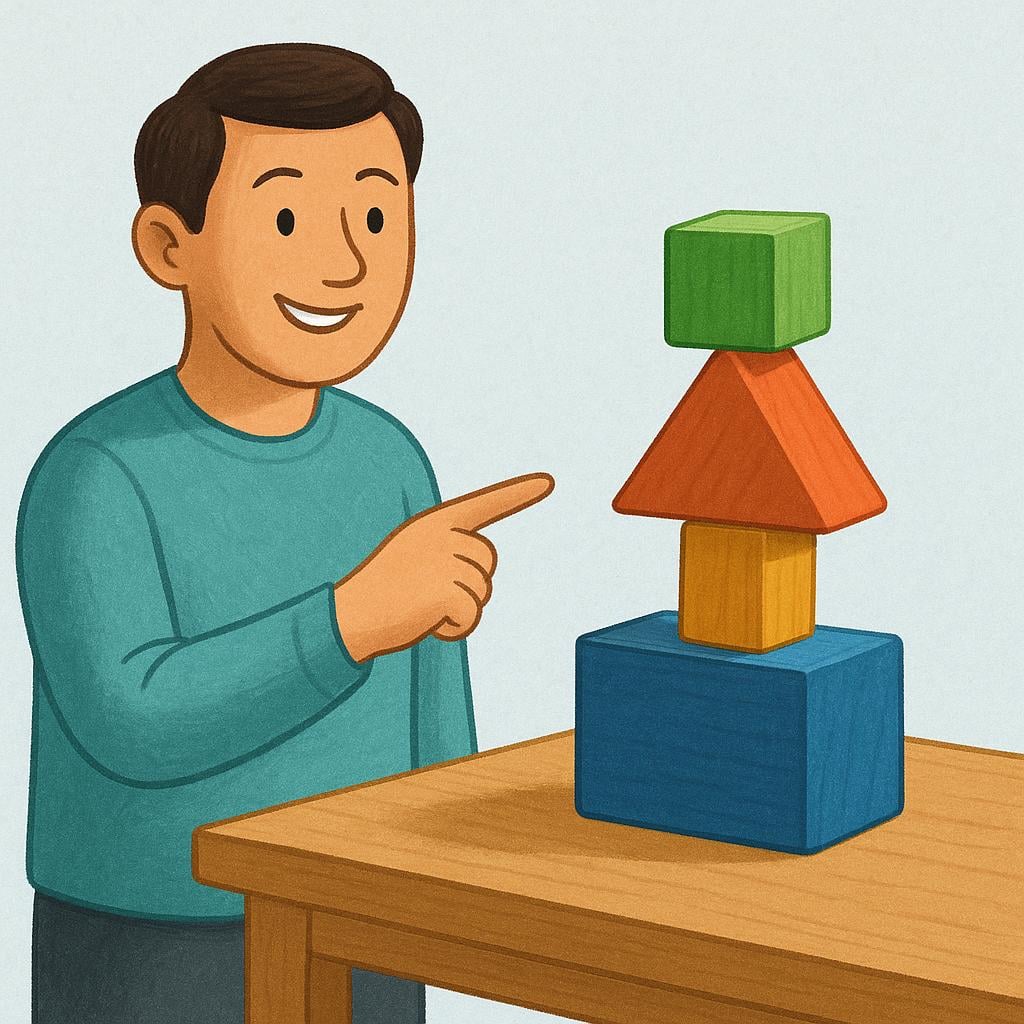
📝 In Action
El informe demuestra que la nueva política funciona.
B1The report proves that the new policy works.
Usted demuestra su compromiso con cada acción.
B2You demonstrate your commitment with every action.
La ciencia demuestra la conexión entre dieta y salud.
B2Science proves the connection between diet and health.
Indicative
Present
Imperfect
Preterite
Subjunctive
Present Subjunctive
Imperfect Subjunctive
Translate to Spanish
Words that translate to "demuestra" in Spanish:
displays→establishes→exhibits→proves→shows→validates→✏️ Quick Practice
Quick Quiz: demuestra
Question 1 of 1
Which sentence uses 'demuestra' as an informal command?
📚 More Resources
👥 Word Family▼
📚 Etymology▼
Comes from the Latin *demonstrare*, meaning 'to point out' or 'to show fully.' It combines the prefix *de-* (meaning 'completely' or 'down from') and *monstrare* (meaning 'to show').
First recorded: Medieval Spanish
Cognates (Related words)
💡 Master Spanish
Take your Spanish to the next level. Read 200+ illustrated and narrated Spanish stories tailored to your level with the Inklingo app!
Frequently Asked Questions
What is the difference between 'demuestra' and 'muestra'?
Both mean 'shows,' but 'demuestra' (from *demostrar*) often implies a stronger act of showing, proving, or exhibiting something clearly and definitively (like proving a theory). 'Muestra' (from *mostrar*) is generally used for a simpler action of pointing something out or making it visible.
Why does 'demuestra' have an 'ue' but 'demostramos' has an 'o'?
This is a common feature of Spanish stem-changing verbs. The vowel change ('o' to 'ue') only happens when that vowel is stressed when you say the word. In 'demuestra,' the 'ue' is stressed, but in 'demostramos,' the stress falls on the 'a,' so the 'o' remains unchanged.