disfrute
“disfrute” means “enjoyment” in Spanish. It has 2 different meanings depending on context:


enjoyment, pleasureAlso: benefit, use

📝 In Action
El disfrute de las vacaciones es mi prioridad este año.
B1The enjoyment of the holidays is my priority this year.
El parque ofrece un espacio de disfrute para todos los vecinos.
B2The park offers a space of enjoyment for all the neighbors.
El disfrute de los beneficios laborales comienza el primer día.
C1The benefit (or use) of the employment perks starts on the first day.
Word Connections
enjoy, I enjoy (subjunctive)Also: he/she/it enjoys (subjunctive)
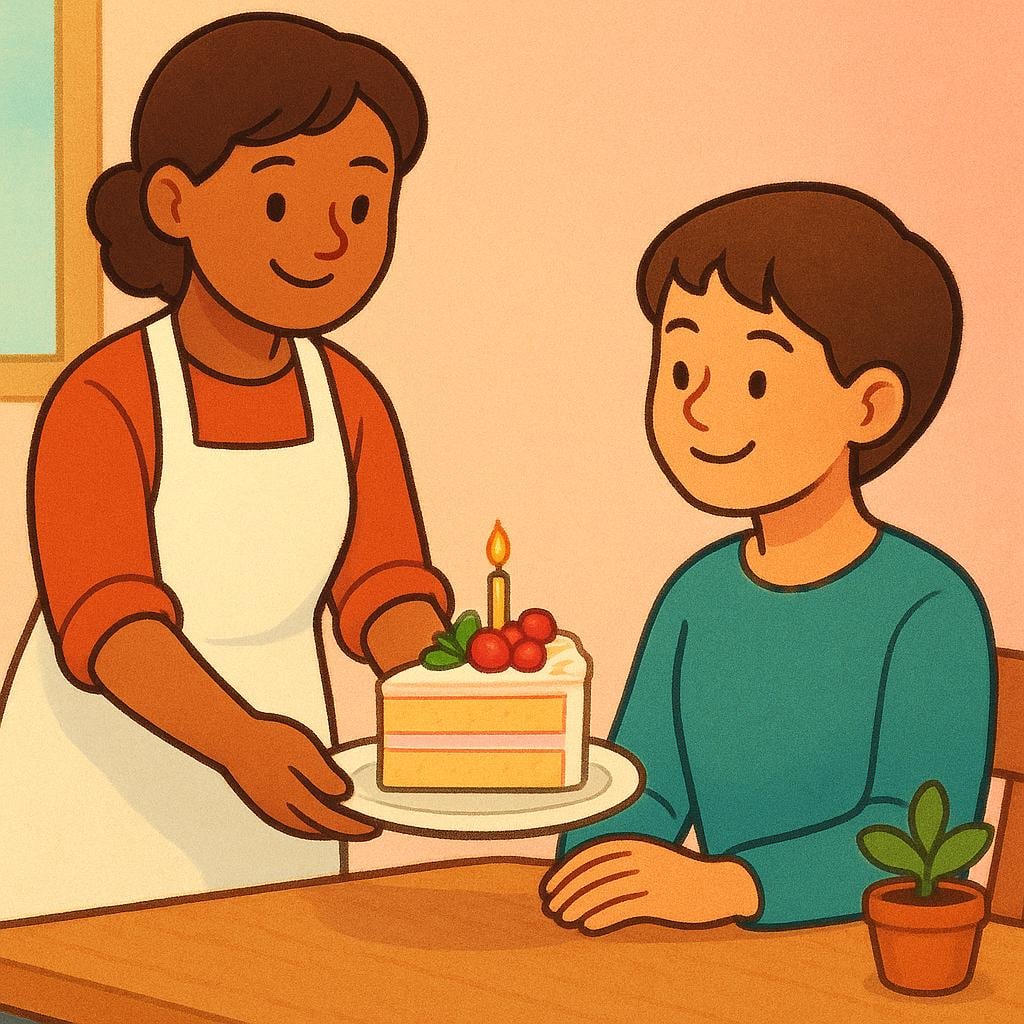
📝 In Action
¡Que disfrute su comida!
A2Enjoy your meal! (Formal way of saying it, wishing you enjoyment)
Espero que yo disfrute el concierto más que la última vez.
B1I hope that I enjoy the concert more than last time.
No creo que él disfrute trabajar tan tarde.
B2I don't think he enjoys working so late.
Word Connections
Subjunctive
Imperfect Subjunctive
Present Subjunctive
Indicative
Preterite
Imperfect
Present
✏️ Quick Practice
Quick Quiz: disfrute
Question 1 of 2
Which sentence uses 'disfrute' as a noun (the enjoyment itself)?
📚 More Resources
👥 Word Family
🎵 Rhymes
📚 Etymology
The word comes from the verb 'disfrutar,' which evolved from the Latin 'fructus' (fruit or profit). It literally means 'to take the fruit or benefit from something,' which over time became 'to enjoy.'
First recorded: 15th century
Cognates (Related words)
💡 Master Spanish
Take your Spanish to the next level. Read 200+ illustrated and narrated Spanish stories tailored to your level with the Inklingo app!
Frequently Asked Questions
What is the difference between 'disfrute' (noun) and 'diversión'?
'Disfrute' refers more to the deep, personal satisfaction or benefit derived from an activity or object (like 'the enjoyment of art'). 'Diversión' is closer to simple 'fun' or 'entertainment' (like 'the fun of a party').
Is 'disfrute' pronounced like 'disfruta'?
No. 'Disfrute' ends with a soft 'e' sound (dis-FROO-teh), while 'disfruta' ends with an 'a' sound (dis-FROO-tah). The stress is on the second syllable in both words.