Inklingo

doler

/doh-LEHR/

to hurt

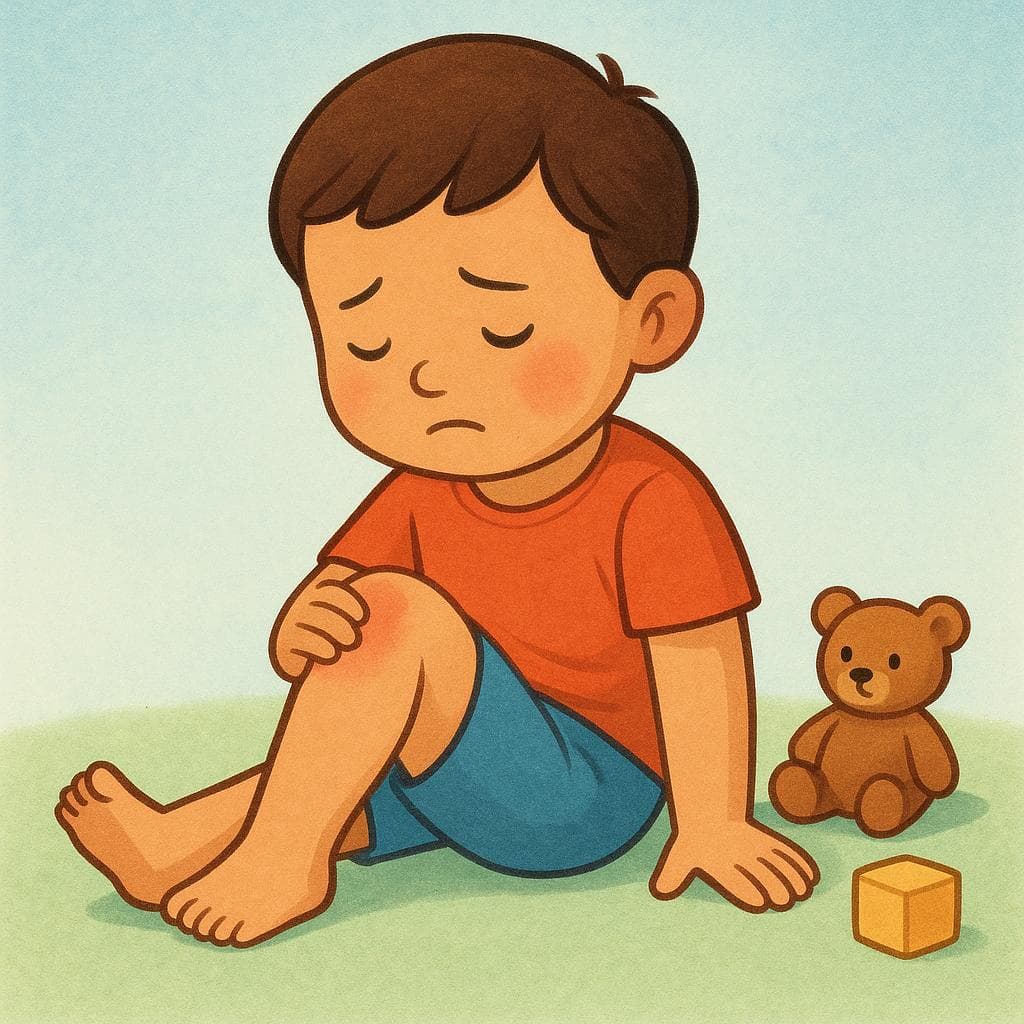
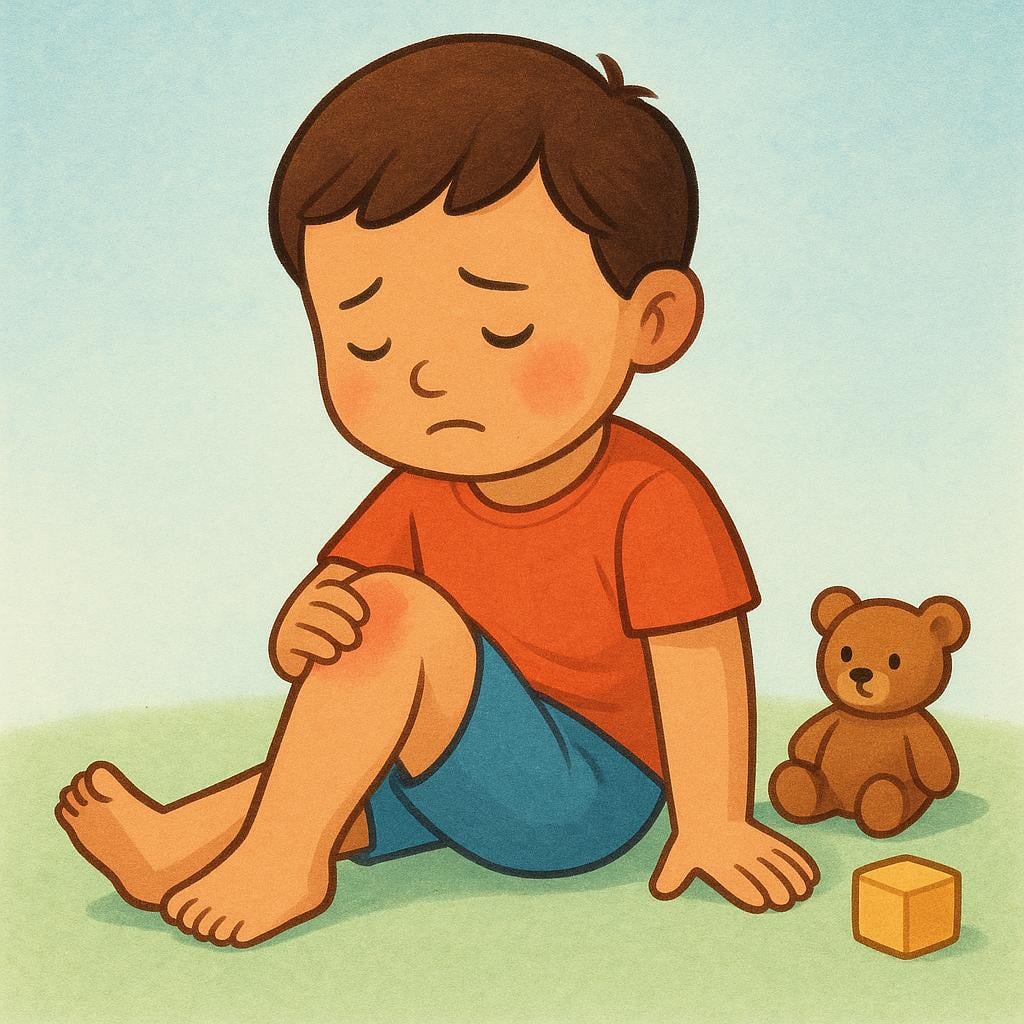
A storybook illustration of a young child sitting on the ground, clutching their knee and looking slightly distressed, indicating physical pain.

"Doler" means 'to hurt' when referring to physical pain.

doler(verb)

A1irregular (stem-changing o > ue) and used like gustar er

to hurt

?

physical pain

,

to ache

?

continuous pain

Also:

to be painful

?

describing the sensation

📝 In Action

¿Te duele la espalda después de trabajar?

A1

Does your back hurt after working?

Me duelen mucho los pies por los zapatos nuevos.

A2

My feet hurt a lot because of the new shoes.

Al dentista le dolió la cabeza todo el día.

B1

The dentist had a headache all day (literally: The head hurt the dentist all day).

Word Connections

Synonyms

Common Collocations

  • Me duele la gargantaMy throat hurts
  • Me duele el estómagoMy stomach hurts

💡 Grammar Points

Using Doler (The 'Gustar' Structure)

Unlike English ('I hurt my leg'), Spanish phrases the sentence backward: the object (the leg) is the subject, and the person feeling the pain is the indirect object. You must use 'me, te, le, nos, os, les' first.

Singular vs. Plural

The verb 'doler' must agree with the body part that is hurting. If you have one aching body part (la cabeza), use 'duele'. If you have multiple (los pies), use 'duelen'.

❌ Common Pitfalls

Forgetting the Indirect Pronoun

Mistake: "La cabeza duele (The head hurts)."

Correction: Me duele la cabeza (My head hurts me). You must include the 'me, te, le, etc.' to say who is feeling the pain.

Using the 'Yo' form incorrectly

Mistake: "Yo duelo la pierna."

Correction: Me duele la pierna. The 'yo' form (duelo) is almost never used naturally in this context, as you are usually describing the body part's action (duele/duelen) on you (me).

⭐ Usage Tips

Clarity with 'Le' and 'Les'

Since 'le' and 'les' can mean 'him,' 'her,' 'it,' 'them,' or 'you (formal),' always add 'a' + the person's name or pronoun for clarity: 'A Juan le duele el brazo.'

A storybook illustration of a lone person sitting on a wooden bench, head lowered, exhibiting a sad expression with a single tear, representing grief or sorrow.

When used to mean 'to grieve' or cause sorrow, "doler" refers to emotional pain.

doler(verb)

B1irregular (stem-changing o > ue) and used like gustar er

to grieve

?

to cause sorrow

,

to pain

?

to cause emotional distress

Also:

to regret

?

when used with something someone did

📝 In Action

Le duele mucho que sus hijos no la visiten.

B1

It pains her greatly that her children don't visit her.

Nos duele pensar en todo el tiempo perdido.

B2

It grieves us to think about all the lost time.

Me duele que la gente no sea más amable.

C1

It bothers me that people aren't kinder (literally: It pains me that people...).

Word Connections

Synonyms

  • entristecer (to sadden)
  • lamentar (to regret)

Antonyms

  • alegrar (to make happy)

Common Collocations

  • Me duele el almaMy soul aches (deep emotional pain)
  • Me duele decir que...It pains me to say that...

💡 Grammar Points

Doler + Subjunctive

When 'doler' expresses regret or sadness about someone else's action or a situation, the verb that follows must be in the subjunctive mood (the special form for wishes and feelings): 'Me duele que vivas tan lejos.'

❌ Common Pitfalls

Mixing Physical and Emotional Contexts

Mistake: "Me duele la noticia (I hurt the news)."

Correction: Me entristece la noticia (The news saddens me). While 'doler' works, 'entristecer' or 'dar pena' are often smoother for general bad news.

⭐ Usage Tips

Expressing Sympathy

A common way to express sympathy for someone's misfortune is to say 'Cuánto me duele,' meaning 'How much that pains me.'

🔄 Conjugations

subjunctive

imperfect

él/ella/usteddoliera
yodoliera
ellos/ellas/ustedesdolieran
dolieras
vosotrosdolierais
nosotrosdoliéramos

present

él/ella/ustedduela
yoduela
ellos/ellas/ustedesduelan
duelas
vosotrosdoláis
nosotrosdolamos

indicative

imperfect

él/ella/usteddolía
yodolía
ellos/ellas/ustedesdolían
dolías
vosotrosdolíais
nosotrosdolíamos

present

él/ella/ustedduele
yoduelo
ellos/ellas/ustedesduelen
dueles
vosotrosdoléis
nosotrosdolemos

preterite

él/ella/usteddolió
yodolí
ellos/ellas/ustedesdolieron
doliste
vosotrosdolisteis
nosotrosdolimos

✏️ Quick Practice

💡 Quick Quiz: doler

Question 1 of 2

Which sentence correctly uses 'doler' to mean 'My knees hurt'?

📚 More Resources

Word Family

Frequently Asked Questions

Why is 'doler' considered an irregular verb?

It's irregular because of the stem change. In the present tense, the 'o' changes to 'ue' in the 'boot' forms (yo, tú, él/ella, ellos/ellas): *doler* becomes *duelo*, *duele*, *duelen*. The 'nosotros' and 'vosotros' forms stay regular (*dolemos*, *doléis*).

Is it okay to use 'doler' for minor annoyances, or just serious pain?

It is usually reserved for actual pain or deep emotional distress. For minor annoyances, it is better to use 'molestar' (to bother) or 'picar' (to itch).