Inklingo

molestar

/moh-lehs-tahr/

to bother

A storybook illustration showing a person frowning in annoyance as a small mosquito buzzes loudly near their ear while they try to read a book.

Use molestar when you want to say 'to bother' or 'to annoy' someone.

molestar(verb)

A1regular ar

to bother

?

to annoy or disturb someone

,

to annoy

?

to cause mild irritation

Also:

to irritate

?

to make slightly angry

,

to disturb

?

to interrupt someone

📝 In Action

Por favor, no molestes al perro mientras come.

A1

Please, don't bother the dog while it eats.

¿Le molesta si abro la ventana?

A2

Does it bother you if I open the window?

Me molesta mucho el ruido de la calle.

A2

The street noise annoys me a lot.

Word Connections

Synonyms

  • fastidiar (to bother/pester)
  • irritar (to irritate)

Antonyms

  • agradar (to please)
  • contentar (to make happy)

Common Collocations

  • molestar a alguiento bother someone
  • no te molestesdon't bother (yourself)

💡 Grammar Points

Using 'Molestar' like 'Gustar'

When talking about things that bother you, 'molestar' often works backwards, just like 'gustar' (to like). You use 'me', 'te', 'le', etc., followed by the verb. Example: 'Me molesta el calor' (The heat bothers me).

❌ Common Pitfalls

Using 'Molestar' for 'To be Bothered'

Mistake: "Estoy molestando (I am bothered)."

Correction: Estoy molesto/a (I am bothered/annoyed). 'Molestar' means 'to annoy,' so 'estoy molestando' means 'I am annoying (someone).'

⭐ Usage Tips

A Polite Interruption

To politely get someone's attention, you can say: 'Disculpa que te moleste...' (Excuse me for bothering you...).

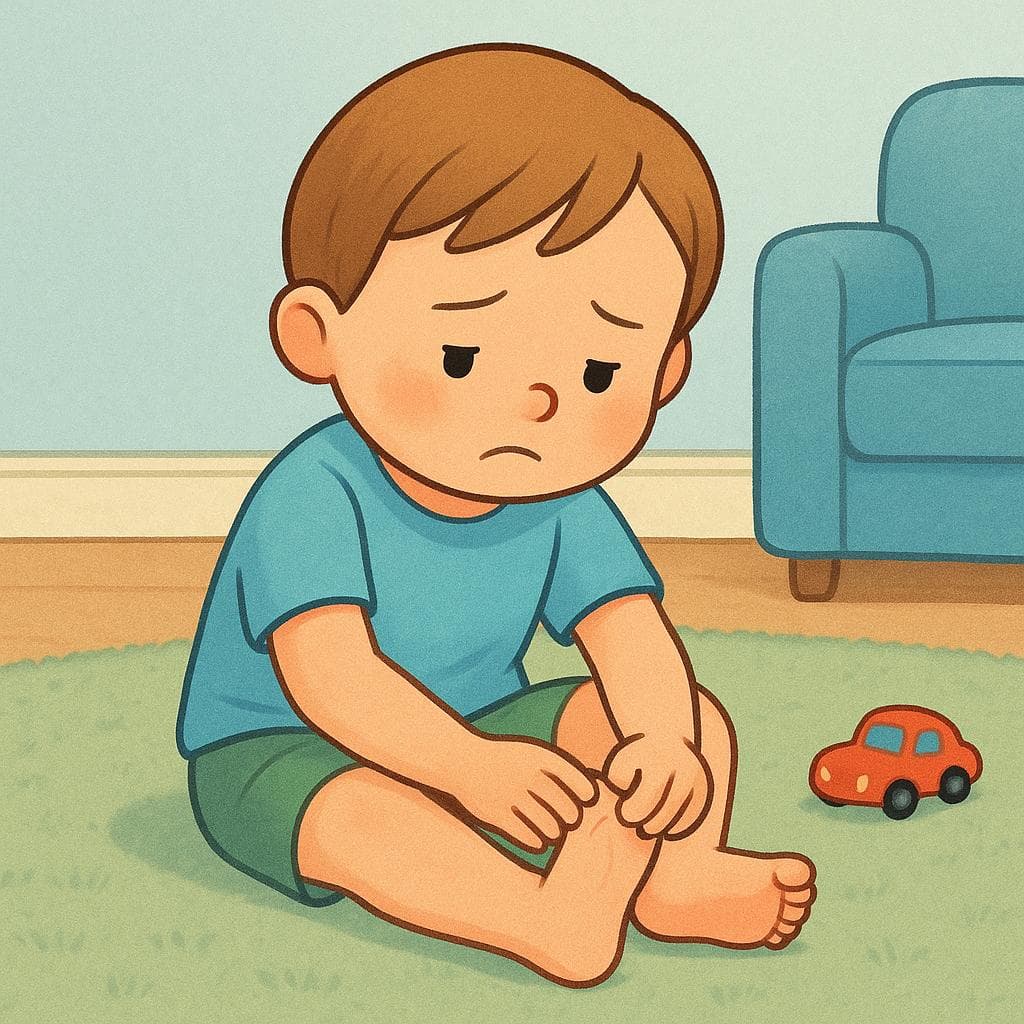
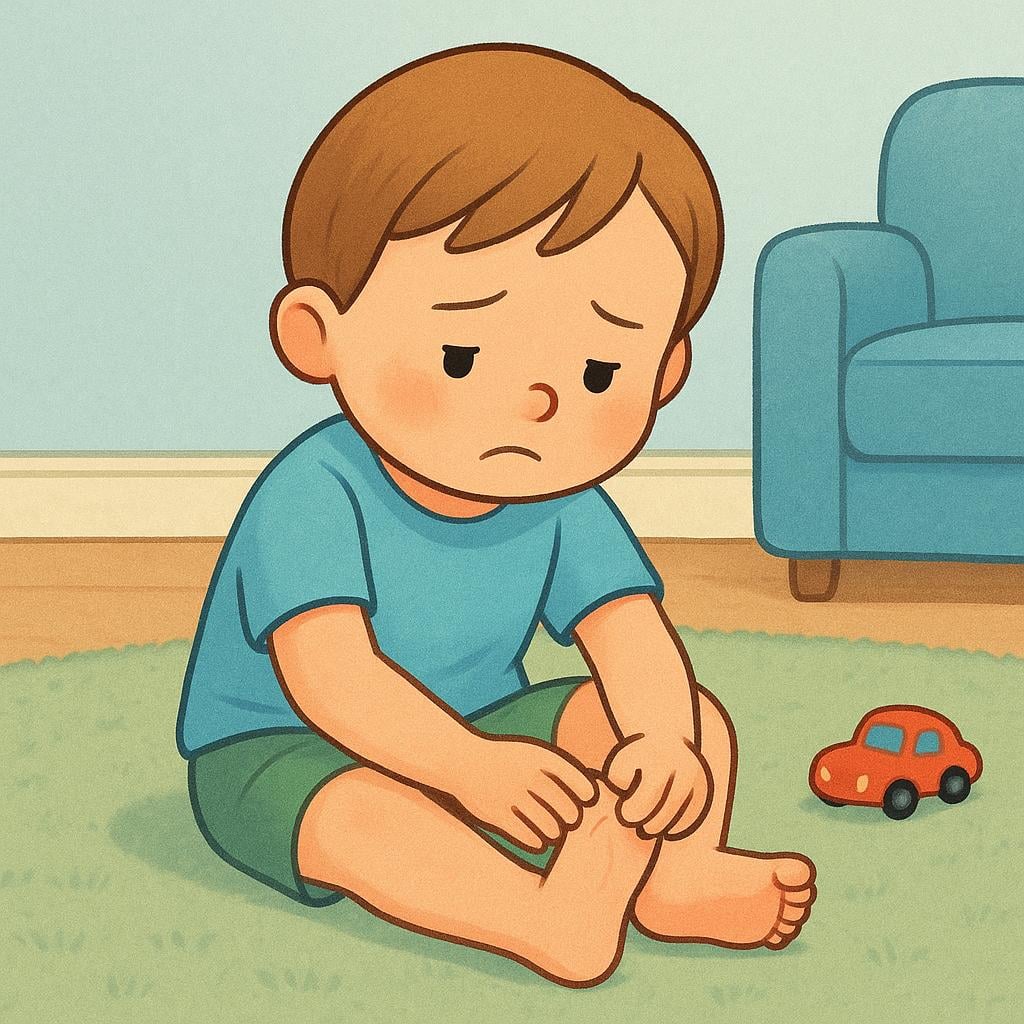
A storybook illustration of a young child sitting and gently holding their toe with a slightly pained expression, illustrating mild physical discomfort after stubbing it.

In Spanish, molestar can also mean 'to hurt' when referring to mild physical pain or discomfort.

molestar(verb)

B1regular ar

to hurt

?

to cause mild physical pain or discomfort

,

to trouble

?

to cause a mild physical ailment

Also:

to ache

?

when referring to a body part

📝 In Action

¿Te molesta la espalda después de hacer ejercicio?

B1

Does your back hurt after exercising?

La etiqueta de la camisa me molesta mucho.

A2

The shirt tag bothers/irritates me a lot.

El doctor preguntó si algo le molestaba al caminar.

B2

The doctor asked if anything troubled him when walking.

Word Connections

Synonyms

  • doler (to hurt (more intense pain))
  • incomodar (to make uncomfortable)

Common Collocations

  • me molesta la gargantamy throat hurts
  • molestar la vistato strain the eyes

💡 Grammar Points

Using 'Molestar' vs. 'Doler'

'Molestar' is usually for minor, temporary, or irritating discomfort (like a scratchy throat or a tight shoe). 'Doler' is used for actual, usually sharper pain (like a broken bone or a headache).

⭐ Usage Tips

Asking About Pain

When asking about pain, you can use '¿Qué te molesta?' (What is bothering you?) to ask where the discomfort is coming from.

🔄 Conjugations

indicative

present

él/ella/ustedmolesta
yomolesto
molestas
ellos/ellas/ustedesmolestan
nosotrosmolestamos
vosotrosmolestáis

imperfect

él/ella/ustedmolestaba
yomolestaba
molestabas
ellos/ellas/ustedesmolestaban
nosotrosmolestábamos
vosotrosmolestabais

preterite

él/ella/ustedmolestó
yomolesté
molestaste
ellos/ellas/ustedesmolestaron
nosotrosmolestamos
vosotrosmolestasteis

subjunctive

present

él/ella/ustedmoleste
yomoleste
molestes
ellos/ellas/ustedesmolesten
nosotrosmolestemos
vosotrosmolestéis

imperfect

él/ella/ustedmolestara
yomolestara
molestaras
ellos/ellas/ustedesmolestaran
nosotrosmolestáramos
vosotrosmolestarais

✏️ Quick Practice

💡 Quick Quiz: molestar

Question 1 of 2

Which sentence correctly uses 'molestar' to describe being annoyed by a loud sound?

📚 More Resources

Frequently Asked Questions

Why does 'molestar' sometimes sound like 'to molest' in English?

While the words share a common Latin root (*molestare*), their meanings have separated. In Spanish, 'molestar' only means 'to bother, annoy, or cause discomfort.' It does NOT carry the serious legal/sexual connotation of the English word 'to molest.' For that meaning, Spanish uses verbs like 'abusar' or 'acosar'.

How do I say 'I am bothered' using 'molestar'?

You use the adjective form: 'Estoy molesto' (if you are male) or 'Estoy molesta' (if you are female). You would NOT say 'Estoy molestando' unless you meant 'I am currently annoying someone else.'