escuchan
“escuchan” means “they listen” in Spanish (Present tense action (ellos/ellas)).
they listen, you listen
Also: they are listening, you hear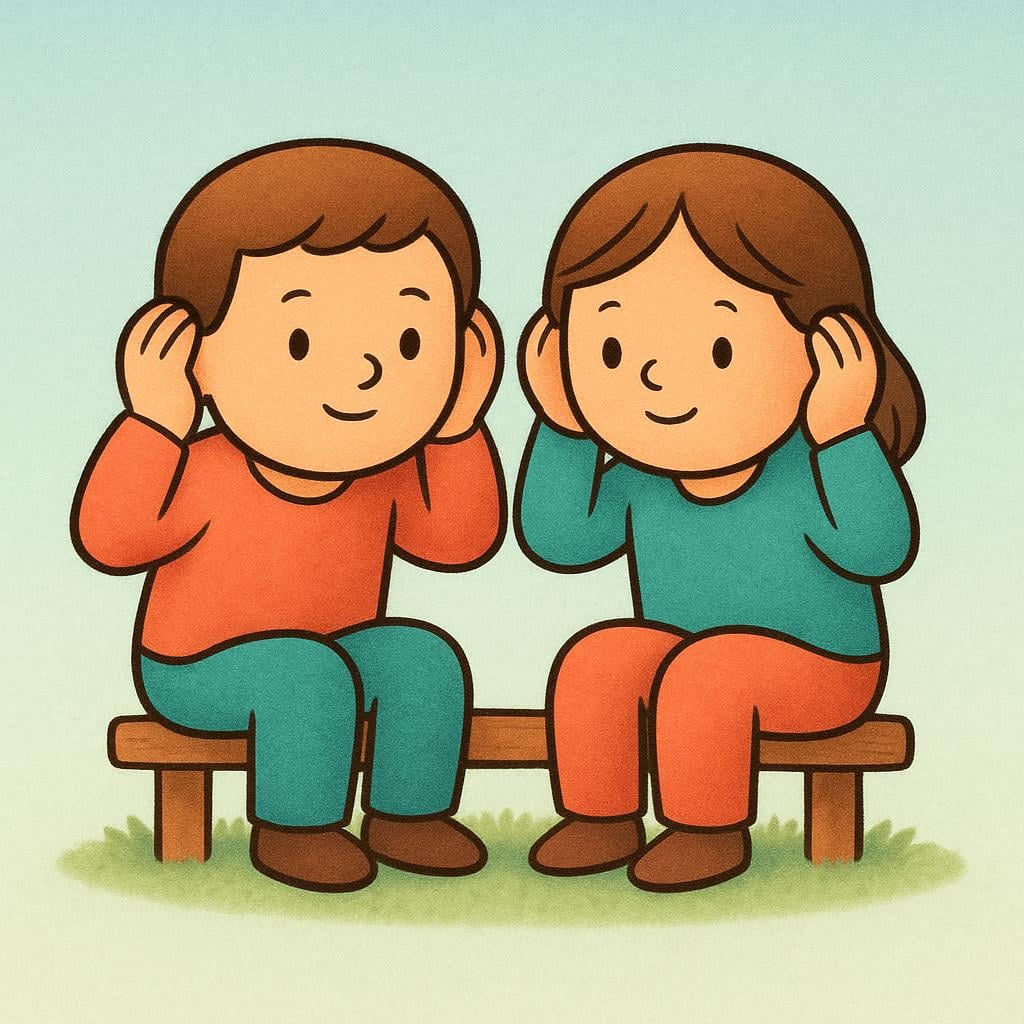
📝 In Action
Los niños escuchan un cuento antes de dormir.
A1The children listen to a story before sleeping.
Ustedes escuchan música muy fuerte en el coche.
A2You (plural formal) listen to music very loudly in the car.
Es importante que me escuchen cuando hablo de seguridad.
B1It is important that they listen to me when I talk about safety. (Special verb form)
¡Escuchen! Hay un anuncio urgente.
A2Listen! There is an urgent announcement. (Command form)
Indicative
Present
Imperfect
Preterite
Subjunctive
Present Subjunctive
Imperfect Subjunctive
Translate to Spanish
✏️ Quick Practice
Quick Quiz: escuchan
Question 1 of 1
If you are addressing a group of teachers formally, which meaning of 'escuchan' are you most likely using?
📚 More Resources
👥 Word Family▼
🎵 Rhymes▼
📚 Etymology▼
Comes from the Latin verb *auscultare*, meaning 'to listen attentively' or 'to pay heed.' It emphasizes focused, intentional listening, differentiating it from merely hearing.
First recorded: Around the 10th-11th century in Old Spanish.
Cognates (Related words)
💡 Master Spanish
Take your Spanish to the next level. Read 200+ illustrated and narrated Spanish stories tailored to your level with the Inklingo app!
Frequently Asked Questions
Why does 'escuchan' mean both 'they listen' and 'you listen'?
'Escuchan' is the third-person plural form. In Spanish, the formal plural 'you' (ustedes) shares the same verb ending as 'they' (ellos/ellas). You rely on context or the use of the pronoun (ustedes) to know who is listening.
How do I know if 'escuchan' is a statement or a command?
If it's a command, it is usually at the beginning of the phrase and often accompanied by exclamation marks or words like 'por favor' (please). If it is part of a longer sentence starting with 'Quiero que...' or 'Espero que...', it is the special verb form (subjunctive).