Inklingo

excusa

/eks-KOO-sah/

excuse

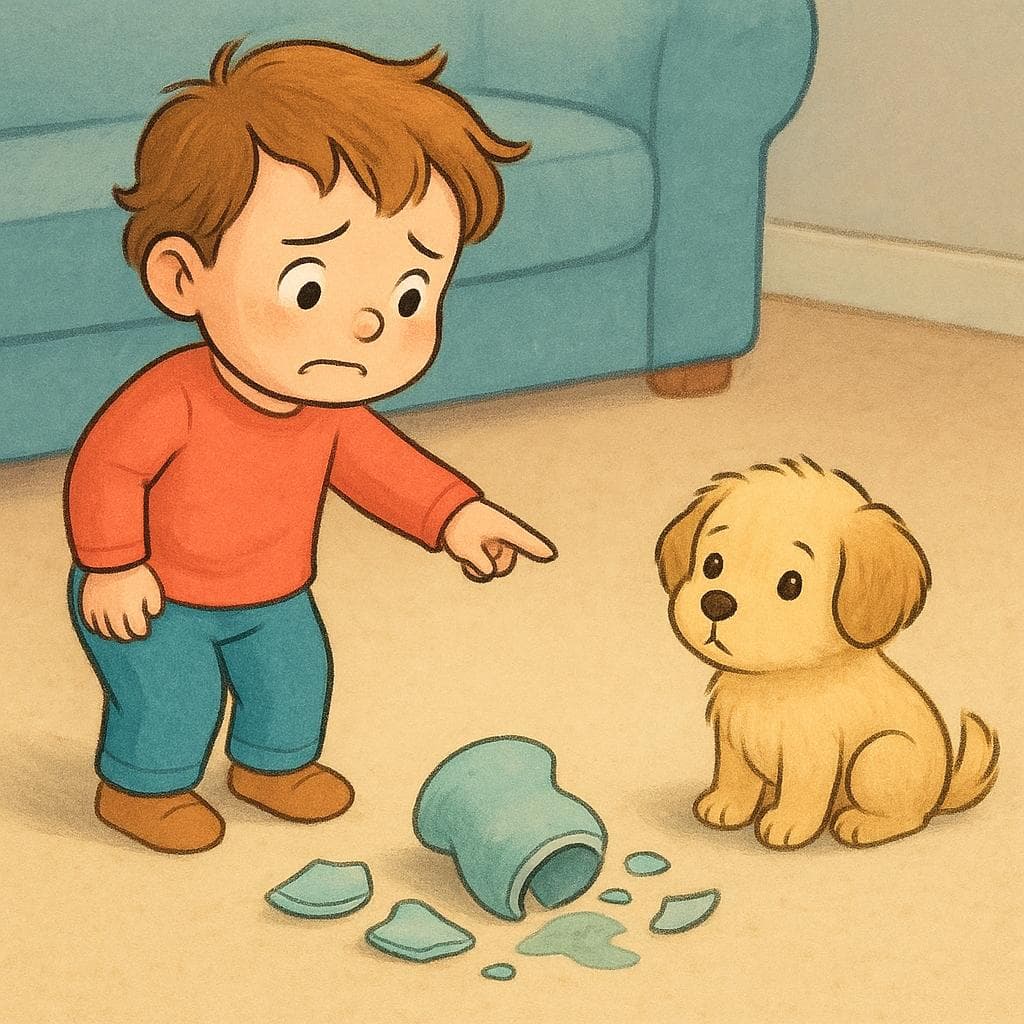
A storybook illustration of a child standing next to a broken vase, nervously pointing at a small puppy as if blaming the pet for the accident.

When you offer an excusa (excuse), you give a reason for a fault.

excusa(noun)

fA1

excuse

?

reason given for a fault

Also:

pretext

?

a false reason used to hide the real motive

,

justification

?

a valid reason

📝 In Action

Su excusa para no venir fue que su perro estaba enfermo.

A1

His excuse for not coming was that his dog was sick.

No tengo ninguna buena excusa para mi error.

A1

I don't have any good excuse for my mistake.

Usó el tráfico como excusa para llegar tarde a la reunión.

B1

He used the traffic as a pretext for arriving late to the meeting.

Word Connections

Synonyms

  • disculpa (apology / excuse)
  • pretexto (pretext)

Common Collocations

  • poner una excusato make an excuse
  • inventar una excusato invent an excuse

💡 Grammar Points

Gender Check

Remember that 'excusa' is always a feminine word, so you must use 'la' or 'una' with it: 'una excusa ridícula'.

⭐ Usage Tips

Disculpa vs. Excusa

'Disculpa' is often used when asking for forgiveness ('Pido disculpas'), while 'excusa' is the reason you give for the mistake.

A storybook illustration showing a kind adult smiling gently and raising a hand in a forgiving gesture towards a smaller figure who looks relieved.

When someone excusa (excuses) another, they pardon them for a fault or shortcoming.

excusa(verb)

A2regular ar

(He/She/It) excuses

?

3rd person singular present tense of 'excusar'

,

(You formal) excuse

?

2nd person singular formal present tense of 'excusar'

Also:

forgives

?

when referring to pardoning a fault

📝 In Action

Ella siempre excusa la mala conducta de su hijo.

A2

She always excuses her son's bad behavior.

Usted excusa a los demás, pero nunca se excusa a sí mismo.

B1

You excuse others, but you never excuse yourself.

Word Connections

Synonyms

  • disculpar (to pardon)
  • perdonar (to forgive)

Common Collocations

  • excusar a alguiento excuse someone

💡 Grammar Points

Reflexive Use

To say 'to excuse oneself' or 'to apologize for oneself,' use the reflexive form: 'excusarse'. For example, 'Me excusé por mi error' (I excused myself for my mistake).

❌ Common Pitfalls

Using 'excusa' for 'Must'

Mistake: "Using 'excusa' where 'debe' is needed (e.g., 'Ella excusa estudiar' for 'She must study')."

Correction: This is incorrect. Use 'excusar' only for forgiving or justifying. For obligation, use 'deber' or 'tener que'.

🔄 Conjugations

indicative

present

él/ella/ustedexcusa
yoexcuso
excusas
ellos/ellas/ustedesexcusan
nosotrosexcusamos
vosotrosexcusáis

imperfect

él/ella/ustedexcusaba
yoexcusaba
excusabas
ellos/ellas/ustedesexcusaban
nosotrosexcusábamos
vosotrosexcusabais

preterite

él/ella/ustedexcusó
yoexcusé
excusaste
ellos/ellas/ustedesexcusaron
nosotrosexcusamos
vosotrosexcusasteis

subjunctive

present

él/ella/ustedexcuse
yoexcuse
excuses
ellos/ellas/ustedesexcusen
nosotrosexcusamos
vosotrosexcuséis

imperfect

él/ella/ustedexcusara / excusase
yoexcusara / excusase
excusaras / excusases
ellos/ellas/ustedesexcusaran / excusasen
nosotrosexcusáramos / excusásemos
vosotrosexcusarais / excusaseis

✏️ Quick Practice

💡 Quick Quiz: excusa

Question 1 of 2

¿Cuál es la mejor traducción de 'Ella siempre tiene una excusa nueva'?

📚 More Resources

Word Family

Frequently Asked Questions

Is 'excusa' a positive or negative word?

It is usually neutral, but it often carries a negative connotation, implying the reason given might be weak or false (a 'lame excuse').