grita
“grita” means “shouts” in Spanish. It has 2 different meanings depending on context:


shouts, yells
Also: is screaming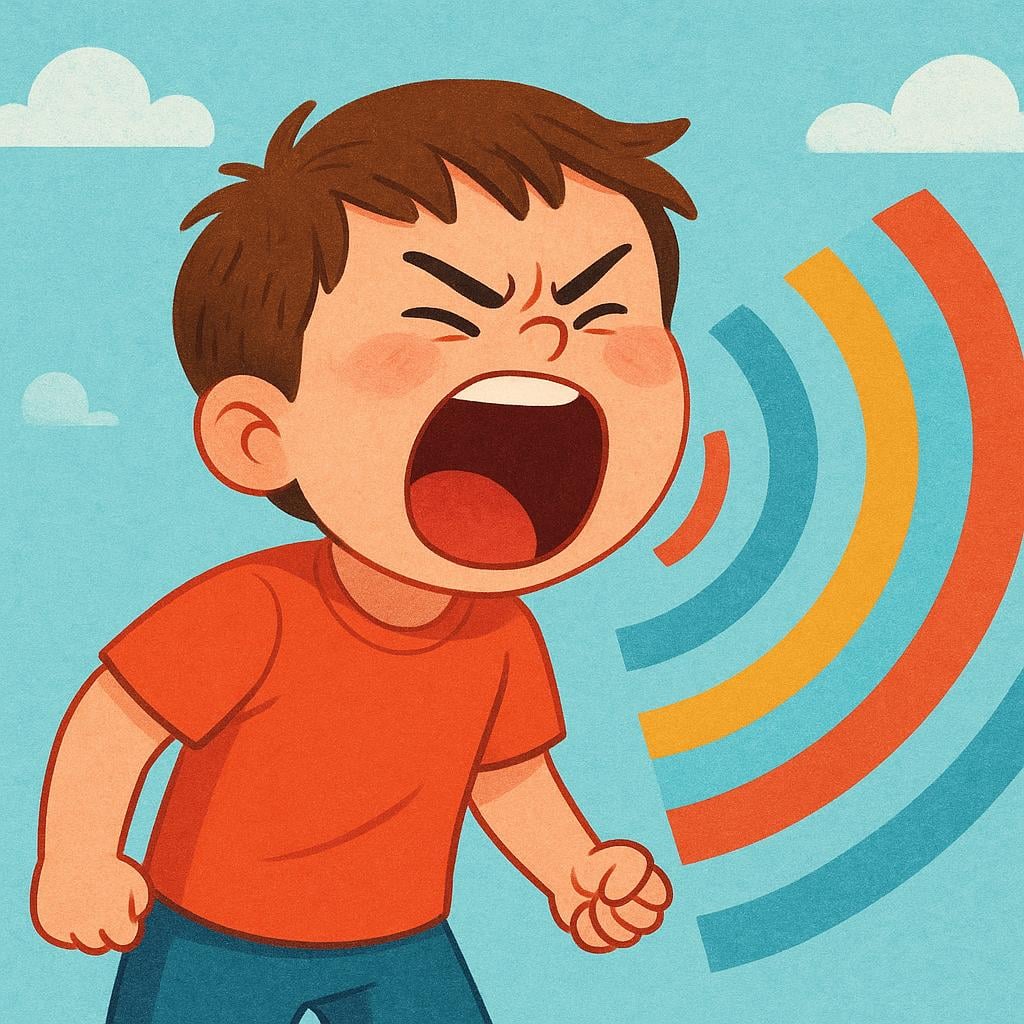
📝 In Action
Mi hermana grita cuando ve una araña.
A1My sister screams when she sees a spider.
Usted grita demasiado fuerte en la biblioteca.
A2You (formal) shout too loudly in the library.
¡Grita si necesitas ayuda!
A1Shout if you need help!
shout, yell
Also: war cry
📝 In Action
Una grita de alarma resonó en el valle.
B2A shout of alarm echoed in the valley.
La multitud lanzó una grita de protesta.
C1The crowd let out a yell of protest.
Indicative
Present
Imperfect
Preterite
Subjunctive
Present Subjunctive
Imperfect Subjunctive
Translate to Spanish
✏️ Quick Practice
Quick Quiz: grita
Question 1 of 2
Which of the following sentences uses 'grita' as a command?
📚 More Resources
👥 Word Family▼
🎵 Rhymes▼
📚 Etymology▼
The root verb 'gritar' comes from the Vulgar Latin *critare*, which itself is thought to be an imitative word—meaning it was created to mimic the sound of a cry or shout.
First recorded: Around the 13th century
Cognates (Related words)
💡 Master Spanish
Take your Spanish to the next level. Read 200+ illustrated and narrated Spanish stories tailored to your level with the Inklingo app!
Frequently Asked Questions
Is 'grita' the same as 'grito'?
'Grita' and 'grito' are different. 'Grita' is primarily a verb form ('he/she shouts' or 'Shout!'). 'Grito' is the standard masculine noun meaning 'a shout' (the sound itself).
How do I know if 'grita' is a command or a statement?
You usually tell by the context or punctuation. If it's used with 'él,' 'ella,' or 'usted,' it's a statement ('He shouts'). If it's used alone, often with an exclamation mark, and addressing 'tú,' it's a command ('Shout!').