imaginaba
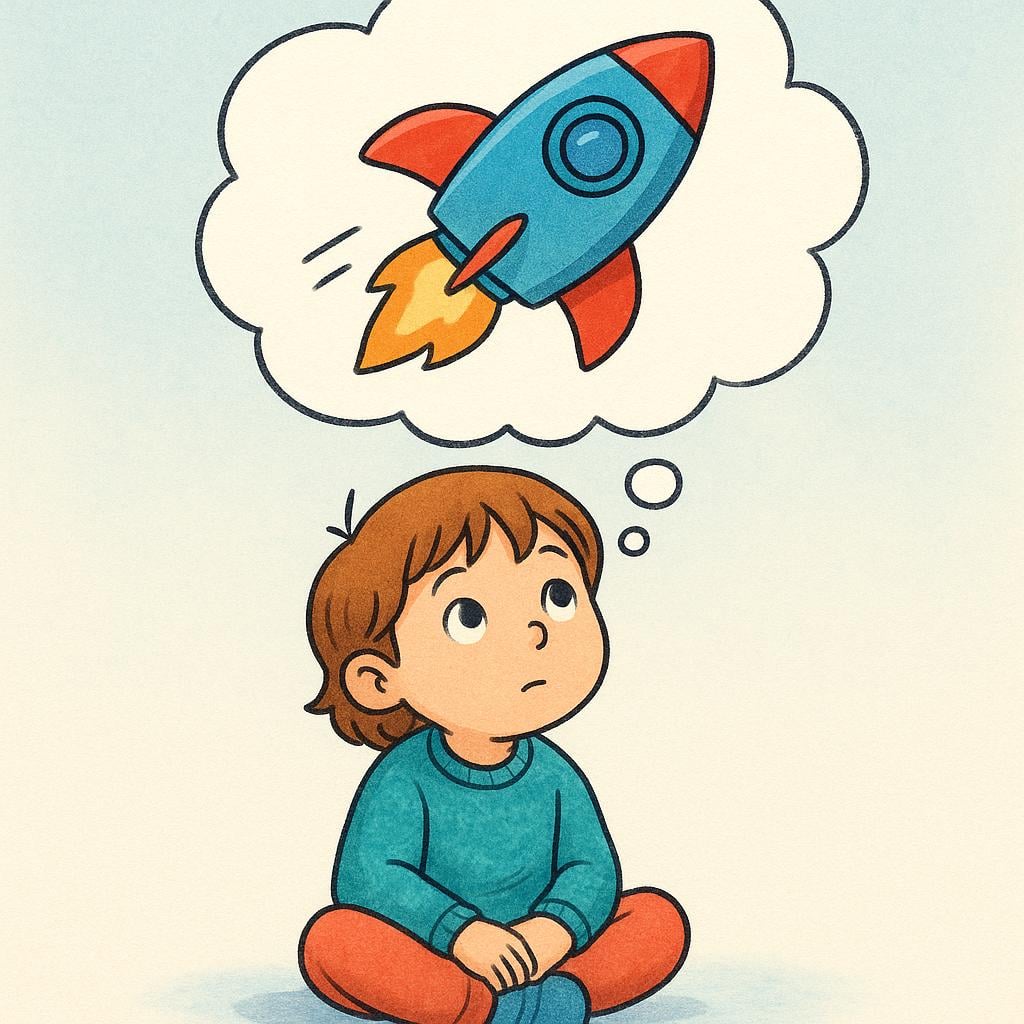
“imaginaba” means “I was imagining” in Spanish (First person singular past continuous).
I was imagining, He/She was imagining, I used to imagineAlso: I pictured, You (formal) were imagining
📝 In Action
Cuando era niño, imaginaba que vivía en un castillo.
A2When I was little, I used to imagine that I lived in a castle.
Ella no sabía qué pasaba, solo imaginaba lo peor.
B1She didn't know what was happening, she was only imagining the worst.
Yo imaginaba que el viaje sería más difícil, pero fue fácil.
B1I had imagined (or was imagining) that the trip would be harder, but it was easy.
Word Connections
Indicative
Present
Imperfect
Preterite
Subjunctive
Present Subjunctive
Imperfect Subjunctive
Translate to Spanish
Words that translate to "imaginaba" in Spanish:
✏️ Quick Practice
Quick Quiz: imaginaba
Question 1 of 1
Which sentence correctly uses 'imaginaba' to describe a repetitive past action?
📚 More Resources
👥 Word Family
📚 Etymology
Comes from the Latin verb *imaginari*, meaning 'to form a mental image' or 'to picture to oneself'. It has been a core part of Spanish vocabulary since its earliest days.
First recorded: c. 13th century
Cognates (Related words)
💡 Master Spanish
Take your Spanish to the next level. Read 200+ illustrated and narrated Spanish stories tailored to your level with the Inklingo app!
Frequently Asked Questions
Why does 'imaginaba' mean both 'I was imagining' and 'He/She was imagining'?
In the imperfect tense, the verb ending for 'yo' (I) and 'él/ella/usted' (he/she/you formal) is identical. Spanish speakers rely on the context of the conversation or the use of the subject pronoun (like 'yo' or 'él') to clarify who is performing the action.
Is 'imaginaba' the same as 'estaba imaginando'?
They are very similar! 'Estaba imaginando' (the continuous past) emphasizes that the action was happening right at that moment. 'Imaginaba' (the simple imperfect) is more general and can mean it was happening continuously OR that it was a repeated habit.