Inklingo

imaginado

/ee-mah-hee-NAH-doh/

imagined

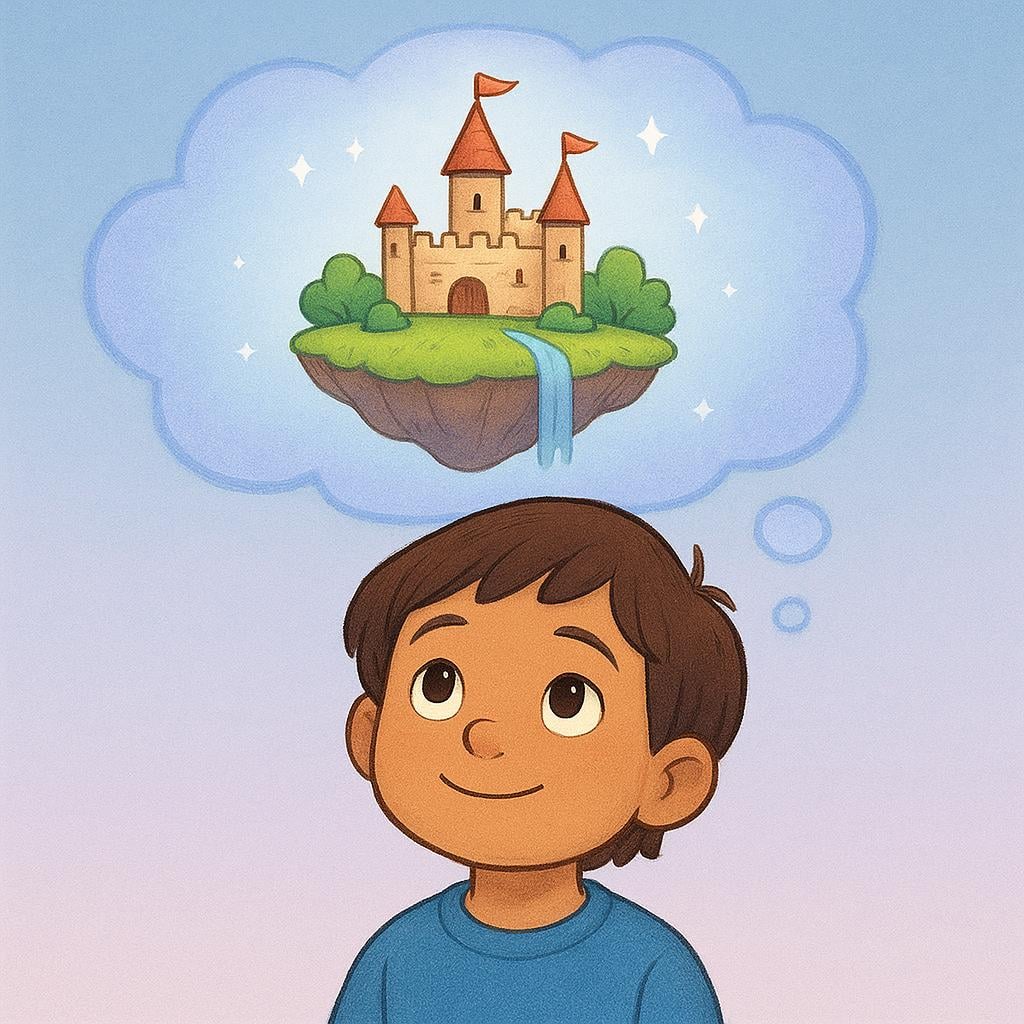
A colorful storybook illustration of a young child gazing upwards. Above the child's head, a translucent, glowing image of a fantastical floating island with a tiny castle appears, representing a thought or imagined concept.

When something is imaginado, it is conceived purely in the mind, like this fantastic floating island.

imaginado(Adjective)

mB1

imagined

?

conceived in the mind

,

fictional

?

not real

Also:

hypothetical

?

theoretical

📝 In Action

El monstruo imaginado por el niño era verde y peludo.

B1

The monster imagined by the boy was green and hairy.

Esa es solo una solución imaginada, no es práctica.

B2

That is only an imagined solution; it's not practical.

Word Connections

Synonyms

  • ficticio (fictitious)
  • soñado (dreamed)

Antonyms

Common Collocations

  • un mundo imaginadoan imagined world
  • peligro imaginadoimagined danger

💡 Grammar Points

Gender and Number Agreement

As an adjective, 'imaginado' must change its ending to match the noun it describes: 'imaginada' (f. singular), 'imaginados' (m. plural), 'imaginadas' (f. plural).

❌ Common Pitfalls

Forgetting the Agreement

Mistake: "La idea imaginado."

Correction: La idea imaginada. (The ending must change from -o to -a to match 'idea'.)

⭐ Usage Tips

Use with 'Ser'

Use the verb 'ser' (to be) with 'imaginado' to describe the essential nature of something: 'El problema es imaginado' (The problem is fictional/made up).

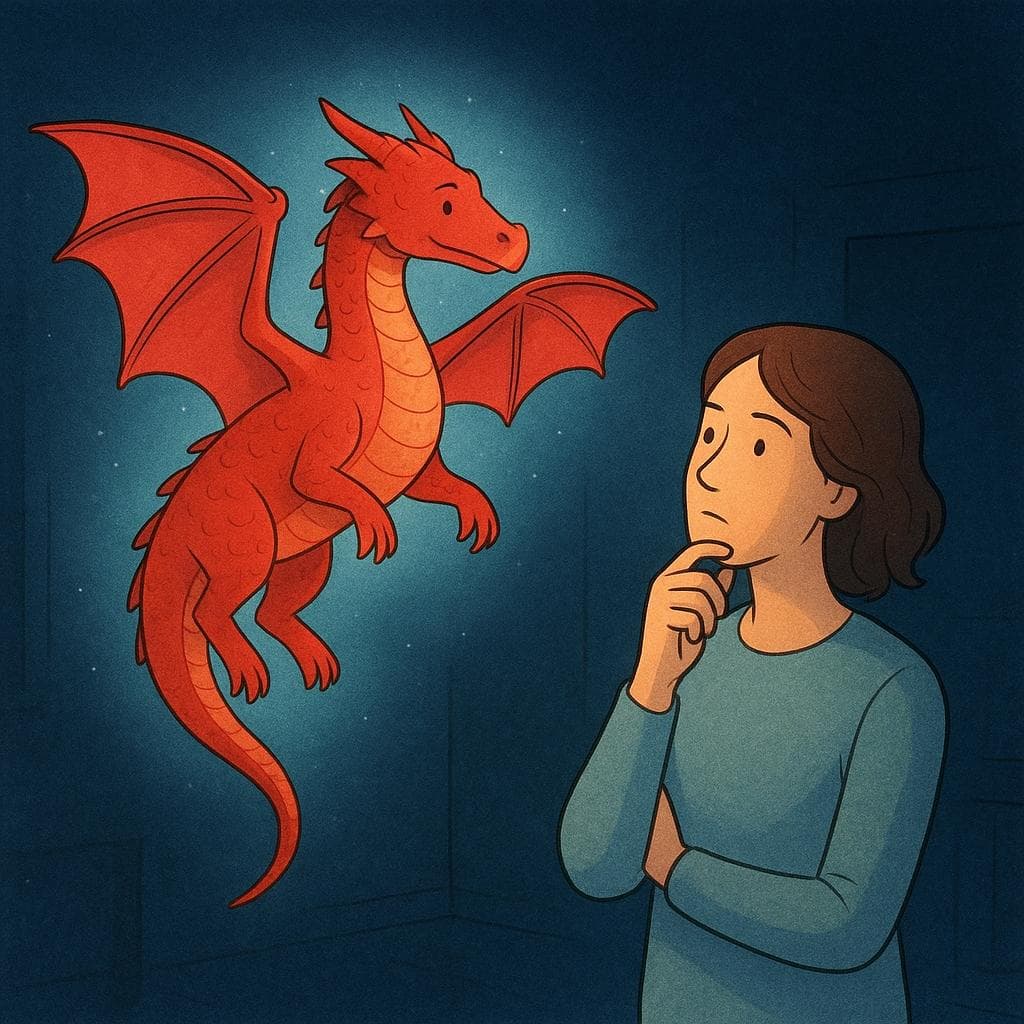
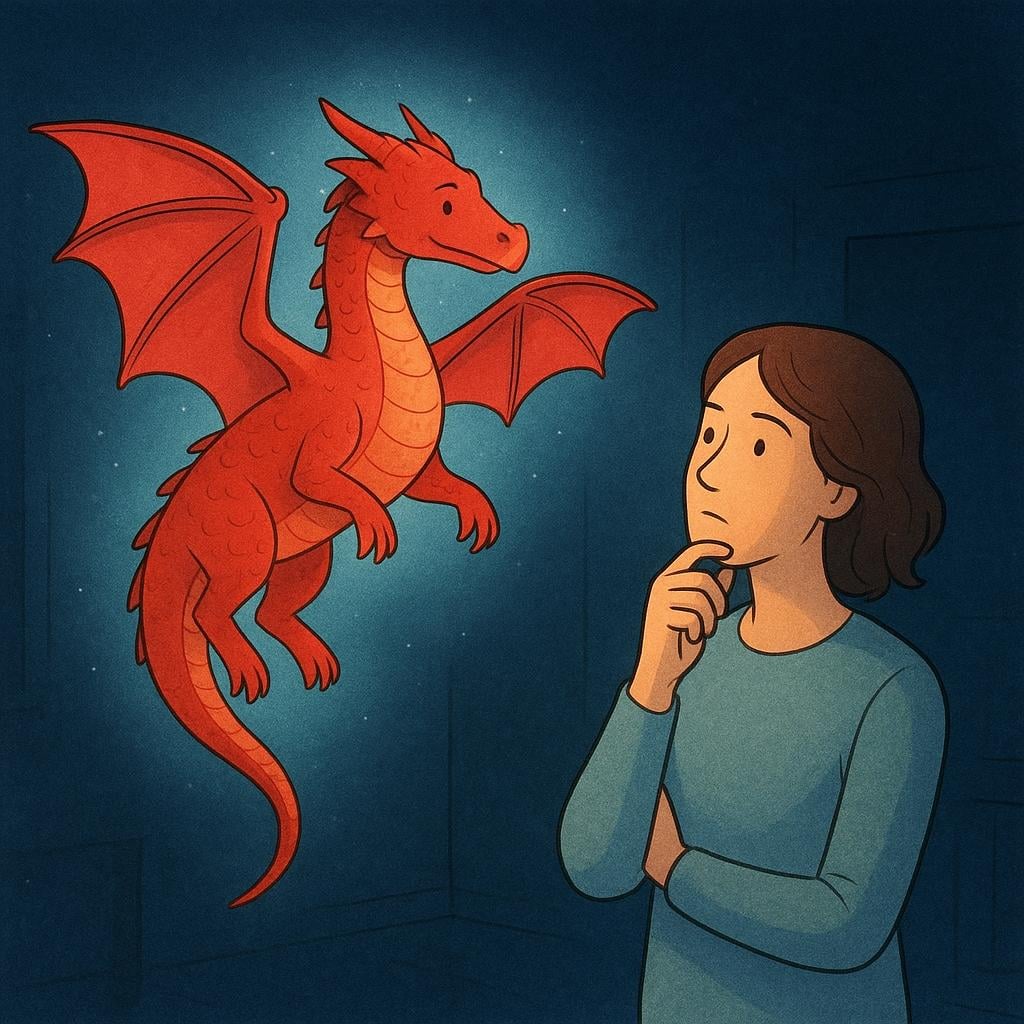
A storybook illustration showing a thoughtful person standing in a dimly lit space. A bright, fully realized, three-dimensional mental projection of a vibrant red flying dragon is floating clearly in front of them.

As a past participle, imaginado refers to the completed action of having formed a mental image, such as 'he has imagined' a dragon.

imaginado(Past Participle)

A2

imagined

?

in compound verb structures (e.g., 'has imagined')

Also:

conceived

?

in a passive structure

📝 In Action

Nunca habíamos imaginado que el viaje sería tan largo.

A2

We had never imagined that the trip would be so long.

Ella ha imaginado la escena muchas veces en su cabeza.

B1

She has imagined the scene many times in her head.

Word Connections

Common Collocations

  • ha imaginadohe/she has imagined
  • había imaginadohe/she had imagined

💡 Grammar Points

Creating Perfect Tenses

This form ('imaginado') is used with the verb 'haber' (to have) to create perfect tenses, which talk about actions completed in the past, like 'He imaginado' (I have imagined).

Unchanging Form in Compound Tenses

When used with 'haber' (like 'he,' 'has,' 'ha'), the past participle 'imaginado' never changes its ending. It always stays 'imaginado,' regardless of who is doing the imagining.

❌ Common Pitfalls

Changing the Participle

Mistake: "Nosotros hemos imaginados un plan."

Correction: Nosotros hemos imaginado un plan. (The form must remain 'imaginado' when paired with 'haber'.)

⭐ Usage Tips

The Root Verb

This form comes from the root verb 'imaginar,' which means 'to imagine.' Memorize the root to understand all its forms.

✏️ Quick Practice

💡 Quick Quiz: imaginado

Question 1 of 2

Which sentence uses 'imaginado' correctly as an adjective?

📚 More Resources

Word Family

Frequently Asked Questions

Is 'imaginado' the same as 'imaginar'?

'Imaginar' is the root verb, meaning 'to imagine.' 'Imaginado' is the past participle, which is the form used to describe the completed action ('imagined'). Think of it like the difference between 'to eat' and 'eaten' in English.

How do I know if I should use 'imaginado' or 'imaginada'?

If you are using it to describe a noun (like an adjective), it must match the noun's gender: 'el libro imaginado' (masculine) vs. 'la historia imaginada' (feminine). If you are using it with 'haber' (like 'hemos imaginado'), it always stays 'imaginado'.