jabón
“jabón” means “soap” in Spanish. It has 2 different meanings depending on context:
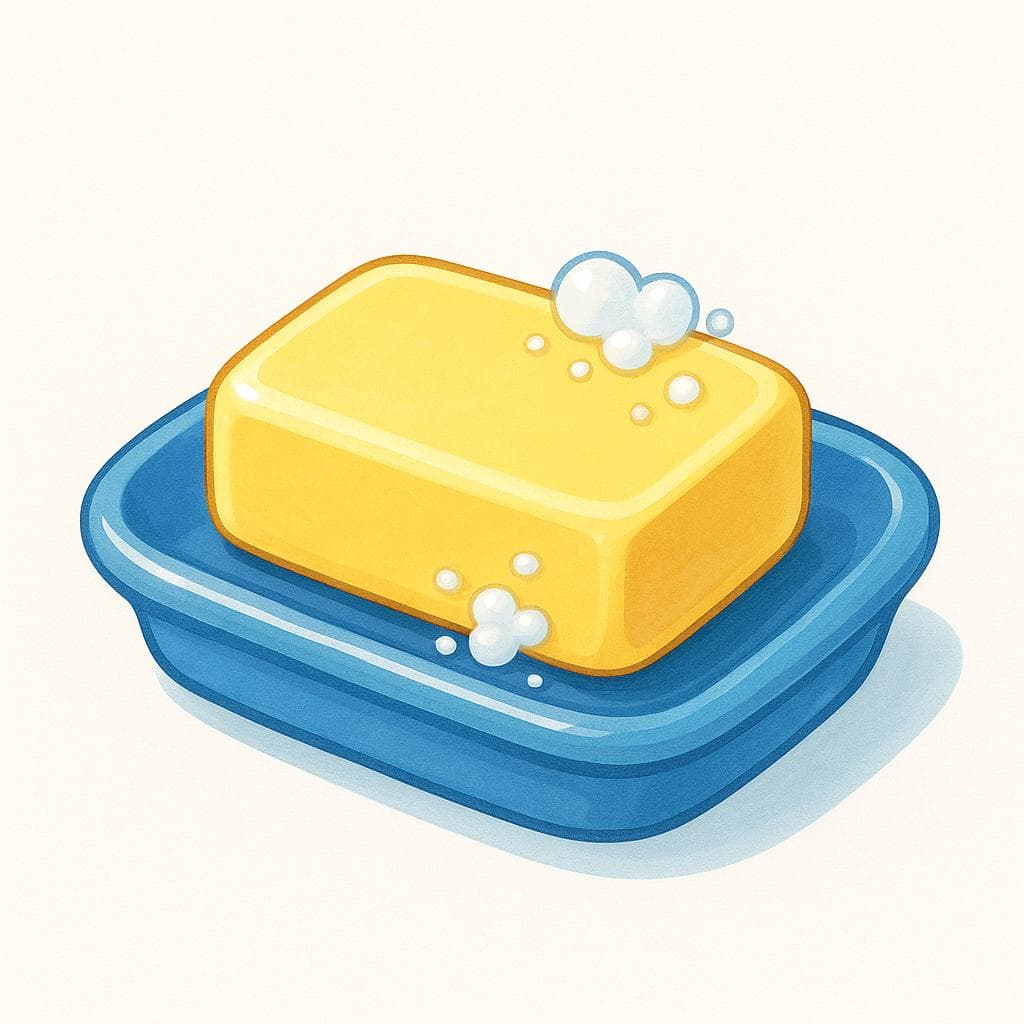
soap
Also: detergent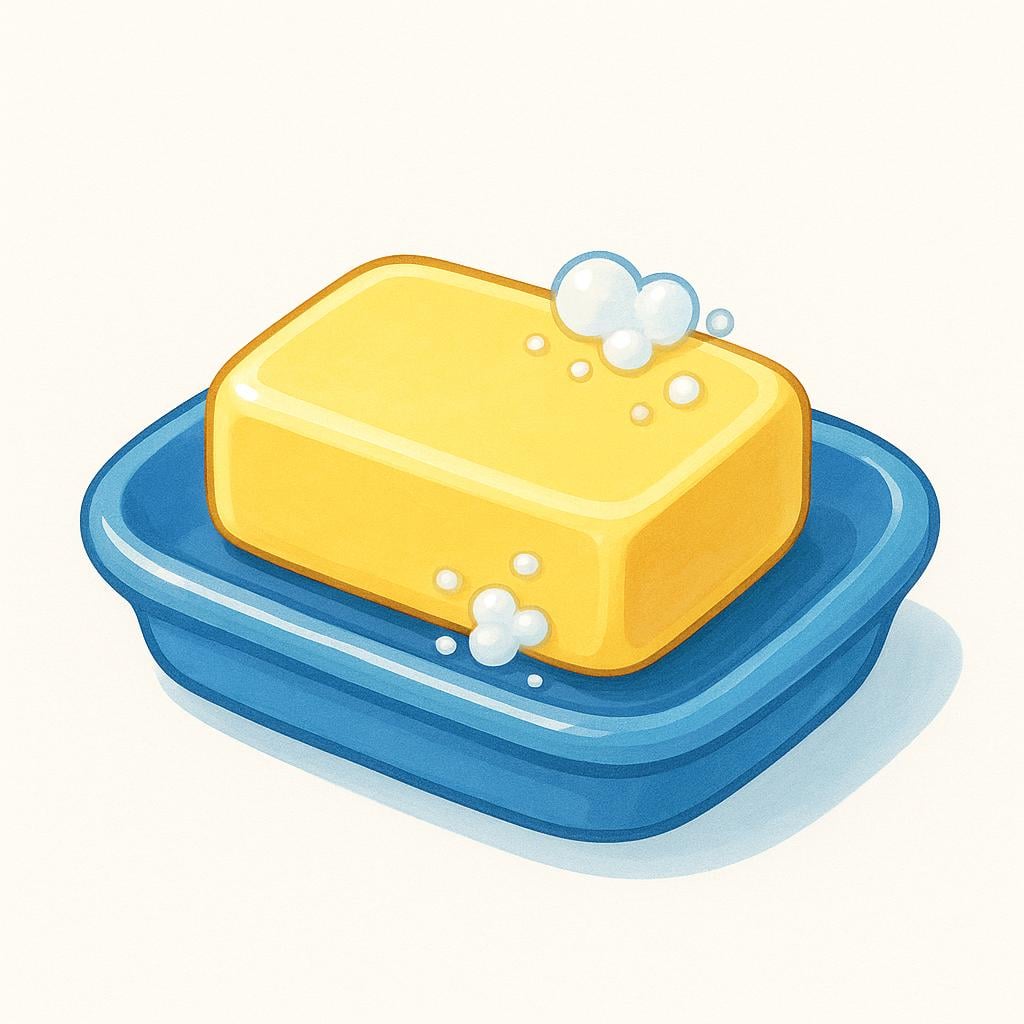
📝 In Action
Por favor, pásame la barra de jabón.
A1Please pass me the bar of soap.
El jabón líquido es mejor para las manos sensibles.
A2Liquid soap is better for sensitive hands.
Se me acabó el jabón para lavar la ropa.
A2I ran out of laundry detergent (soap for washing clothes).
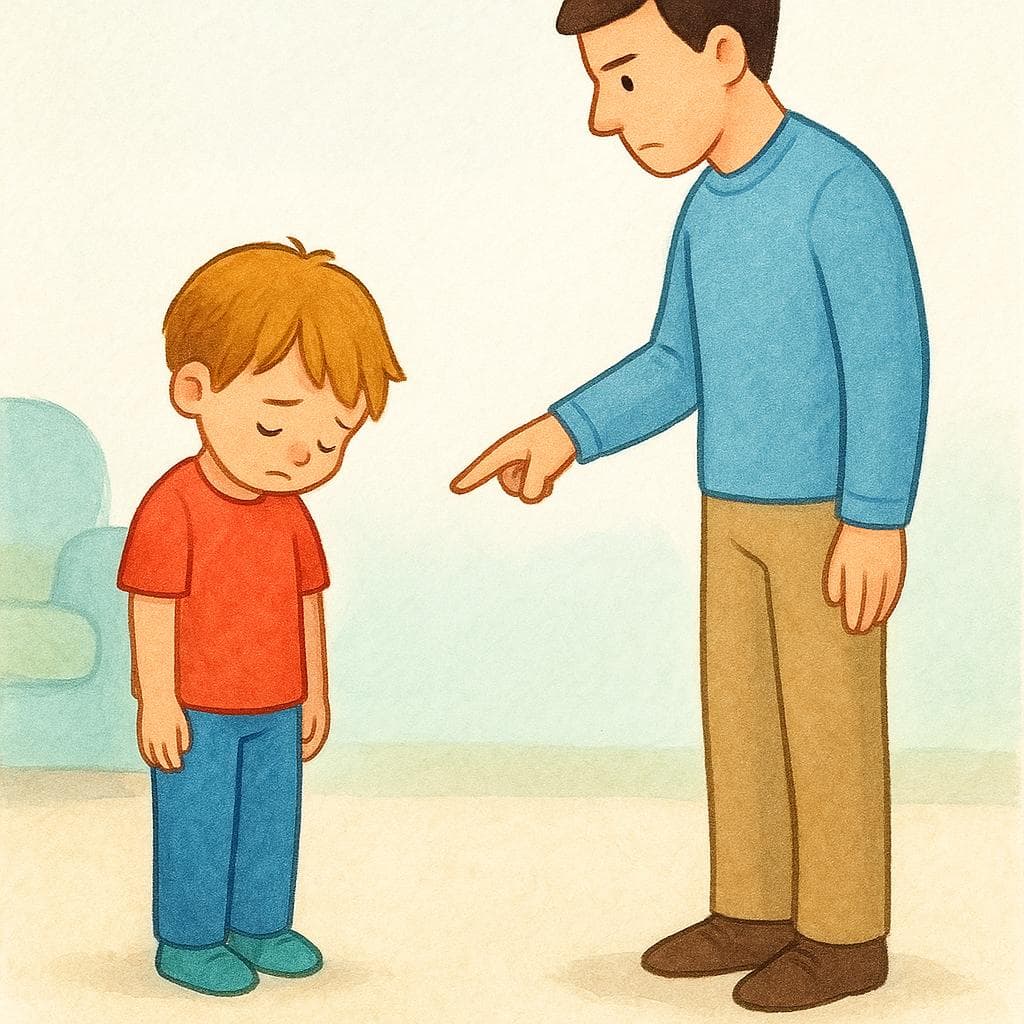
scolding, reprimand

📝 In Action
Le dieron un buen jabón por no entregar el informe a tiempo.
B2They gave him a good scolding for not handing in the report on time.
El entrenador nos echó un jabón después de perder el partido.
C1The coach gave us a telling off after losing the game.
Vocabulary Collections
Translate to Spanish
✏️ Quick Practice
Quick Quiz: jabón
Question 1 of 1
Which sentence uses 'jabón' in its figurative, informal meaning?
📚 More Resources
👥 Word Family▼
🎵 Rhymes▼
📚 Etymology▼
The word comes from the Late Latin word *sapo, saponis*, which itself was borrowed from a Germanic language. This shows that the concept of making soap was adopted across Europe long ago.
First recorded: Around the 13th century in Spanish texts.
Cognates (Related words)
💡 Master Spanish
Take your Spanish to the next level. Read 200+ illustrated and narrated Spanish stories tailored to your level with the Inklingo app!
Frequently Asked Questions
Is 'jabón' masculine or feminine?
Jabón is a masculine noun, so you use 'el jabón' or 'un jabón'. Even though it ends in -ón, it follows the common rule for nouns ending in -ón being masculine.
How do I specify hand soap versus body soap?
While 'jabón' works for both, you can specify: 'jabón de manos' for hand soap, and 'jabón corporal' or 'jabón de tocador' for body soap.