jersey
“jersey” means “sweater” in Spanish. It has 2 different meanings depending on context:
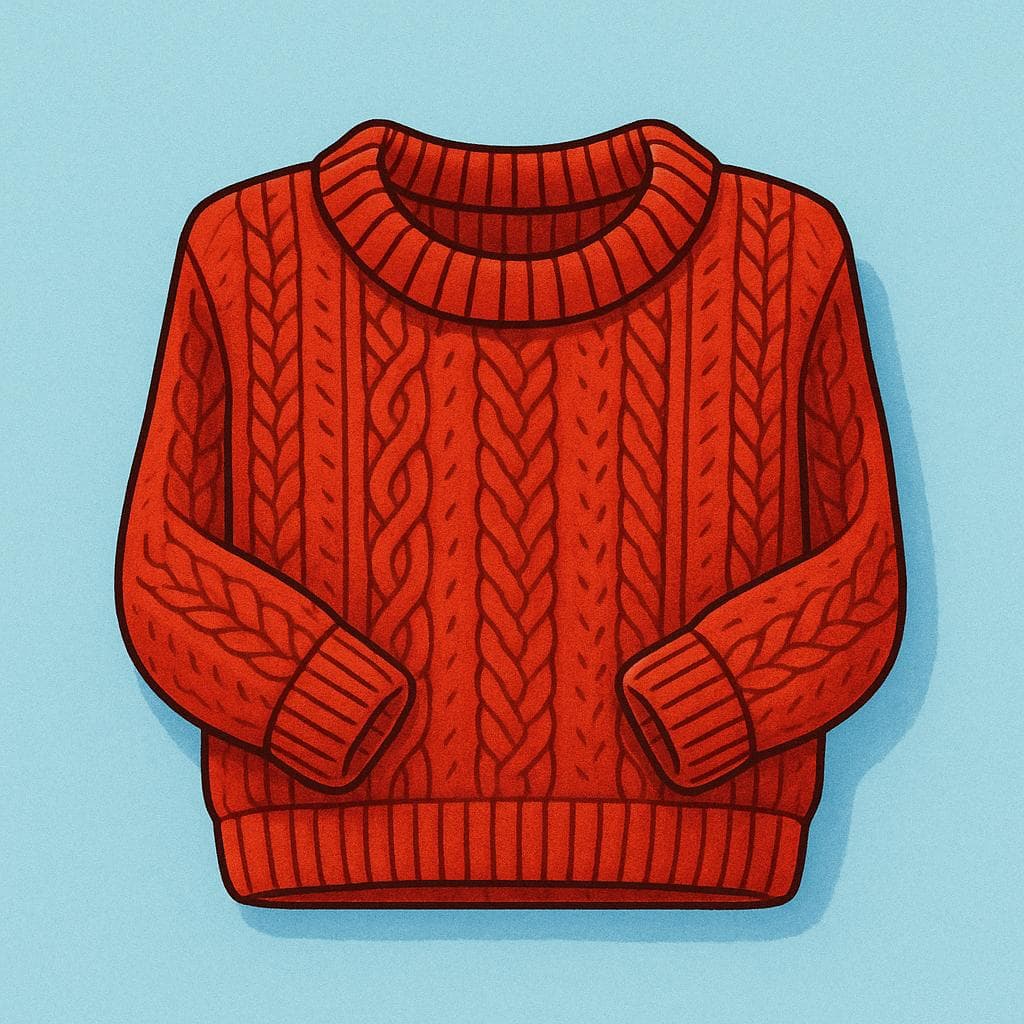
sweater, jumper
Also: pullover
📝 In Action
Hace frío, ponte un jersey grueso antes de salir.
A1It's cold, put on a thick sweater before going out.
Este jersey de lana pica un poco.
A2This wool jumper is a little scratchy.
Compré un jersey azul que combina con mis vaqueros.
A1I bought a blue sweater that matches my jeans.
jersey, kit
Also: shirt
📝 In Action
El futbolista se quitó el jersey después del partido.
A2The soccer player took off his jersey after the game.
Ella colecciona los jerseys de su equipo favorito.
B1She collects the jerseys of her favorite team.
Translate to Spanish
✏️ Quick Practice
Quick Quiz: jersey
Question 1 of 2
If your friend tells you, 'Me voy a poner el jersey de mi equipo,' what is he most likely doing?
📚 More Resources
👥 Word Family▼
🎵 Rhymes▼
📚 Etymology▼
This word is a direct borrowing from English. It comes from the name of the Channel Island, Jersey, where the thick, knitted fabric used to make these garments was first produced and popularized.
First recorded: 19th century (in the clothing sense)
Cognates (Related words)
💡 Master Spanish
Take your Spanish to the next level. Read 200+ illustrated and narrated Spanish stories tailored to your level with the Inklingo app!
Frequently Asked Questions
Is 'jersey' the same as 'suéter'?
Yes, they mean the same thing (a warm, knitted top), but where you are matters. 'Jersey' is standard in Spain, while 'suéter' is used more often in Latin America. Both words are understood almost everywhere, though.
How do I pronounce the 'j' in 'jersey'?
The 'j' in Spanish sounds like the English 'h' in 'house.' Say 'HER-sey,' not 'jer-zee'.