juguetes
“juguetes” means “toys” in Spanish (objects for play).
toys
Also: playthings, gadgets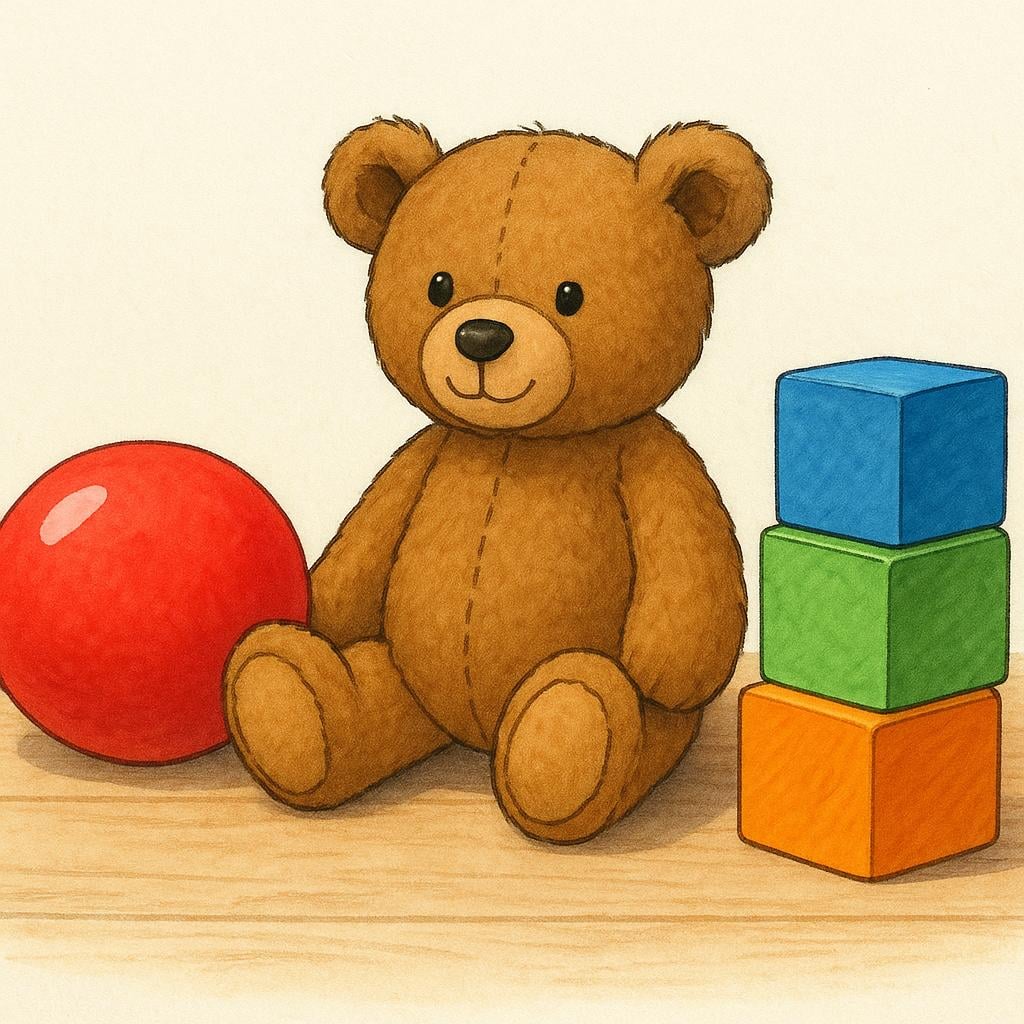
📝 In Action
Los niños guardaron todos sus juguetes en la caja.
A1The children put all their toys away in the box.
¿Dónde están los juguetes del perro?
A1Where are the dog's toys?
Compramos juguetes educativos para la escuela.
A2We bought educational toys for the school.
Mi nuevo coche es mi juguete favorito.
B1My new car is my favorite toy (or gadget).
Translate to Spanish
✏️ Quick Practice
Quick Quiz: juguetes
Question 1 of 1
Which of these words is NOT part of the same word family as 'juguetes'?
📚 More Resources
🎵 Rhymes▼
📚 Etymology▼
Comes from the Spanish verb 'jugar' (to play). The suffix '-ete' is often used to create nouns that refer to instruments or objects related to the action, making it literally 'the thing used for playing.'
First recorded: 15th century
Cognates (Related words)
💡 Master Spanish
Take your Spanish to the next level. Read 200+ illustrated and narrated Spanish stories tailored to your level with the Inklingo app!
Frequently Asked Questions
What is the difference between *juguetes* and *juegos*?
*Juguetes* are the physical objects you play with (like a doll, a ball, or a truck). *Juegos* are the activities or structured pastimes themselves (like chess, hide-and-seek, or a sport). You might use *juguetes* to play a *juego*.
Is 'juguetes' used for adult items?
Yes, sometimes playfully or figuratively. People often refer to expensive or fun gadgets, like a new camera or motorcycle, as 'mis juguetes nuevos' (my new toys/gadgets).