juguete
“juguete” means “toy” in Spanish. It has 2 different meanings depending on context:

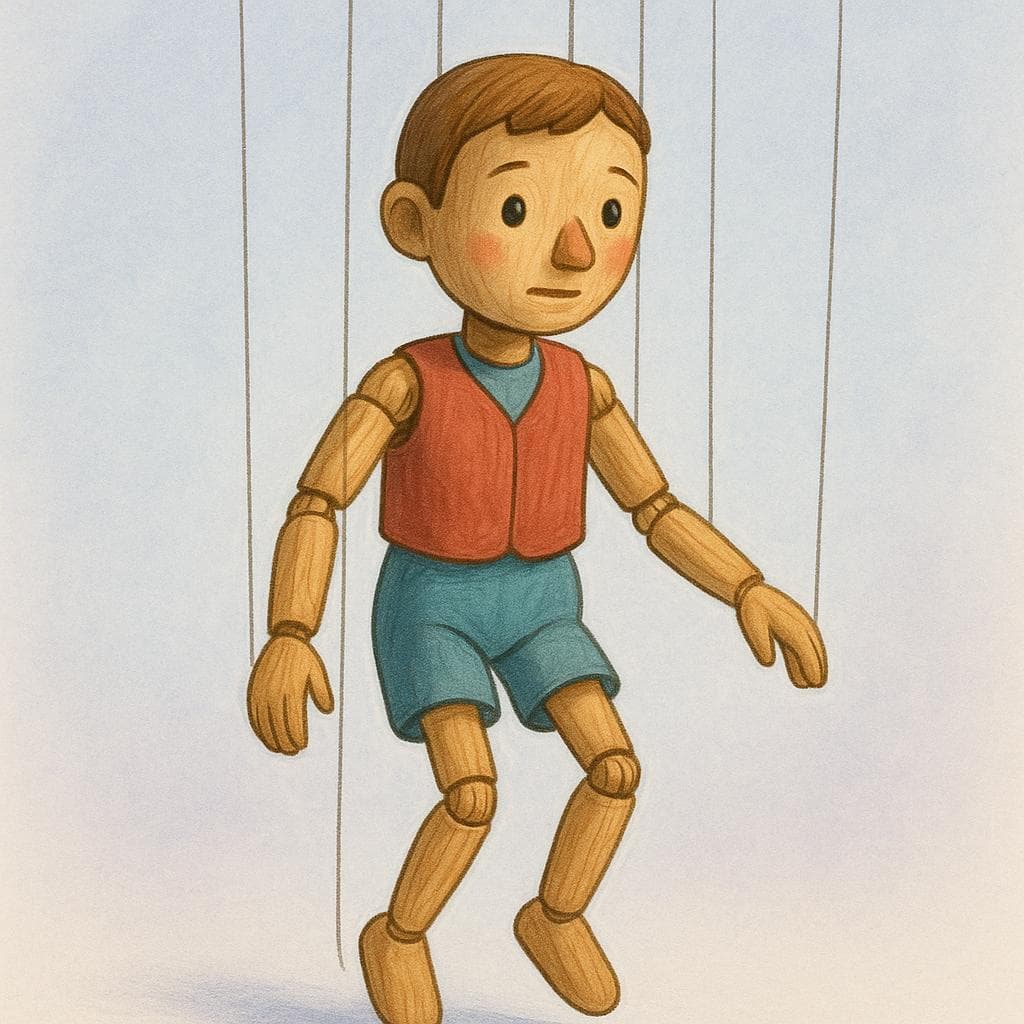
toyAlso: plaything

📝 In Action
El niño perdió su juguete favorito en el parque.
A1The boy lost his favorite toy in the park.
Esta tienda vende juguetes educativos de madera.
A2This store sells educational wooden toys.
¿Puedes guardar todos los juguetes en la caja, por favor?
A1Can you put all the toys away in the box, please?
Word Connections
playthingAlso: tool

📝 In Action
Se sentía como un juguete en manos de su jefe, que lo usaba para todo.
B2He felt like a plaything in the hands of his boss, who used him for everything.
La prensa lo trató como un juguete político desechable.
C1The press treated him like a disposable political tool/plaything.
Word Connections
✏️ Quick Practice
Quick Quiz: juguete
Question 1 of 1
Which sentence uses 'juguete' in its figurative (non-literal) meaning?
📚 More Resources
👥 Word Family
📚 Etymology
The word comes directly from the Spanish verb 'jugar' (to play). It was formed by adding the common suffix '-ete' (which often means a small object or tool) to the verb root. The verb 'jugar' itself traces back to the Latin word *iocus*, meaning 'game' or 'joke'.
First recorded: Medieval Spanish
Cognates (Related words)
💡 Master Spanish
Take your Spanish to the next level. Read 200+ illustrated and narrated Spanish stories tailored to your level with the Inklingo app!
Frequently Asked Questions
¿Cómo se dice 'toy store'?
The word for 'toy store' is 'juguetería'. This uses the noun 'juguete' plus the common ending '-ería', which often means 'a place that sells X' (like 'panadería' for 'bakery').