lanza
“lanza” means “spear” in Spanish. It has 2 different meanings depending on context:
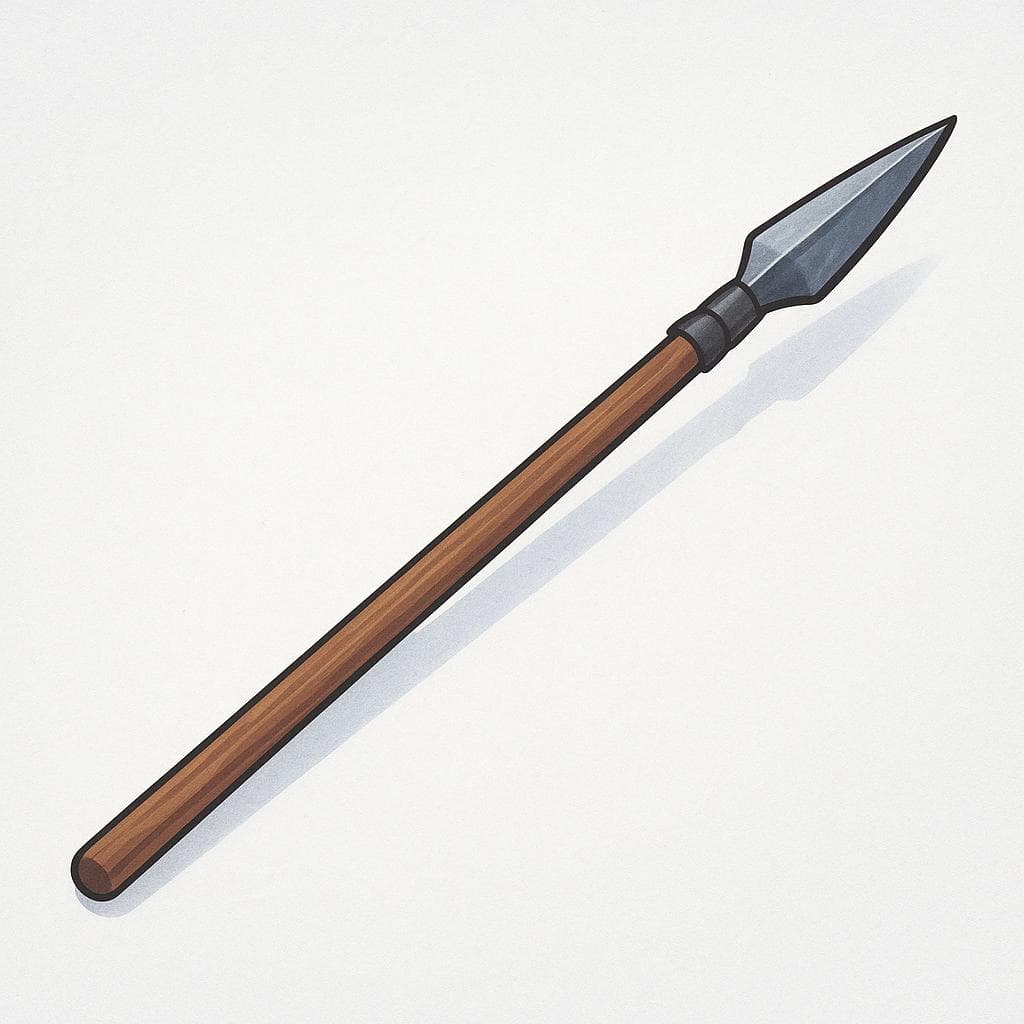

spear, lance
Also: javelin
📝 In Action
El caballero llevaba una lanza larga en el torneo.
B1The knight carried a long lance in the tournament.
La punta de lanza del equipo era el nuevo delantero.
B2The spearhead (leader) of the team was the new striker.
throws, launches, throw!

📝 In Action
Ella lanza la pelota muy alto.
A2She throws the ball very high.
La empresa lanza su nueva aplicación mañana.
B1The company launches its new application tomorrow.
¡Lanza el anzuelo al agua!
A2Throw the hook into the water!
Indicative
Present
Imperfect
Preterite
Subjunctive
Present Subjunctive
Imperfect Subjunctive
✏️ Quick Practice
Quick Quiz: lanza
Question 1 of 1
Which sentence correctly uses 'lanza' as a noun?
📚 More Resources
👥 Word Family▼
📚 Etymology▼
The noun 'lanza' comes directly from the Latin word *lancea*, meaning 'light spear.' The verb form 'lanza' (from *lanzar*) developed later from the same root, meaning 'to throw a spear,' which then expanded to mean 'to throw' or 'to launch' anything.
First recorded: 10th century
Cognates (Related words)
💡 Master Spanish
Take your Spanish to the next level. Read 200+ illustrated and narrated Spanish stories tailored to your level with the Inklingo app!
Frequently Asked Questions
Why does 'lanzar' change to 'lancé' in some conjugations?
This is a spelling rule, not an irregularity! In Spanish, the letter 'z' always sounds like the 's' in 'see' (or 'th' in Spain) and cannot come before 'e' or 'i.' To keep the sound, the 'z' changes to a 'c' before those vowels (e.g., 'yo lancé' or 'que él lance').